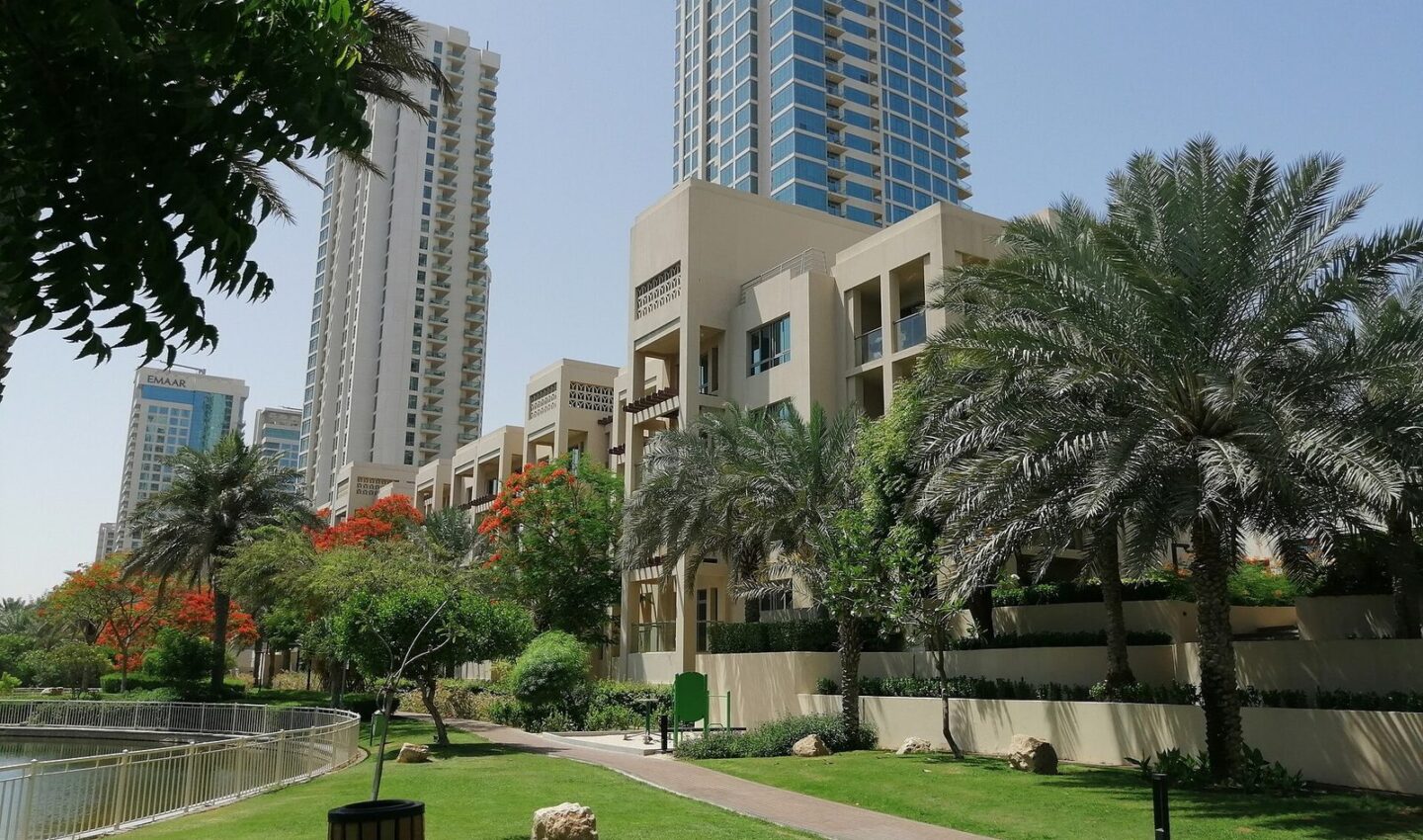
Living in The Greens puts a money exchange house within a short walk of most apartment buildings, which is one of those quiet conveniences residents use far more than they expect. The community’s retail strips along Greens View and around The Greens Village host branches of the UAE’s big exchange networks, handling currency exchange, international remittances and bill payments for a neighbourhood full of expatriates sending money home. If you regularly move money between countries, The Greens is a particularly practical place to live.
Where the Exchange Houses Are
The Greens is a compact, walkable community, and its exchange branches sit where residents already go: the ground-floor retail units beneath the apartment buildings and the shops around the Greens Village centre near the lakes. The big UAE networks — names residents will recognise such as Al Ansari Exchange, Lulu Exchange, UAE Exchange’s successor brands and Wall Street Exchange — operate across this part of Dubai, and between The Greens itself, neighbouring Barsha Heights and the services inside nearby malls, you are rarely more than a few minutes from a counter.
Most branches keep long hours, typically opening around 8 or 9 in the morning and closing late in the evening, seven days a week, because remittance traffic peaks after work and at weekends. Salary week at the end of the month is the busiest period, when queues at popular branches can stretch out of the door on Friday evenings.
What Residents Use Them For
- Remittances home — the biggest use, sending monthly support or savings to family accounts abroad, often at preferential rates for regular corridors.
- Travel money — buying pounds, euros, rupees or dollars before holidays, usually at better rates than the airport.
- Paying bills and fees — many branches process utility, telecom and government payments over the counter.
- Receiving money — collecting cash sent from abroad through international transfer networks.
- Wage services — some residents and many domestic workers receive or manage salaries through exchange-house card products.
As a guide, a typical cash remittance fee to common destinations such as India, Pakistan or the Philippines often falls around AED 15 to AED 25 per transfer at the counter, with the exchange rate margin varying between providers and by time of day. Rates move constantly, so the smart habit is to compare the total received amount — fee plus rate — across two apps or branches on the day you send, rather than chasing the headline fee. Always check current rates at the branch or on the provider’s official app before committing.
📸 Follow @dxbtalk1 on Instagram for daily Dubai in photos →
Living Nearby: The Practical Picture
For neighbours, an exchange branch at the base of your building is almost pure convenience. These are small, quiet retail units with daytime and evening footfall rather than noise, and the only noticeable pressure is on parking bays in front of the retail strips during the end-of-month remittance rush. Many Greens residents walk to their branch, so the impact is lighter than in car-based districts.
All UAE exchange houses are licensed and supervised by the UAE Central Bank, and counters will ask for your Emirates ID for transactions — this is a legal anti-money-laundering requirement, not a shop policy, and larger transactions require source-of-funds details. Dealing only with licensed branches, which The Greens’ established names all are, protects you; avoid anyone offering informal transfers outside the regulated system, however good the rate sounds.
Apps Versus the Counter
Every major exchange network now has an app, and many Greens residents have moved routine transfers to their phones at locked-in rates. The counter still wins in a few situations: first-time registration, which usually must be done in person with your Emirates ID; large transfers, where staff can guide you through the extra checks; cash transactions, where you want physical currency for travel; and problem-solving, when a transfer is delayed and you need a human. A hybrid pattern is common — register and send small amounts in the branch, then switch to the app once your beneficiaries are set up.
FAQ
What ID do I need to send money from an exchange house?
Your original Emirates ID is required for registration and transactions, under UAE Central Bank rules. First-time registration is usually done in person at a branch.
When is the best time to send money home?
Rates move with the markets, so there is no fixed best day. Compare the total amount your family will receive — rate and fee combined — between providers on the day you send.
Are exchange house rates better than my bank’s?
For many popular remittance corridors, exchange houses beat bank rates and fees, which is why they dominate the market. Check both on the day; your bank app makes the comparison easy.
For a community built around expatriate life, having trusted exchange counters a short stroll away is a genuine quality-of-life plus. Discover more about living in Dubai’s neighbourhoods at DXB Talk and through the Dubai Areas guides.