Learning a language as an adult in Dubai is both easy to start and easy to abandon. The city is full of institutes — in JLT, Business Bay, Al Barsha, Knowledge Park and along Sheikh Zayed Road — offering everything from Arabic and English to French, Mandarin and Russian. The variety is a strength, but it means choosing well matters. This guide explains the types of provider, the class formats on offer, and what realistic progress actually looks like for a busy adult.
The Main Types of Language Provider
Dubai’s language scene falls into a few broad families. Dedicated language institutes are the core: multi-language centres that run structured group courses by level, often with their own course books and placement tests. Cultural institutes represent specific countries and languages — the natural home for anyone serious about, say, French or German — and usually combine classes with libraries, film screenings and conversation events. Private tutors and small studios offer flexibility and one-to-one attention, while online platforms and apps provide the cheapest, most portable route, at the cost of human accountability. Universities and community colleges occasionally open language modules to the public too.
Providers operating as training institutes in Dubai are generally licensed through the Knowledge and Human Development Authority or a free zone authority. It is reasonable to ask any institute about its licence, its teachers’ qualifications and how levels are assessed — professional outfits answer without hesitation.
Class Formats and How to Choose
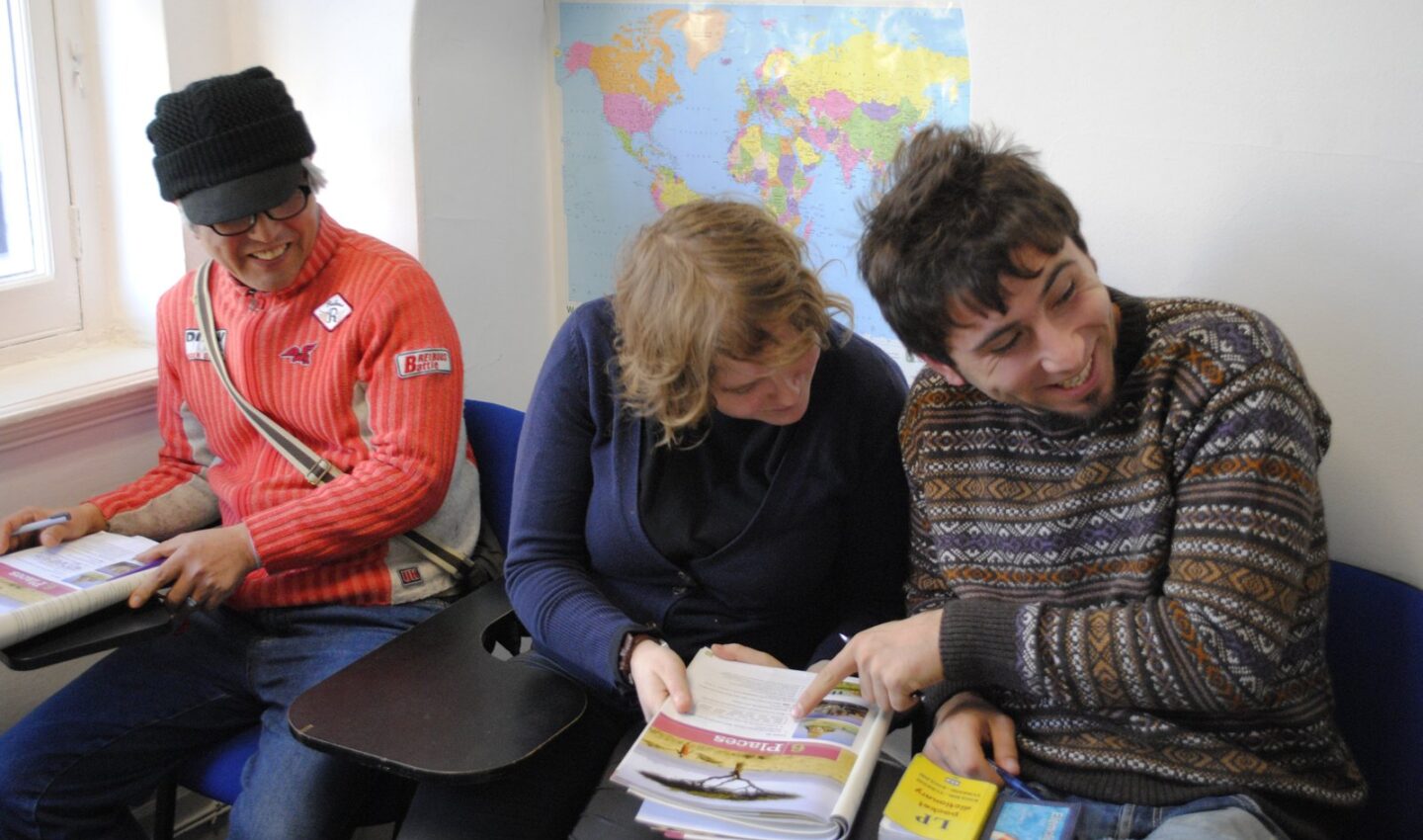
Group courses are the default for a reason: they are affordable per hour, social, and paced by a syllabus. Typical groups run from a handful of students to the mid-teens, meeting two or three times a week in the evening or once at the weekend. Intensive courses compress a level into a few weeks of frequent sessions — effective if you have a deadline, exhausting alongside a demanding job. One-to-one tuition costs more per hour but bends entirely around your schedule and goals; it suits executives, shift workers and anyone preparing for a specific exam or move.
Before enrolling, most good institutes offer a placement test and sometimes a trial lesson. Take both. A level that is too easy bores you by week three; one that is too hard quietly convinces you that you are bad at languages, when you are simply in the wrong room.
📸 Follow @dxbtalk1 on Instagram for daily Dubai in photos →
Realistic Timelines: The Honest Part
Language levels are commonly described using the Common European Framework — A1 and A2 for beginner stages, B1 and B2 for independent use, C1 and above for fluency — and reputable institutes map their courses to it. As a rough guide, each level typically takes somewhere in the region of sixty to one hundred hours of study for many learners, including practice outside class, though this varies enormously with the language’s distance from your own, your previous learning experience and your consistency.
What this means practically: an adult attending two evenings a week might complete a beginner level in a term, hold simple conversations within six months or so, and need a couple of years of steady work to reach confident intermediate level in a language like Spanish or French. Arabic, Mandarin and other languages with new scripts and structures usually take longer. Institutes that promise fluency in a few weeks are selling something other than language learning.
Costs and Questions to Ask
Group course fees in Dubai are commonly charged per level or per term, and course fees vary — confirm with the institute, including whether course books, registration and any exam fees are included. Ask about the maximum class size, the make-up policy when work sends you travelling, whether you can freeze or transfer a course, and what certificate is issued at the end — internal certificates of completion are standard, while internationally recognised exams are a separate step with their own fees.
Making It Stick in a Multilingual City
Dubai is, paradoxically, a hard place to practise: English works everywhere, so your new language never becomes necessary. Adults who progress build artificial necessity — conversation meetups, a language exchange partner, media in the target language, colleagues or friends who speak it and are willing to be practised on. Combine one structured course with one weekly habit of real use, and the institute’s syllabus turns into an actual skill. That combination, sustained over a year, is worth more than any single intensive splurge.