Step into a Dubai mosque for the first time — perhaps on the guided tour at Jumeirah Mosque — and the space can feel both beautifully simple and quietly mysterious. What is the alcove in the far wall? Why is there a staircase that leads nowhere obvious? Where does the imam stand? Like a church with its altar and pulpit, a mosque has parts, each with a name, a purpose and centuries of tradition behind it. This gentle walk-through names them, so the next prayer hall you enter reads like a familiar room.
The Prayer Hall
The heart of the mosque is the prayer hall — a broad, open, carpeted space with no furniture in its centre and no images of people or animals on its walls. Decoration runs instead to geometry, calligraphy and pattern, which keeps the room calm and the mind uncluttered. The carpet is often marked with subtle rows or arch shapes, guiding worshippers to stand shoulder to shoulder in straight lines facing the same wall.
That wall is the qibla wall, oriented towards Mecca — from Dubai, broadly north-west. Everything in the hall takes its cue from it. You may also notice a separate gallery or section, in many mosques provided for women worshippers, and clocks or screens displaying the day’s prayer times, which change daily with the sun.
Mihrab and Minbar
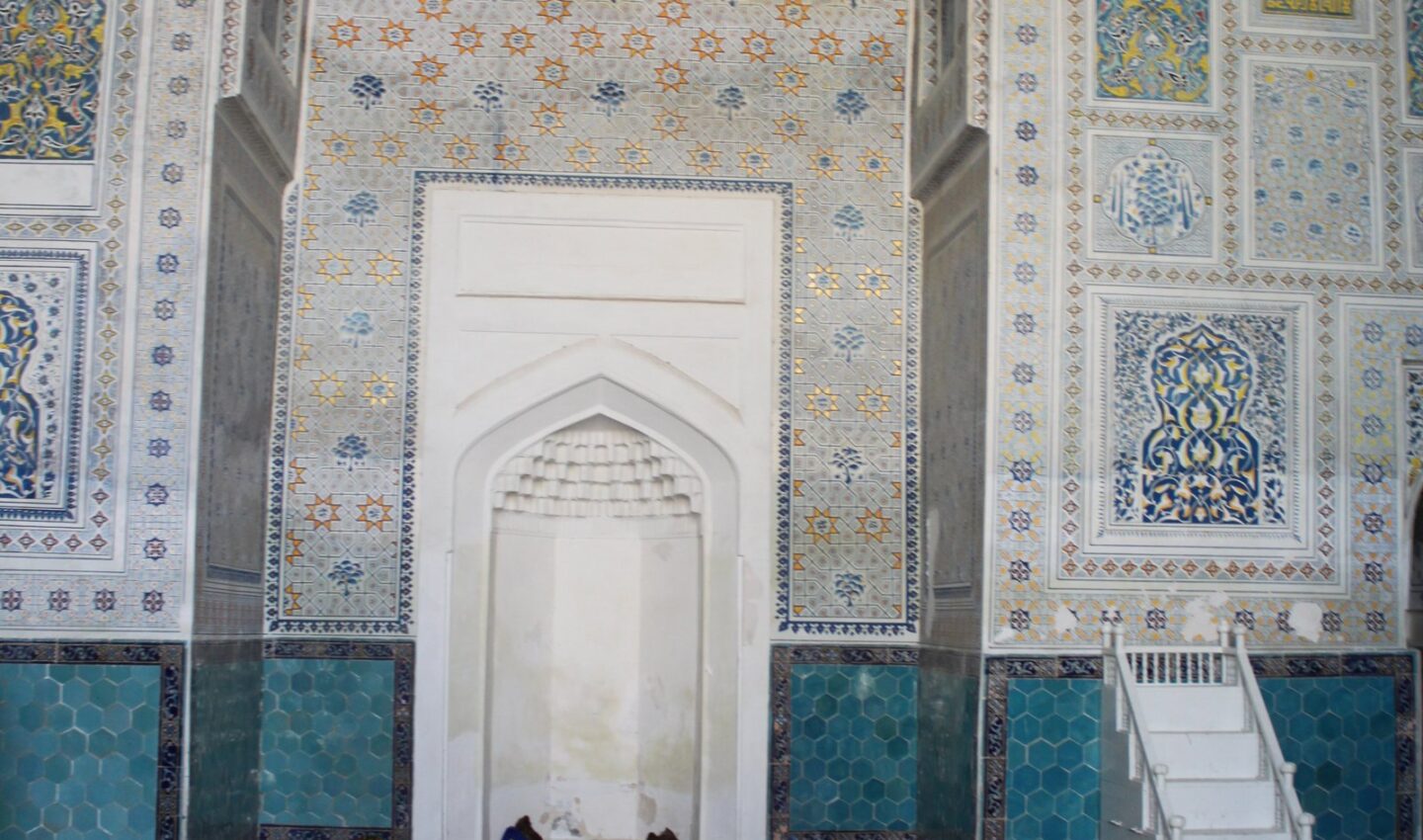
In the centre of the qibla wall sits the mihrab, a niche or alcove, often beautifully tiled or carved. It indicates the direction of prayer, and the imam — the person leading the prayer — stands just in front of it, facing the same way as everyone else, his voice naturally carried into the hall. The mihrab is the visual focus of most mosque interiors, and on tours it is the feature guides reach first.
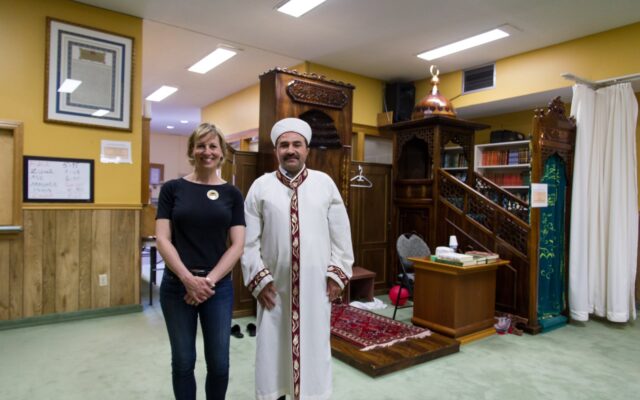
Beside it usually stands the minbar, a short staircase leading to a small seat, often with a canopy above. From here the Friday sermon — the khutbah — is delivered. Its raised position is practical, helping the speaker be seen and heard through a full hall, and its design ranges from simple carved wood to elaborate works of art in the grander mosques.
📸 Follow @dxbtalk1 on Instagram for daily Dubai in photos →
Dome and Minaret
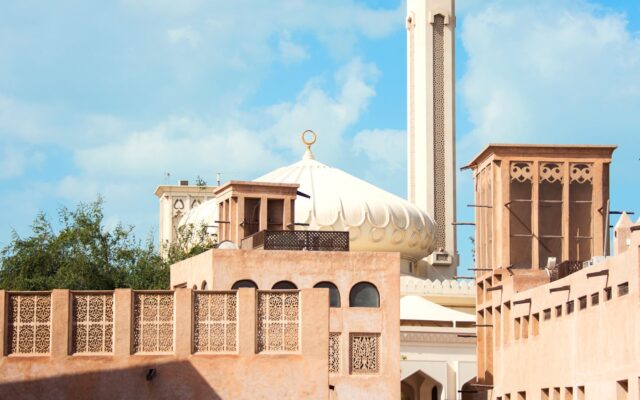
Above, in many mosques, rises the dome. Inside, it lifts the space and helps sound bloom softly through the hall; outside, it is the curve every skyline photograph loves. Not every neighbourhood mosque has a grand dome — small mosques may have a modest one or none — but where it exists, look up: domes are often the most intricately decorated surfaces in the building.
Outside stands the minaret, the slender tower from which the adhan, the call to prayer, is announced — today by loudspeaker, the caller’s voice rolling over the rooftops five times a day. Some mosques have one minaret, famous ones may have two, and modern designs experiment boldly. The minaret is the mosque’s landmark and lighthouse: in an unfamiliar district, it is how you find the door.
Courtyard, Ablution Area and the Edges
- The courtyard (sahn): an open or shaded yard for gathering, overflow prayer on Fridays and Ramadan nights, and conversation before and after.
- The ablution area: rows of taps and seating where worshippers perform wudu, the washing before prayer; separate facilities serve men and women.
- Shoe racks and entrances: shoes are left here, marking the threshold between street and sanctuary.
- Small libraries and noticeboards: in many mosques, shelves of Qurans and translations, plus community announcements, sit near the hall.
Reading a Mosque From the Street
You can practise reading a mosque before you ever step inside. From the pavement, find the minaret, then the dome, then the courtyard wall and the entrances — often separate doors for men and women, each leading towards its own ablution area and section of the hall. Look for the prayer-times board near the door and the community notices beside it; even from outside, a mosque tells you its timetable and its neighbourhood news. Decorative bands of calligraphy above the doors, geometric screens shading the windows and the orientation of the whole building towards the qibla all become easier to spot once you know to look. A streetscape that once seemed merely pretty becomes a small lesson in how faith shapes architecture.
Simple Parts, One Purpose
A mosque is not a complicated building. Hall, niche, pulpit, dome, tower, courtyard, water — every part exists to help a community stand together, in clean quiet, facing one direction at the same moment. Once you can name the parts, every mosque in Dubai becomes legible, from the grandest landmark to the smallest neighbourhood room. And legible, very quickly, becomes loved.