Many cities have immigrants. Dubai is something rarer: a city whose population is mostly from somewhere else, and whose character is therefore not diluted by its diversity but composed of it. Roughly nine in ten residents were born abroad, and the communities they form do not merely occupy neighbourhoods — they build them, name their shops, stock their shelves, set their calendars and, in the process, continuously redesign what kind of city this is. Understanding Dubai means understanding that its international communities are not a feature of the city. They are its mechanism.
Neighbourhoods With Distinct Characters
Walk the older districts and the map reads like an atlas. Karama carries the imprint of its South Asian communities in its restaurants, tailors, jewellers and festival lights; Satwa layers Filipino, Pakistani and Indian life into a few dense, vivid streets; Deira’s trading quarters speak Arabic, Hindi, Urdu, Tagalog, Amharic and Somali across a single morning’s commerce. These are not enclaves sealed off from the whole — they are open for business with everyone, and Dubai residents of all backgrounds shop and eat in each other’s districts as a matter of weekly routine. The mosaic quality matters: because no single community defines the city, every community’s presence is normalised, and the everyday experience of other cultures — their food, their music spilling from a shop, their holidays on the calendar — is simply what living here feels like.
The Economy That Communities Build
The shaping is economic before it is cultural. Dubai’s small-business layer — the cafeterias, trading companies, workshops, salons, logistics firms and family enterprises that give the city its texture — is overwhelmingly built by its international residents, each importing not just labour but networks: supply lines to home markets, trading relationships across the Indian Ocean and beyond, remittance corridors, and an instinct for what a particular community needs before anyone else stocks it. The souks were the original form of this; the free zones and the startup scene are its modern descendants. When a new community grows in Dubai, an economy grows with it — restaurants first, then grocers, then services, then institutions — and the city gets a new district’s worth of life without a single planner drawing it.
📸 Follow @dxbtalk1 on Instagram for daily Dubai in photos →
Calendars, Faith and Festivals
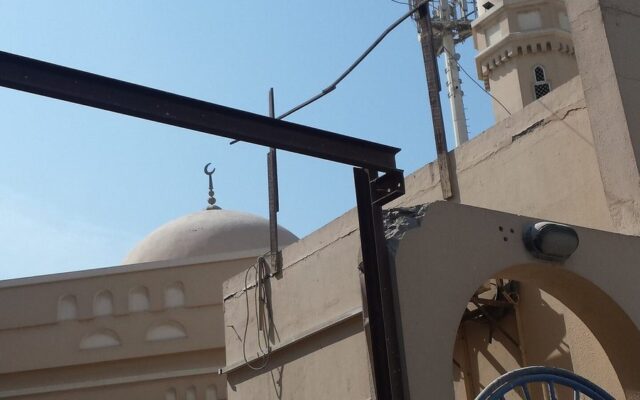
Count the year in celebrations and the communities’ authorship is unmistakable. Ramadan reorganises the entire city’s rhythm; Diwali lights Karama and Bur Dubai; Christmas fills the malls and churches; Eid gathers everyone; Chinese New Year, Onam, Sinulog and a dozen other festivals each get their season in the open. Places of worship — mosques, churches, a Hindu temple, a Sikh gurdwara, and more — stand within the same districts, operating under a framework that licenses and protects them. Schools teach in multiple curricula and languages; workplaces run on a shared week stitched together from everyone’s holidays. None of this is accidental tolerance at a distance. It is a working system, renewed daily, in which the city’s diversity is scheduled, catered and celebrated rather than merely permitted.
The Daily Mechanics of Living Together
What makes the mosaic hold is infrastructure as much as attitude. A common working language — English, in its flexible Dubai form — lets a dozen nationalities share a workplace, a classroom and a queue. Shared spaces do the rest: the metro carriage, the mall, the public beach and the school run are neutral ground where the communities mix as a matter of course. A single legal framework applies to all, and respect for local laws and Emirati customs supplies the common etiquette within which everyone else’s customs have room. Frictions exist, as they do in every real city, but the baseline fact stands: millions of people who share almost nothing by birth share a functioning city by practice, and the practice has become a culture of its own — the distinctively Dubai skill of being at ease among everybody.
What It Means for the Newcomer
For anyone arriving, the communities are the soft landing and the education at once. There is almost certainly a restaurant cooking your food, a shop stocking your ingredients, a congregation, a club, a countryman two floors down — and, one street over, a dozen invitations to become fluent in other people’s worlds. Residents routinely date their real arrival in Dubai not to the visa stamp but to the moment the city stopped being foreign: usually a meal, a festival, a neighbour’s kindness from a country they had never thought about. That is the deepest way the communities shape the city. They make it a place where the whole world is somebody’s home ground — and where, in time, it becomes yours.