Every food culture in Dubai has its morning ritual, but the Emirati breakfast is the one that belongs to this place — dishes that were eaten in courtyard houses and pearl-diving towns long before the towers arrived. It is a sweet-and-savoury table built around bread, eggs, dates and honey, and winter is the perfect time to explore it: the heritage restaurants that serve it best often have courtyards and garden seating, and a plate of hot chebab eaten outdoors on a cool morning, with a small pot of karak beside it, is one of the city’s simplest pleasures.
The Dishes You Need to Know
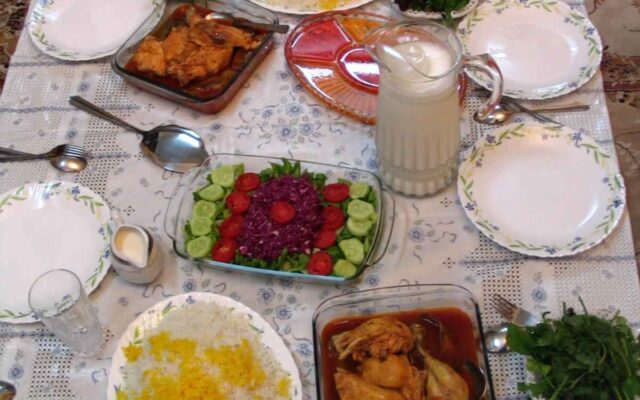
An Emirati breakfast is usually ordered as a spread rather than a single plate, so go with at least one other person and share. The essentials:
- Balaleet — the signature dish. Fine vermicelli noodles are cooked sweet with sugar, saffron, cardamom and rosewater, then topped with a thin, plain omelette. The sweet-noodles-with-egg combination surprises first-timers and converts most of them instantly.
- Chebab — golden, yeasted pancakes, a little like a cross between a pancake and a crumpet, served warm with date syrup (dibs) and a soft white cheese to spread or dip. Eat them while they are hot.
- Khameer — puffy, round flatbreads baked fresh, their tops dotted with sesame or nigella seeds and sometimes brushed with date syrup. Made for tearing and scooping.
- Rgag — paper-thin, crisp bread made on a hot griddle, served with honey and cheese, or with eggs. Watching it being spread and flipped is half the experience.
- Dates and coffee — many places will bring dates and a dallah of Arabic coffee or a pot of karak, the sweet, milky, cardamom-spiced tea that fuels mornings across the Gulf.
Omelettes with tomato, spiced eggs and small plates of cheese and olives round out most trays. Nothing is heavy or greasy; it is a breakfast designed for a warm climate, which is exactly why it sits so comfortably on a winter morning outdoors.
Where to Try It
You are looking for Emirati and heritage restaurants rather than hotel buffets. The best-known courtyard restaurants in the Al Fahidi Historical Neighbourhood in Bur Dubai serve traditional breakfast trays in wind-tower houses, and eating balaleet in a shaded courtyard while the call to prayer drifts over the Creek is about as far from the mall food court as Dubai gets. In Jumeirah, a much-loved Emirati café near the flagpole end of Beach Road has been serving chebab and rgag to a loyal local crowd for years, with majlis-style seating and an unhurried feel. Deira and the old towns of Sharjah, a short drive away, have their own family-run spots where the bread is made to order at the front of the shop.
As a rule of thumb: if the menu lists balaleet, chebab and khameer alongside the karak, and the bread arrives too hot to touch, you are in the right place. A generous traditional breakfast tray for two typically lands somewhere around AED 60–110 in these neighbourhood restaurants, noticeably less in the old-town cafeterias.
📸 Follow @dxbtalk1 on Instagram for daily Dubai in photos →
How to Order Without Overthinking It
Most heritage restaurants offer a set breakfast tray or platter that includes a little of everything — balaleet, chebab with date syrup and cheese, eggs, khameer or rgag, and tea. Order that the first time. It removes the guesswork and gives you the full grammar of the meal. On a second visit, order by craving: balaleet and karak if you want sweet and comforting; rgag with eggs and a side of cheese if you want something lighter and crisper.
Ask for the date syrup on the side if you are cautious about sweetness, and do not skip the fresh bread just because the tray looks big — the breads are the point, and they are best in the first ten minutes.
Why Winter Mornings Suit It Best
Emirati breakfast culture is outdoor culture. These dishes come from a world of courtyards and rooftops in the cool season, and the restaurants that honour them tend to have their best seating outside. A January morning in Al Fahidi — cool air, sand-coloured walls, a dallah on the table — is the setting this food was made for. Arrive before 9.30am on weekends to beat the tour-group hour, take the courtyard table if there is one, and let breakfast run long. In Dubai’s winter, that is not wasting the morning. That is the morning.