Every parent watches for first words and first steps, and most toddlers reach milestones in their own good time. But when something feels slower than expected, hearing the phrase “wait and see” can be frustrating. In Dubai, early intervention services for speech, occupational therapy and developmental support are well established, and nurseries are often the first place where a concern is spotted and acted on. This guide explains the early signs worth discussing, how assessment usually works, and how therapy and nursery life can fit together for under-fives.
Early signs it may be worth a conversation
Children develop at different rates, and a single late milestone is rarely a cause for alarm. Patterns are what professionals look for. With speech and language, parents and teachers might notice a toddler who is using very few words compared with peers, who seems not to understand simple instructions, who rarely points, gestures or imitates, or whose speech is unusually hard for unfamiliar adults to understand. Frustration during communication, such as frequent tantrums when trying to make needs known, can also be a clue that language is lagging behind intention.
Occupational therapists tend to look at everyday function: a child who avoids messy play or certain textures, struggles with feeding or drinking, finds climbing and balancing much harder than peers, or has difficulty with early self-care skills such as using a spoon or attempting to undress. Developmental concerns more broadly might involve play that stays at a very repetitive level, limited interest in other children, or losing skills that had previously appeared. Any of these is a reason to ask questions, not a diagnosis in itself.
Who to talk to first
For most families, the first conversation is with the nursery teacher or your paediatrician. Nursery staff observe your child alongside many children of the same age, so their view of how your toddler compares in play, communication and independence is genuinely valuable. A good nursery will raise concerns gently and early, often suggesting a period of closer observation and simple classroom strategies before recommending formal assessment.
Your paediatrician can check hearing, which is an essential early step when speech is delayed, since undetected hearing difficulties can sit behind language problems. From there, families are typically referred to, or self-refer to, a speech and language therapist, occupational therapist or developmental specialist for a fuller assessment. Waiting times and routes vary between providers, so it is worth making enquiries promptly once you decide to go ahead, and asking each provider how their assessment process works.
📸 Follow @dxbtalk1 on Instagram for daily Dubai in photos →
What an assessment usually involves
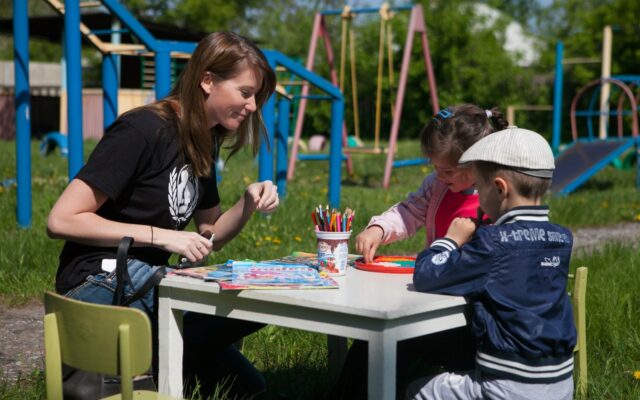
An early years assessment is generally play-based and unhurried. A speech therapist will observe how your child communicates during play, what they understand, and how their sounds and words are developing, often using structured tasks woven into games. An occupational therapist may watch your child move, climb, draw, build and manage everyday tasks, and ask detailed questions about routines at home such as mealtimes, dressing and sleep.
Parents are part of the process throughout: your knowledge of your child fills in the picture that a clinic session alone cannot give. Afterwards you should receive a clear explanation of findings and, where support is recommended, a plan with goals. Ask what the goals are, how progress will be measured and reviewed, and what you can do at home, because the strategies families use in daily routines usually matter more than the therapy hour itself.
Therapy centres working alongside nurseries
In Dubai, many therapy centres are used to working in partnership with nurseries. With parental consent, therapists may visit the nursery to observe a child in class, advise teachers on strategies, or in some cases deliver sessions within the setting, which saves families extra journeys across the city. Nurseries may also have their own inclusion or special needs staff who coordinate this support and make sure classroom practice matches the therapy plan.
Ask your nursery how it works with external therapists: whether visits are welcomed, how information is shared, and whether teachers attend review meetings. Equally, ask any therapy centre you approach about its experience with nursery-age children and its links with settings locally. Fees for assessments and therapy sessions vary widely between providers and are typically paid privately or, in some cases, partly covered by insurance, so always confirm current costs, what is included and any insurance arrangements before you commit to a programme.
Supporting your toddler while you wait
- Talk through everyday routines, naming objects and actions as you go.
- Follow your child’s lead in play rather than directing every activity.
- Offer choices between two items to encourage communication.
- Read and sing together daily, keeping it playful and pressure-free.
- Build in movement: climbing, swinging, pushing and carrying build strength and coordination.
- Keep notes of new words and skills to share with professionals.
Seeking advice early is never an overreaction. Early intervention exists precisely because support given in the toddler years, when development is moving fastest, tends to make the biggest difference. Services, fees and referral routes change over time, so confirm details directly with providers and your nursery. Most of all, remember that a child who needs some extra help with speech or skills is the same child you know and love; assessment simply gives the adults around them a clearer map of how to help.