

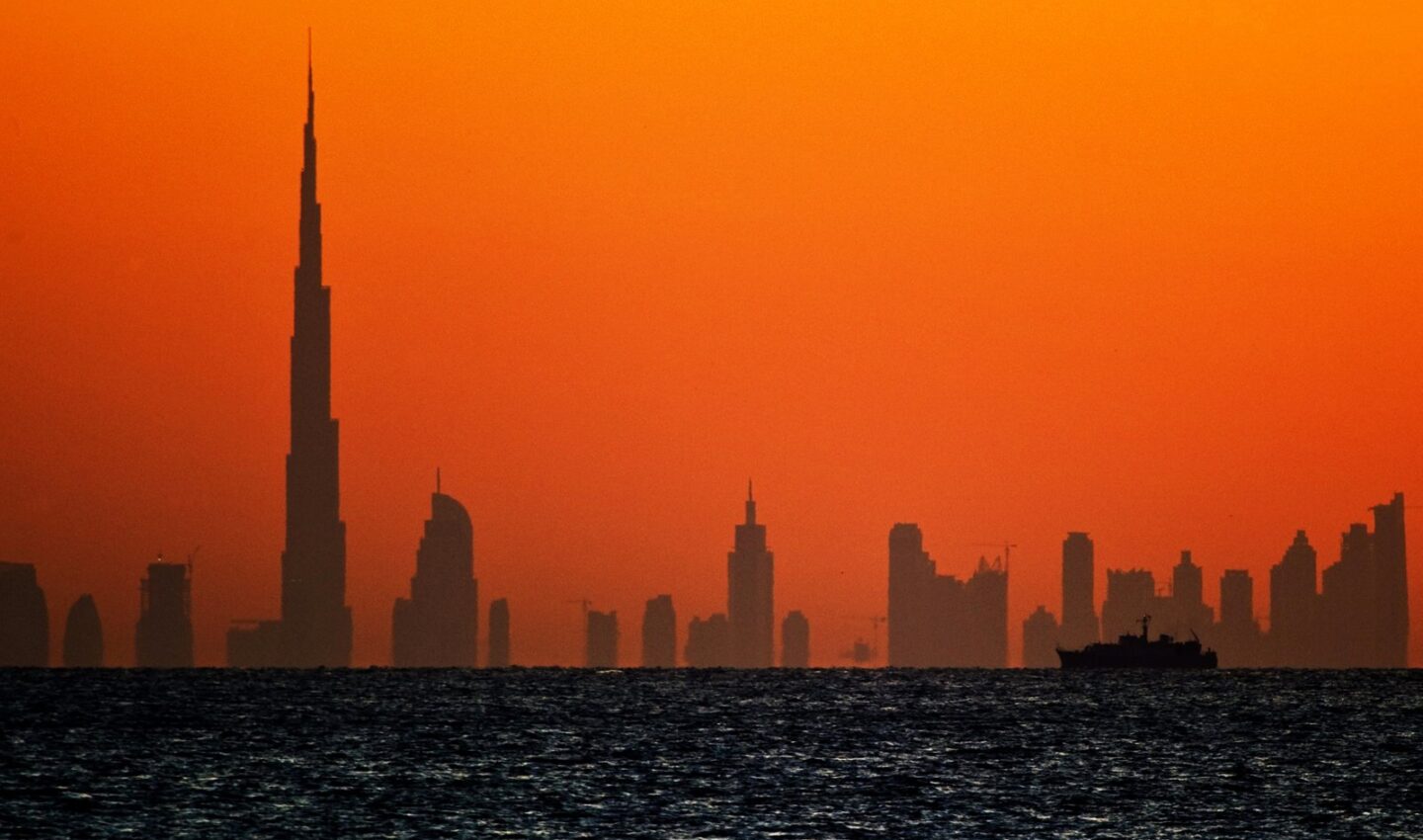
For a few weeks every winter, Dubai wakes up inside a cloud. Warm, moist air from the Gulf rolls over ground that has cooled overnight, and by dawn the Sheikh Zayed Road can vanish somewhere between one interchange and the next. Winter fog in the Emirates is not a cosmetic thing — it is the season’s one real driving hazard, and it rewards commuters who learn the rules before they need them. This is the calm, practical version: what to check before you leave, how to use your lights properly, and how to recognise the morning when the right decision is to wait.
Why the fog comes, and when
The foggiest weeks are usually December to February, when clear, still nights let the land cool while the sea stays comparatively warm. The result is dense fog that forms in the early hours, sits thickest around sunrise and usually burns off between about eight and ten in the morning. Inland and low-lying stretches — around the desert fringes, Jebel Ali and the outer motorways — often get it worse, and keep it longer, than the coast. Not every winter morning is foggy, which is precisely the trap: a crystal-clear Monday tells you nothing about Tuesday.
The National Center of Meteorology issues fog alerts, often colour-coded, the night before and in the early hours, and Dubai Police and the RTA amplify the warnings through their official channels. Make checking them part of your winter routine, the same way you would glance at the traffic report: forecast first, car second.
Before you turn the key
- Check the alerts. If a severe fog alert covers your route, build in extra time — or delay the trip if you possibly can.
- Clear every window properly. Run the demisters front and rear and let the glass clear fully. A small wiped porthole in a fogged windscreen is not visibility.
- Know your light switches. Find the front and rear fog lamp controls before you need them; on many cars the rear fog lamp is a separate button you have never pressed.
- Leave earlier, and slower. A fog commute simply takes longer. Leaving in a rush is how fog accidents begin.
📸 Follow @dxbtalk1 on Instagram for daily Dubai in photos →
Lights: the rules that actually help
Use dipped headlights and your fog lamps — that is what fog lamps exist for, mounted low and wide to light the road surface beneath the fog layer. Full beam is the instinctive mistake: in fog it reflects straight back off the water droplets and turns the windscreen into a glowing white wall. Your rear fog lamp matters as much as the front ones, because in dense fog the biggest danger is often the driver behind you who cannot see you until very late.
One point deserves underlining, because it is so commonly got wrong on UAE roads: do not drive along with your hazard warning lights flashing. Hazard lights tell other drivers that a vehicle is stopped, or stopping, in an emergency. Travelling with them on hides your indicators, makes your speed and intentions impossible to read, and has been repeatedly flagged by the police as a fog danger in its own right. Hazards belong to one moment only — when you have stopped safely, well out of the traffic flow. While you are moving, fog lamps are the correct answer.
Distance, speed and quiet hands
Fog compresses your world to whatever is visible inside the grey, so drive to what you can see rather than to the speed limit or the timetable. The governing rule is simple: if you could not stop within the distance you can see clearly, you are going too fast. Leave several times your normal gap to the vehicle ahead — and if all you can make out is a pair of tail lights, be aware that in fog those lights are much closer than they appear.
Use the road itself as your guide: the edge lines and reflective studs will carry you straight when every landmark has vanished. Keep every input gentle — no sudden braking, no sharp lane changes — and signal early when you genuinely need to move over. On the big commuter motorways, the slower lanes are the calmer place to be; traffic often organises itself into cautious streams, and settling into one at its speed is far safer than pressing on alone into empty grey. If a faster driver is determined to gamble, let them go.
When the fog wins: stopping safely
Occasionally the visibility drops to almost nothing, and the professional decision is to stop driving altogether. If that moment comes, do it properly: signal in good time, leave the motorway at the next exit or pull into a petrol station, rest area or another genuinely safe place off the carriageway — and only then switch on your hazard lights. Never stop in a live lane to wait it out. In thick fog a stationary car on the carriageway is nearly invisible until far too late, and the chain collisions that make winter headlines begin exactly that way.
If your employer or your child’s school offers any flexibility, use it without embarrassment. Schools in the Emirates occasionally announce delayed starts on the worst mornings, and many offices accept a late arrival or a work-from-home start when officials are advising caution. An hour’s patience at home is the cheapest safety equipment of the season.
After the sun burns through
By mid-morning on most fog days, the city is back to its sparkling winter self, and the commute you delayed becomes an easy drive in sunshine. That is the bargain winter offers Dubai’s drivers: a few dozen mornings a year that demand real respect, in exchange for the best motoring weather on the calendar. Check the alert, light the fog lamps, keep the hazards off until you are safely stopped — and give the grey its hour.





