For a few nights each autumn, parts of Dubai quite literally glow. Diwali, the Hindu festival of lights, is one of the biggest celebrations in the city’s calendar — hardly surprising in a city where Indians form the largest expatriate community — and Dubai marks it the way Dubai marks everything: generously, publicly and with fireworks. Diyas flicker in windows, apartment balconies are strung with lights, temples fill before dawn, and the gold shops do their busiest trade of the year.
Lights Across the City
The festival runs across several days, with the main Diwali night at its heart and Dhanteras and Bhai Dooj bookending the celebrations — so the lights, visits and feasting stretch across the better part of a week rather than a single evening.
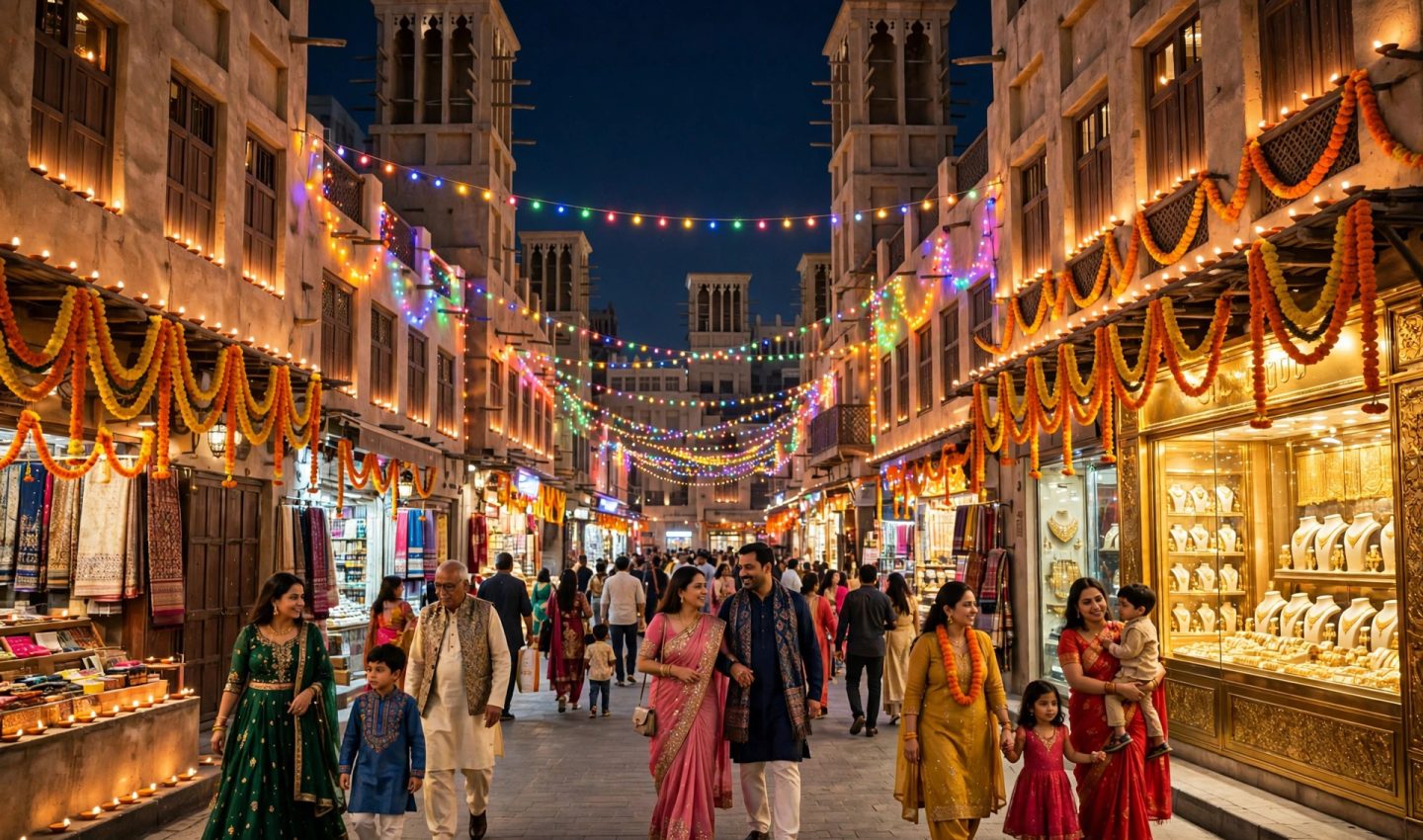
The festival celebrates the victory of light over darkness, and the city takes the theme literally. In the older neighbourhoods — Bur Dubai, Meena Bazaar, Karama and around the temples — buildings are outlined in strings of coloured lights and windows glow with oil lamps and candles. Landmarks and malls across Dubai join in with Diwali displays and light installations, and fireworks over the waterfront have become a fixture of the celebrations in recent years. The dates follow the Hindu calendar and change every year, falling in autumn; if you are visiting then, you will know — the city will be lit.
Bur Dubai and the Old Neighbourhoods
The heart of Diwali in Dubai beats in Bur Dubai, around the city’s Hindu temples near the Creek — among the oldest places of worship in the emirate, serving the community since long before the towers. The lanes around them become a festival in themselves: flower sellers with marigold garlands, sweet shops doing a roaring trade, families in new clothes visiting neighbours and exchanging gifts. Meena Bazaar, the neighbourhood’s famous shopping district, is at its most joyful — and most crowded — with shops lit up and festive offers everywhere. It is one of the best times of year to wander old Dubai on foot in the evening.
📸 Follow @dxbtalk1 on Instagram for daily Dubai in photos →
Free Dubai Tools
Dubai, in Your Hands
Food, Gold and Gifts
Diwali runs on two fuels: sweets and gold. The sweet side is mithai — boxes of ladoo, barfi and jalebi exchanged between families, colleagues and friends until every office desk in the city carries a box. Restaurants across Dubai lay on Diwali menus and thalis, and the snack shops of Karama and Bur Dubai queue out of the door. The gold side is Dhanteras, the auspicious day for buying precious metal that opens the festival period, when the Gold Souk and mall jewellers see some of their longest queues of the year. Our Dubai shopping guide covers the souk and the city’s jewellery districts if you are joining the tradition.
Practical Notes
- Dates: Diwali follows the Hindu lunar calendar and falls in autumn, on a different date each year — check the current year’s date if you are planning around it.
- Greetings: “Happy Diwali” is warmly received everywhere; a small box of sweets for colleagues or neighbours is a gesture people remember.
- Where to see it: Bur Dubai and Meena Bazaar for the full neighbourhood celebration; waterfront spots for announced fireworks.
- Gold buying: Dhanteras queues are long — go early in the day, and remember the gold price itself is fixed by weight; the making charge is what varies.
- Respect: temples are busy with worshippers; visitors are welcome to look from outside the prayer areas and should dress modestly and ask before photographing people.
DXB FACT — DID YOU KNOW?
Snow in the middle of the desert
- Ski Dubaithe Middle East's first indoor ski resort
- Real snow22,500 m² of it
- Inside temperature−1°C to −4°C, all year
- Slopes5 — including an indoor black run
Source: The National
A new Dubai fact every dayRead more »
Reader poll
Poll of the Day
A fun reader poll, just for curiosity — not an official survey. A new question arrives every day.