

An island that did not exist before this century is an odd place to go looking for heritage — and that is exactly what makes Palm Jumeirah interesting. The Palm has no old buildings, no ancestral souks, no centuries. What it has is something rarer: a creation story recent enough to be told by the people who lived it, a gallery scene growing up in its hotels and arcades, and tours that narrate not just the island but the whole maritime culture it rose from. Heritage on the Palm is not inherited. It is being written, live.
The Creation Story: An Island as an Exhibit
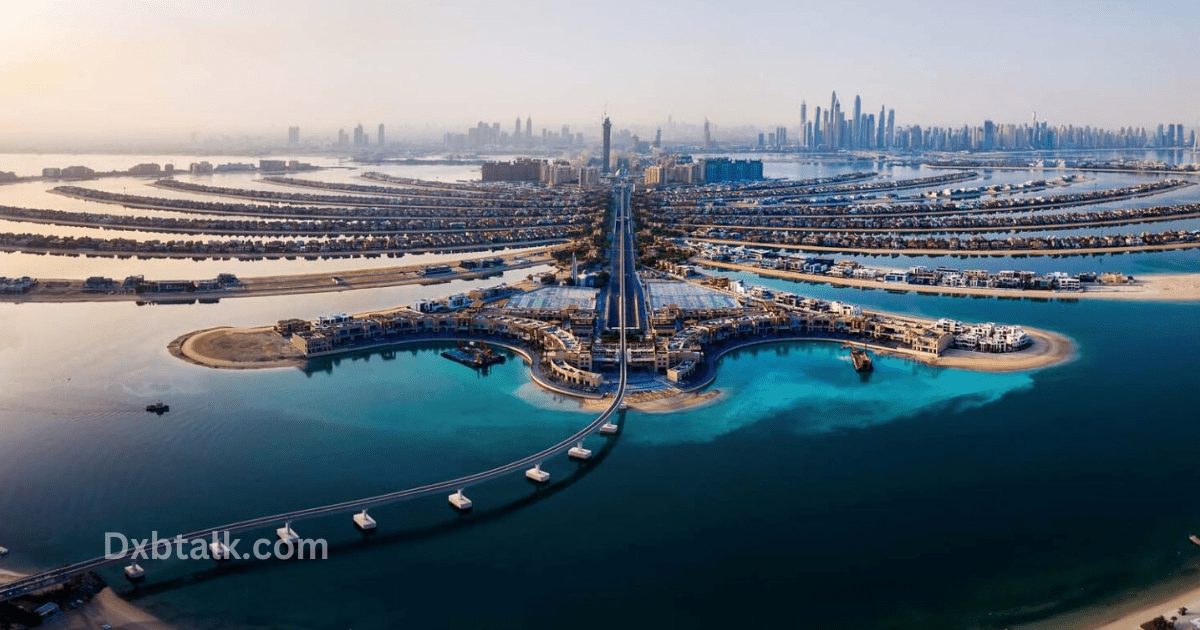
Start with the story every Palm tour tells, because it deserves telling well. The island was built grain by grain — dredged sand, a crescent breakwater of rock, a trunk, seventeen fronds — engineered to hold its palm shape in open water and to give Dubai kilometres of new beachfront. The viewing and exhibition spaces on the island, including The View at The Palm at its trunk, present this making-of as part of the visit: the dredging fleets, the GPS-guided sand placement, the sheer logistics of printing a palm onto the sea. Most heritage is about what a place survived. The Palm’s heritage is about what a place dared — and the tour that explains it is the island’s foundational text.
Galleries and Art on the Island
The Palm’s art scene lives where its visitors live: in the gallery spaces, hotel collections and exhibition programmes of its resorts and retail arcades. The Golden Mile and the island’s hotels host rotating shows and permanent pieces by regional and international artists, and the big resorts treat art as part of the architecture — sculpture in the lobbies, collections along the corridors, installations you pass on the way to breakfast. It is a different gallery culture from Al Quoz’s warehouses: polished, hospitality-framed, and constantly changing with the exhibition calendar. Check what is showing during your stay; the island rewards those who look up from the pool.
📸 Follow @dxbtalk1 on Instagram for daily Dubai in photos →
Tours That Tell the Local Stories
The boat tours that circle the crescent are the Palm’s storytellers. From the water you read the island as its makers drew it — fronds, crescent, the Atlantis crown at the apex — while guides layer in the older story underneath: these were pearling and fishing waters long before they were real estate, and the dhow routes to the Creek ran through this same Gulf. Walking and hotel tours add the human chapters: the engineers and divers of the construction years, the first residents, the staff drawn from a hundred countries who now give the island its daily culture. Ask questions. On an island this young, half the heritage is still walking around in uniform.
Practical Notes for the Culture Hunter
A few logistics sharpen the experience. Time a gallery-and-tour day for the cooler months if you plan to walk the crescent; the boardwalk is glorious in January and a test in August. Book the viewing platforms and boat tours ahead at weekends, when the island fills. Combine the Palm with its neighbours — the Marina’s promenade and the Madinat’s souk-styled arcades sit minutes away and add the retail-craft chapter the Palm itself tells lightly. And manage expectations honestly: come to the Palm for the story of its making and the culture it is growing, and leave the deep-history hunger for the Creek, the souks and Al Fahidi, where it belongs. Heritage-hunting works best when each place is asked for what it actually has.
The Living Culture: Food, Faith and the Calendar
Heritage that is alive does not sit in cases. On the Palm it shows up as Emirati and regional kitchens inside the big resorts, as Ramadan nights when the island’s majlis tents and iftars fill with families, as National Day flags along the crescent, and as the multicultural everyday of a place staffed and visited by the whole world. The honest way to experience the Palm’s culture is to participate in its calendar rather than hunt for monuments: eat the Emirati dishes where they are served proudly, time a visit to a festival week, take the boat, hear the story. The island’s culture is young — but youth, here, is not the absence of heritage. It is heritage at the moment of its making, and the Palm is the one place in Dubai where you can watch that happen.





