

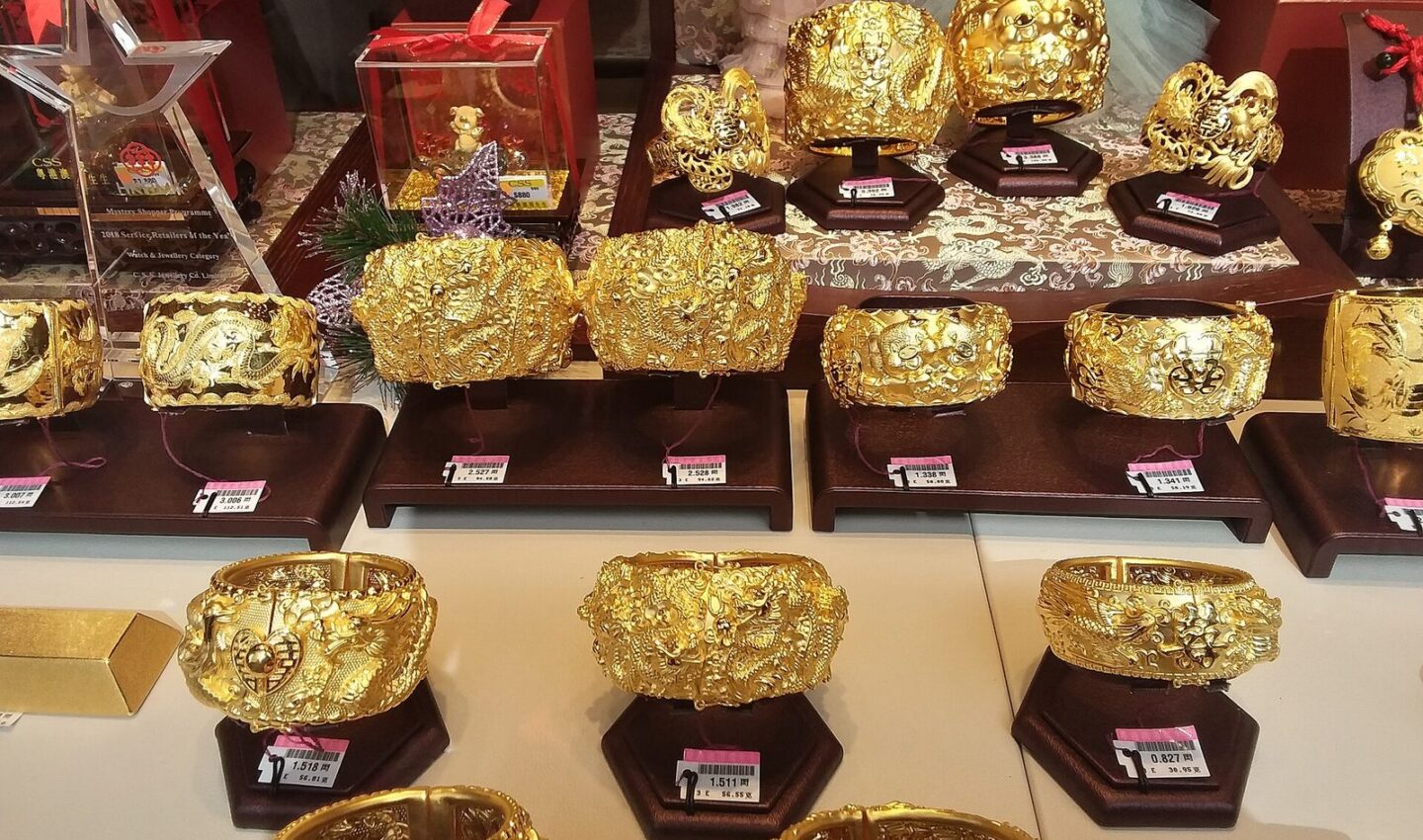
Buying gold in Deira’s Gold Souk is one of Dubai’s great pleasures and, done carelessly, one of its easiest places to overpay — not because the souk is unsafe, but because visitors rush, skip the weight and rate check, and agree a price before they understand what the price is made of. The gold itself is tightly regulated and hallmarked; the mistakes that cost people money are about making charges, paperwork and haste, and every one of them is avoidable.
Mistake One: Shopping Without Knowing the Day’s Gold Rate
Every shop works from the same live gold price, displayed on boards in the souk and published daily. The metal value of any piece is simply its weight multiplied by that rate for its purity — 24, 22, 21 or 18 karat. Walk the souk once without buying, note the day’s rate for the karat you want, and ask each shop to confirm the weight on their scale in front of you. A shop that weighs openly and quotes from the board is behaving exactly as a good souk shop should.
- Today’s gold rate per gram for the karat you are buying
- The exact weight of the piece, weighed in front of you
- The making charge, quoted separately from the metal value
- Any stone value separated from the gold value for set pieces
- A detailed invoice showing weight, karat, rate and making charge
Mistake Two: Ignoring the Making Charge
Two identical-weight bangles in neighbouring windows can differ in price by hundreds of dirhams, and the difference is almost entirely the making charge — the labour fee for design and craftsmanship. Simple machine-made chains and bangles carry low making charges; intricate hand-finished and branded designs carry high ones. As a guide, basic pieces have typically carried making charges from around AED 10–30 per gram, while elaborate work can be several times that, so always ask for the making charge per gram and negotiate that element, not the gold rate, which is fixed by the market. Haggling politely over making charges is expected in the souk and is not rude; arguing about the day’s gold price simply marks you as uninformed.
📸 Follow @dxbtalk1 on Instagram for daily Dubai in photos →
Mistake Three: Weak Paperwork and No Hallmark Check
- Check the piece for its purity hallmark stamp before paying.
- Insist on a full invoice on the shop’s letterhead with weight, karat, gold rate, making charge and total clearly itemised.
- Confirm the shop’s buy-back and exchange policy in writing on the invoice, including whether making charges are excluded on resale — they normally are.
- Pay by card where possible so the transaction is traceable, and keep the invoice with your passport details correct for any customs declaration at home.
- For large purchases, ask whether a certificate is provided for stones, and have significant diamonds or gems independently checked.
The invoice is not a souvenir. It is your proof for insurance, for resale, for a dispute, and for customs officers who ask where the gold came from. A verbal promise without an itemised bill is the single most common paperwork failure visitors make, and reputable souk shops provide proper invoices as a matter of routine — treat reluctance as a reason to walk to the next shop, of which there are hundreds.
Mistake Four: Forgetting Home-Country Rules and Timing
Dubai’s side of the purchase is easy; your home country’s customs allowance may not be. Many countries require declaration of gold above a value threshold and some apply duty, so check your home rules before you travel rather than at the arrivals hall. Timing matters in a smaller way too: gold prices move daily, so a resident buying for a wedding or investment should watch the rate for a week or two and buy on a dip rather than on the one free Saturday available. Avoid the most crowded evening hours for a large purchase if you can — a quiet morning means a patient shopkeeper, a calmer negotiation and time to visit three shops before deciding.
Finally, buy for the exit as well as the entrance. Plain, high-karat pieces close to the metal value are easiest to resell anywhere in the world; heavily designed pieces and stone-set jewellery return mainly their gold weight plus whatever the stones fetch, with the making charge gone. There is nothing wrong with paying for beauty — just pay for it knowingly.
FAQ
Is gold in the Deira souk genuine?
The souk is regulated and shops are inspected, and genuine pieces carry purity hallmarks. Your protection is the standard one: buy from an established shop, watch the weighing, check the hallmark and keep the itemised invoice.
Can I negotiate the price?
Yes — on the making charge, not on the gold rate, which follows the live market price displayed in the souk. Comparing the making charge across two or three shops for a similar piece is the most effective negotiation of all.
Will the shop buy the piece back later?
Most souk shops buy back gold by weight at the day’s rate, typically excluding the original making charge and any stone premium unless agreed otherwise. Confirm the buy-back terms in writing at purchase, especially for expensive pieces.
Know the rate, weigh the piece, negotiate the making charge and keep the invoice — four habits that make the souk as safe as it is enjoyable. More shopping and money guides are on DXB Talk in our How-To category.
Related Guides
- Sell Your Car Safely to a Private Buyer: Common Mistakes That Cause Delays (And How to Avoid Them)
- Open a Gold Savings or Investment Account: Common Mistakes That Cause Delays (And How to Avoid Them)
- Get an Emicool Connection for Your Apartment: Common Mistakes That Cause Delays (And How to Avoid Them)




