Fifteen minutes from the towers of Downtown Dubai, at the head of the Creek, lies a shallow lagoon of mudflats and mangroves where winter mornings belong to the birds. Ras Al Khor Wildlife Sanctuary sits on one of the great migration routes between Europe, Central Asia and Africa, and from November to February it fills with travellers who have flown thousands of kilometres to be here — flamingos in their pink hundreds, ospreys on the posts, harriers quartering the reed beds. Birdwatching in Dubai surprises people who think of the city as purely urban. In winter, at dawn, it is one of the great free shows in the Emirates.
Ras Al Khor: The Sanctuary in the City
Ras Al Khor is a protected wetland — a Ramsar-listed site of international importance — enclosed within the city so completely that the Burj Khalifa stands in the background of photographs taken across its water. Visitors watch from screened hides positioned around the lagoon: the Flamingo Hide on the sanctuary’s western edge, and the Mangrove and Lagoon hides reached from the other side. The hides put you astonishingly close to the birds without disturbing them, which is the entire design: the birds behave naturally because, as far as they are concerned, you are not there.
Access to the hides has traditionally been free, with set opening hours that favour the morning — hides typically open during the day with a break pattern that varies, and the sanctuary side roads close at times, so check the current arrangements with Dubai Municipality before you set out. Bring binoculars if you own them; the hides reward even a cheap pair, and some regulars bring a flask and simply settle in for the first hour.
What Winter Brings
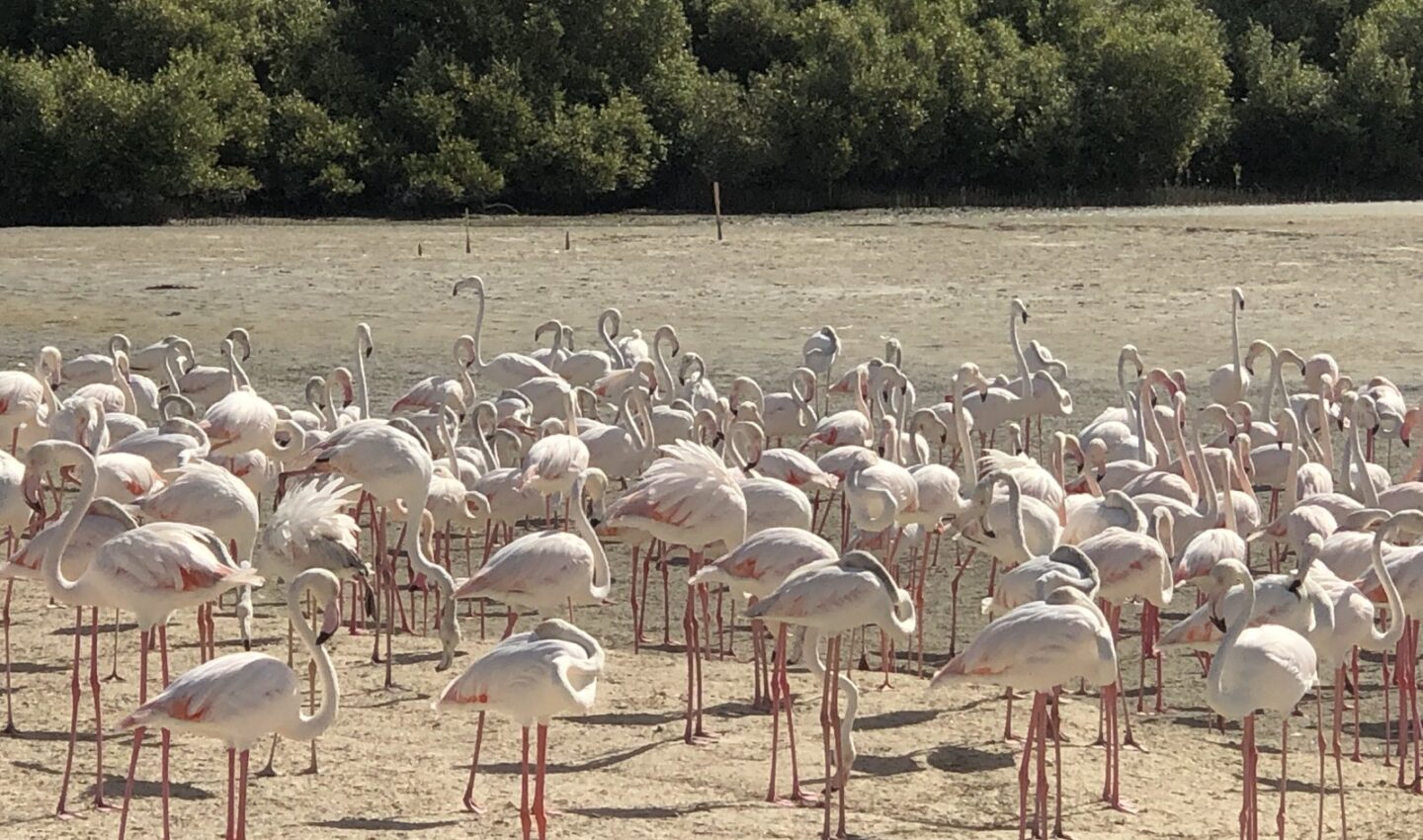
The star residents are the greater flamingos, present in large, shifting flocks through the winter. The sanctuary supplements their natural feeding — the scatter of feed in the shallows near the Flamingo Hide draws the birds in close — and watching several hundred flamingos filter-feeding in formation, pink deepening in the morning light, is a signature Dubai sight. Around them works a full cast of winter wetland life:
- Waders on the mudflats: dunlin, curlew sandpipers, sand plovers and broad-billed sandpipers probing the tide edges in busy flocks.
- Herons and egrets: grey herons standing like statues, great and little egrets, and western reef herons along the mangrove lines.
- Raptors: ospreys fishing the Creek, western marsh harriers drifting over the reeds, and greater spotted eagles in the winter skies.
- Waterbirds: great cormorants drying their wings, black-winged stilts picking through the shallows, and ducks in the quieter corners.
📸 Follow @dxbtalk1 on Instagram for daily Dubai in photos →
The Rules That Keep It Wild
A sanctuary works because visitors accept its terms, and Ras Al Khor’s are simple and absolute. Stay inside the hides and on the designated paths — the mudflats and mangroves are for the birds. Keep voices low. Never feed the birds or any wild animal: the flamingos’ supplementary feeding is done by the sanctuary’s own rangers as part of their management, and visitor feeding disrupts diets, behaviour and the careful balance of the site. Drones are prohibited, flash photography at close range is poor manners, and dogs have no place here at all. If a ranger or sign asks for something, it is protecting exactly the experience you came for.
Beyond Ras Al Khor
Winter birding in Dubai does not end at the Creek:
- Al Qudra Lakes and Al Marmoom: desert-edge lakes drawing flamingos, swans, ducks and waders, with oryx on the surrounding reserve — best at dawn, and always observe wildlife from a respectful distance without offering food.
- Mushrif Park: the ghaf forest hosts woodland species — warblers, rollers in season, and Indian silverbills among the residents.
- Jebel Ali Wetland Sanctuary and the city’s quieter coastline add shorebirds and a wilder feel for those who explore further; access arrangements vary, so check before travelling.
Getting Started
You need less than you think: an early alarm, binoculars if you have them, a free bird-identification app on your phone, and patience. Go on a weekday morning if you can — the hides are quietest, and the light on the flamingos with the skyline behind them is something photographers travel for. Winter is short, the migration is shorter, and the birds, having crossed continents to reach this lagoon, will not wait for you. Set the alarm.