Dubai’s heritage is told in two places at once. Half of it sits behind glass, in museums that gather the pearl-diving gear, the weapons, the photographs and the founding documents. The other half is still standing outdoors — restored neighbourhoods where the houses, lanes and souks are themselves the exhibit. The visitors who get the most from the city’s history are the ones who do both halves together: a museum in the morning, the living district around it in the afternoon. Here is how the two halves fit.
The Museum Half: Choose by the Story You Want
Dubai’s museums are not interchangeable, and choosing well matters more than visiting many. For the classic story of the old trading city, the Dubai Museum inside Al Fahidi Fort — the fort is among the oldest buildings in Dubai — walks you through pearl diving, desert life and the Creek’s trading days in recreated scenes. For the story of the nation itself, the Etihad Museum in Jumeirah covers the founding of the UAE, on the site where the union was signed, through documents, photographs and the leaders’ own belongings. For the Creek’s merchant life told house by house, the Shindagha Museum district along the water restores the world of the trading families, perfumers and pearl merchants who built the port.
Beyond history, the city’s gallery scene carries regional and international art, and science and technology exhibits give families a different register entirely. The honest advice is to pick one museum that matches your curiosity rather than marching through three that do not. A single museum visited slowly, with the labels actually read, teaches more than a checklist of halls.
The Heritage Half: Districts That Are Themselves the Exhibit
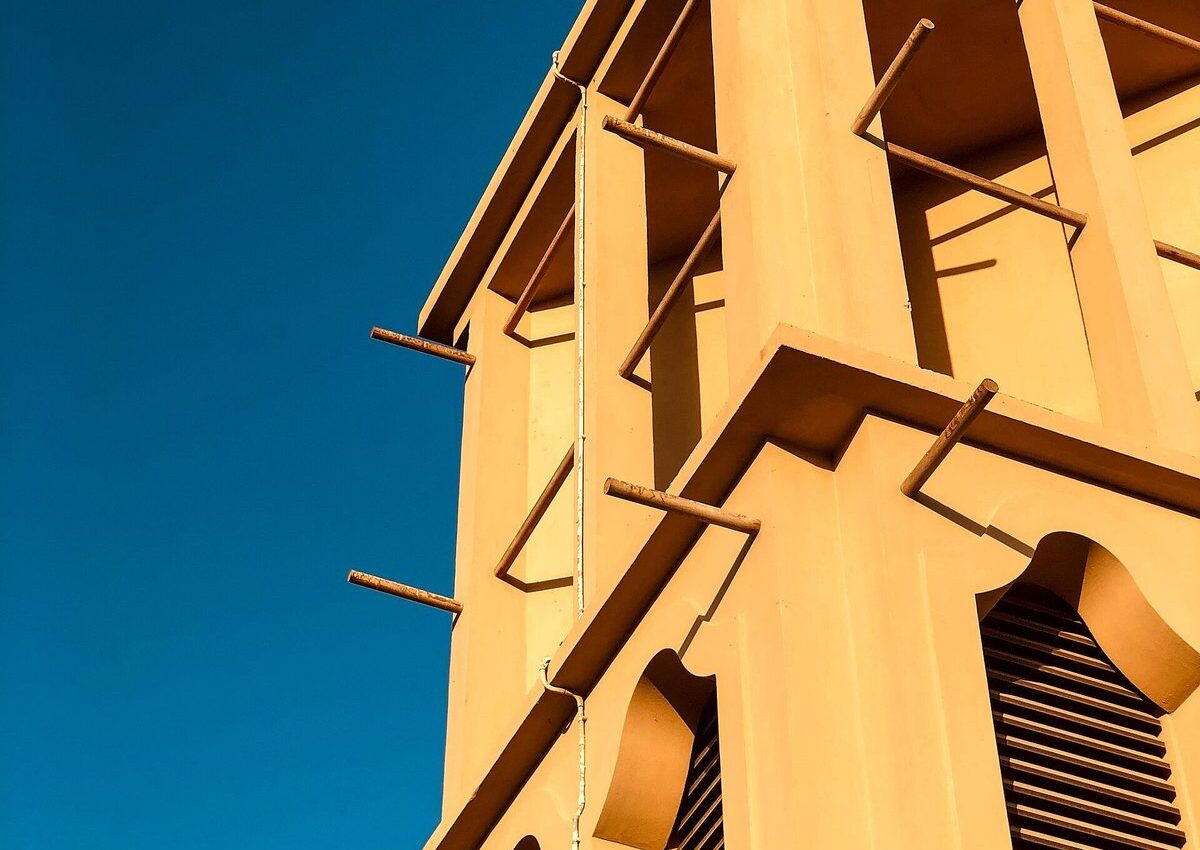
Walk out of the fort and you are already in the second half. The Al Fahidi Historical Neighbourhood preserves the old merchant quarter in coral stone and gypsum: wind towers rising over courtyard houses, narrow lanes — sikka — built for shade, and doors that open onto galleries, small museums and cafés. Nothing here is behind glass. You learn the old city by moving through it at its own scale, noticing how the wind tower catches the breeze and how the lanes stay cool at noon.
The souks extend the lesson into commerce that never stopped. The textile, spice and gold souks across and along the Creek still trade much as they always have, and a crossing on a wooden abra — the little ferry boats that shuttle between Bur Dubai and Deira — puts you on the water the whole economy once ran on. Craft demonstrations and small house-museums scattered through the districts add the human detail: weaving, metalwork, the perfumer’s trade, the calligrapher’s hand.
📸 Follow @dxbtalk1 on Instagram for daily Dubai in photos →
Pair Them Into One Day
The two halves combine naturally around the Creek, and a slow day assembles itself. Start with a museum while the morning is fresh and your attention is good — the fort, or the Shindagha houses along the water. Take lunch somewhere traditional in the old town. Then give the afternoon to the district: the Al Fahidi lanes, a coffee in a courtyard house, the crossing by abra, and the souks as the light softens and the traders’ day peaks. You will find the afternoon reads completely differently after the morning — the artefacts you saw in cases are suddenly sitting in their original context, and the wind tower you photographed is the same machine the museum diagram explained.
Visit Craft: Getting More From Less
A few habits lift any heritage visit. Check opening hours and ticketing in advance; they vary by venue and change across seasons and holidays. Join a guided tour where one is offered — guides supply the stories no label has room for, and in heritage districts a good guide turns a pleasant walk into an education. Allow more time than feels necessary; heritage rewards lingering and punishes hurrying. Read a little background before you go, so exhibits connect to a story you already half-know.
Dress modestly, particularly in historic and religious areas, and be thoughtful about photography: ask before photographing people, and respect private courtyards and homes even in restored districts. Finally, protect the middle of a summer day — heritage districts are outdoor places, and mornings and late afternoons are their kind seasons. Do the visit this way and the point of the whole exercise lands: Dubai’s futuristic skyline stops looking like a beginning, and starts looking like what it is — the latest chapter of a much older story.