As the sun slides towards the horizon on a Ramadan evening, a quiet choreography unfolds across Dubai. In mosque courtyards in Deira, on mats laid along Marina walkways, in community tents and neighbourhood spaces from Muhaisnah to Jebel Ali, long rows are being prepared — dates, water, juice, and soon hot food — for anyone who wishes to sit down and break the fast. This is the mosque iftar, Dubai’s daily act of radical hospitality, and for a whole month it seats strangers side by side as family.
Rows Laid Before Sunset
The preparation begins well before Maghrib. Volunteers — many of them fasting themselves — unroll the long mats and sheets, set out cups and dates at each place, and arrange the meal that sponsors, neighbours and community groups have provided. The scene varies from a grand courtyard feeding hundreds to a modest row outside a small neighbourhood mosque, but the principle never varies: there is a place for whoever comes, and it is ready before they arrive.
As the hour approaches, the rows fill. Workers coming straight from their shifts. Travellers caught by sunset far from home. Elderly gentlemen from the neighbourhood, students, taxi drivers resting between fares, whole families who simply love the atmosphere. Nobody checks anything at the door, because there is no door. There is only a row, and room in it.
The Moment of Maghrib
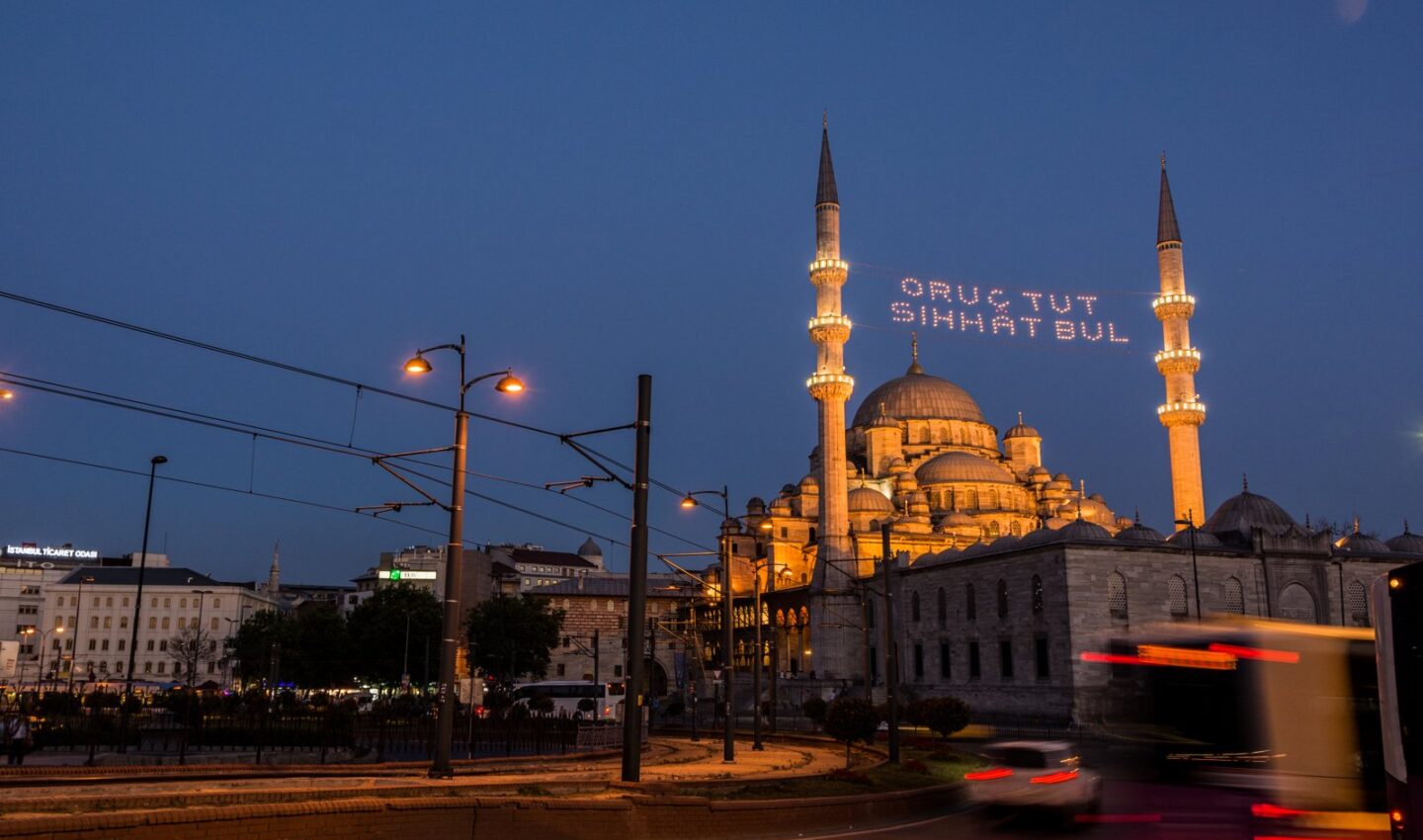
Then comes the minute everyone is waiting for. The adhan sounds for Maghrib — the sunset prayer, its exact time shifting daily and followed from the official calendar — and a hush of gratitude moves along the rows as hundreds of people break their fast at the same instant: a date, a sip of water, a quiet prayer of thanks. It is one of the most moving sounds of the Dubai year, this soft collective beginning of a meal, repeated in courtyards and tents across the entire city at once.
- Dates and water first: the traditional, gentle breaking of the fast, within everyone’s reach.
- Then the meal: rice, breads, soups, fruit and sweets — menus vary, generosity does not.
- Prayer follows: many worshippers pray Maghrib at the mosque before or after eating, as local arrangements allow.
- Everyone eats: guests and newcomers are seated with the regulars — being fed is the only qualification.
📸 Follow @dxbtalk1 on Instagram for daily Dubai in photos →
From Deira Courtyards to Marina Walkways
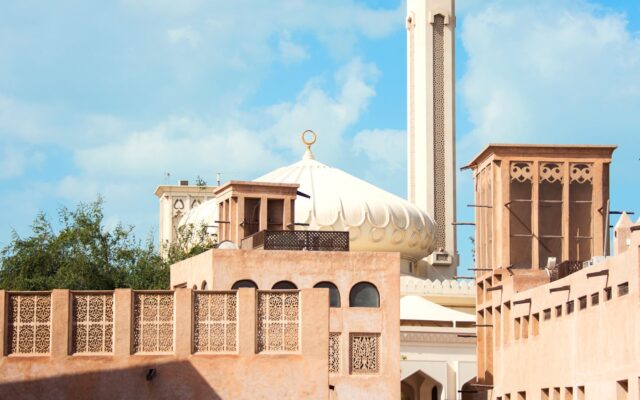
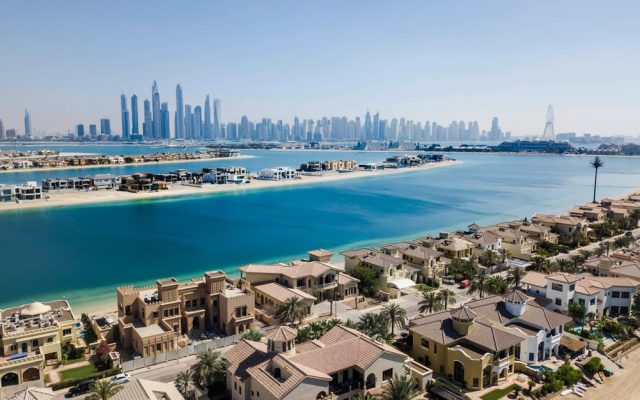
Each district gives the iftar its own flavour. In old Dubai, mosque courtyards near the Creek fill with traders, porters and residents in scenes that feel generations deep. In the labour districts, vast and warmly organised rows serve the men who build and run the city, and the sense of brotherhood at those tables is something participants talk about for years. In the newer communities, residents’ groups and mosques lay rows that draw tower-dwellers down to street level to eat with their neighbours — many for the first time.
Alongside the mosque gatherings, community iftar tents and charitable initiatives across Dubai host the same open-table spirit on a larger scale during the month. The settings differ. The sentence you hear at all of them is the same: please, sit.
The People Who Make It Happen
Behind every row stands an invisible workforce: the volunteers who arrived in the afternoon, the sponsors whose names are rarely announced, the cooks, the cleaners who restore the courtyard before Taraweeh. Many mosques and community groups organise their iftars through the generosity of local benefactors and the labour of their own congregations. It runs, year after year, on a fuel Dubai has in abundance — people who consider feeding a fasting stranger one of the best uses of an evening.
An Open Table, All Month
Ramadan’s dates each year depend on the sighting of the moon and the official UAE announcement, and the daily Maghrib time follows the official prayer calendar. But the meaning of the mosque iftar needs no calendar. For a month, at sunset, Dubai sets a table it does not count the guests at — and in doing so, shows every newcomer, worker and wanderer exactly what kind of city they are in. If you pass a filling row at sunset this Ramadan, do not hover at the edge. There is a place laid. It was, in every sense that matters, laid for you.