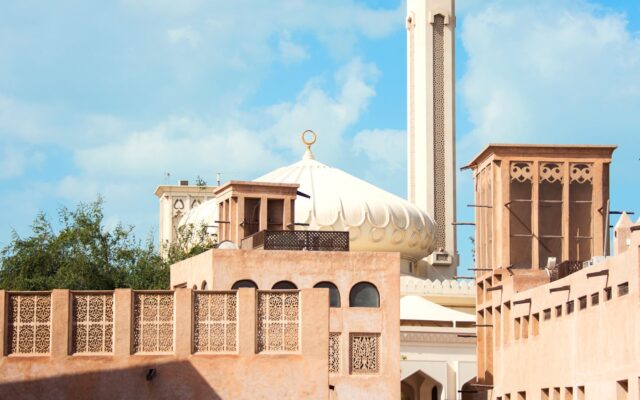
Every city has an hour that belongs to it. For Dubai, that hour is Friday Jummah. Around the middle of Friday — a working day’s morning traded for a slower one, families fed and dressed — the whole city turns, as if on a signal, towards its mosques. Streets that were empty fill with white and colour. Car parks brim, pavements stream, courtyards unroll their extra mats. For one hour, Dubai is not a hundred separate districts and two hundred separate nations. It is one congregation. Then the doors open, everybody pours out together, and the most sociable lunch hour of the week begins.
The City Pauses — All of It
The pause is remarkable precisely because Dubai so rarely pauses. Construction sites quieten. Small shops shutter from Satwa to Deira. Offices empty in waves, and even the roads seem to take a breath, traffic thinning as the adhan for Jummah approaches. In the souks, traders who have haggled all morning simply close mid-sentence, trusting their customers to return — as they do, an hour later, to conclude the bargain as if no time had passed.
Inside homes the same gravity applies. Friday is the week’s family axis in the UAE: the big breakfast, the best clothes for the children, grandparents collected, the slow build towards leaving for the mosque together. People who pray alone all week in office musallahs make a point of the mosque on Friday. Jummah is congregational by its very nature — it is the one prayer of the week that is really about being together.
Overflow: Mats on the Pavement
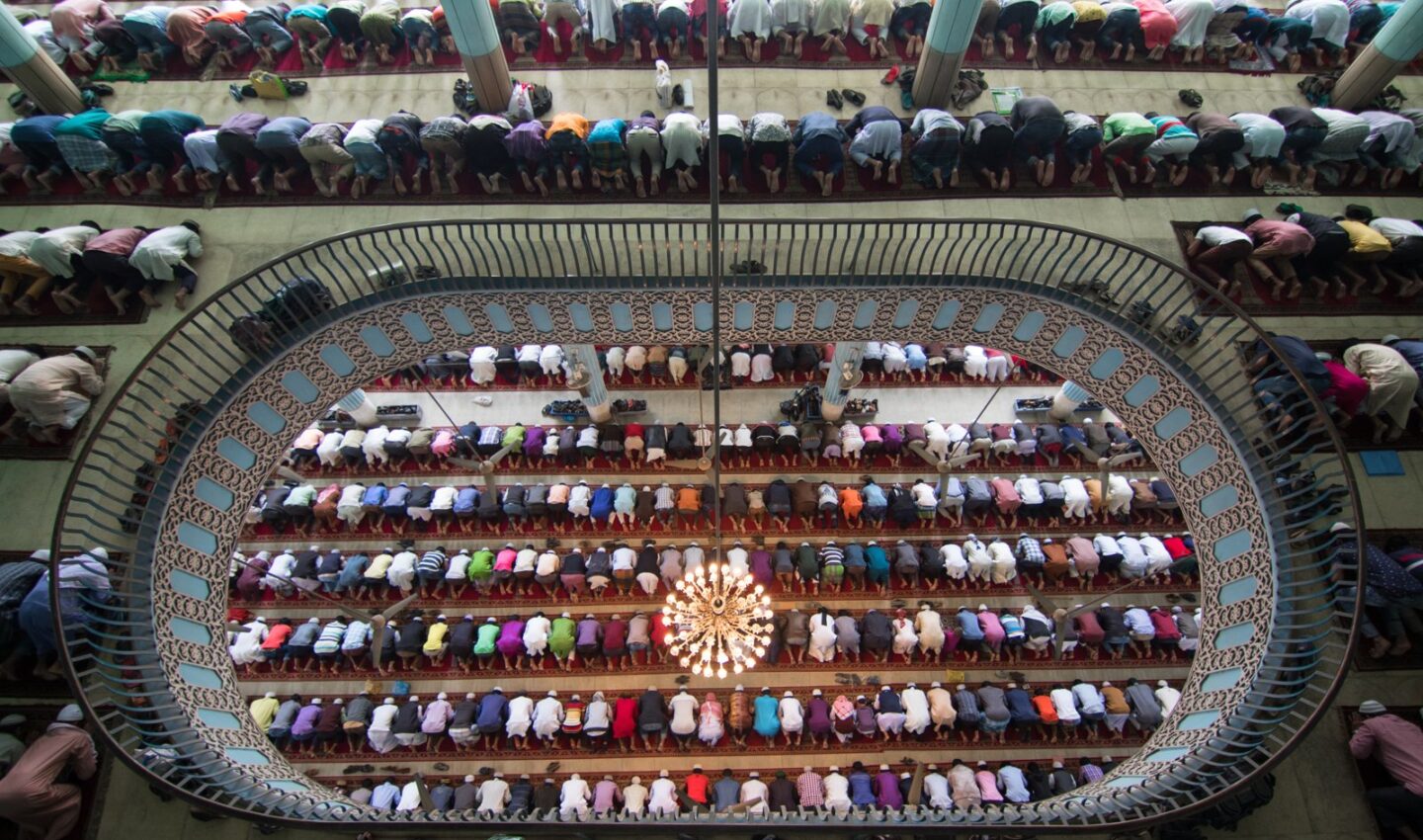
At popular mosques, togetherness becomes visible overflow. Halls fill row by row, then courtyards, then shaded pavements and side areas, where latecomers unroll mats on any clean patch and join the congregation from the street. Nobody finds this strange. Drivers navigate the parked cars with patience, passers-by lower their voices, and for a short while the mosque’s walls become more of a suggestion than a boundary.
The sermon — the khutbah, delivered in Arabic across the UAE — is listened to by this whole gathered crowd, many following its themes through translation apps, summaries and the conversation afterwards. Then comes the prayer itself, two units, shorter than visitors expect, and the great exhale: heads turning in greeting, hands reaching for hands, the courtyard erupting into talk.
📸 Follow @dxbtalk1 on Instagram for daily Dubai in photos →
The Hour After: Dubai at Its Warmest
If the prayer is the heartbeat, the hour after is the smile. Mosque steps become reunion venues — friends not seen all week, cousins visiting from Sharjah, the colleague you only ever see in this courtyard. Children compare their Friday outfits and negotiate ice cream. Elders are escorted to cars with a tenderness that would melt the hardest commuter. Invitations fly: lunch at ours, no excuses.
Restaurants and cafeterias near mosques do their happiest trade of the week. Family lunch — at home around a shared platter, or out at a favourite place kept for Fridays — stretches long into the afternoon, and the city’s weekend ease begins here, in the unhurried drift from mosque to table.
Practical Notes for the Friday Crowd
- Worshippers: arrive early — the best rows, shade and parking go quickly, and exact prayer times shift with the seasons, so check the official calendar for the day.
- Drivers: expect brief, dense congestion around mosques before and after Jummah; patience is the local custom.
- Visitors: Friday midday is a wonderful time to witness old Dubai’s rhythm — observe from a respectful distance, and plan shopping around the short souk closure.
One Hour, One City
Ask long-time residents what they would show a visitor to explain Dubai, and many skip the tower queues and say: come to Jummah. Not to watch, exactly — to feel it: a global city of strangers deciding, weekly and willingly, to stand in the same rows at the same hour and then eat together afterwards. Towers can be built anywhere. This takes a people. And every Friday, Dubai’s people do it again.
Week by week, year by year, the hour repeats — through Ramadan and summer, through boom years and quiet ones, through the childhoods of children now bringing children of their own. Empires of glass rise around it and the hour does not change its nature. Jummah was bringing this city together long before it was a city of towers, and on the evidence of any Friday you care to witness, it will be doing so long after today’s towers are the old town.