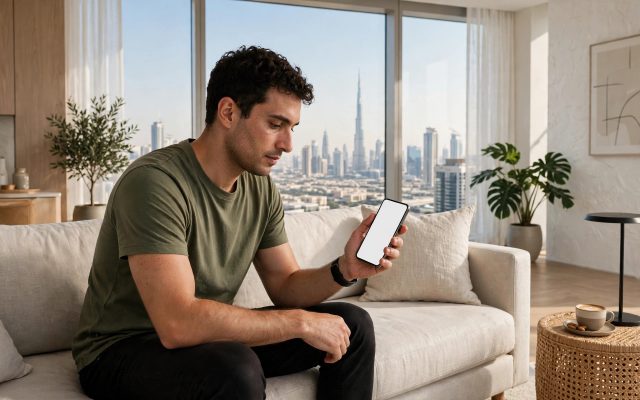
Ask a Dubai resident what time lunch is and they may answer with a prayer. Life in this city runs on two clocks — the office clock, and the older, gentler clock of the five daily prayers, whose times shift a little each day with the sun. For newcomers and visitors, the system can look mysterious: why was Dhuhr at one time last month and twenty minutes earlier today? This guide explains how the daily prayer schedule in Dubai works, in plain terms, so you can plan around it with confidence — and stop being surprised by it.
The Five Daily Prayers
The day is framed by five prayers, each tied to the position of the sun rather than to a fixed hour. Fajr is prayed at dawn, before sunrise. Dhuhr falls just after the sun passes its midday peak. Asr comes in the mid-to-late afternoon. Maghrib is prayed just after sunset. Isha is the night prayer, prayed after the twilight has faded. There is also a sunrise time, often listed as Shurooq, which marks the end of the Fajr window rather than a separate prayer.
Because the times follow the sun, they drift through the year. In summer, Fajr in Dubai can be very early and Isha late; in winter the whole pattern compresses, with sunset — and Maghrib — arriving in the late afternoon. The daily change is small, often a minute or two, but across a season it reshapes routines completely, which is why nobody in Dubai quotes prayer times from memory for long.
Where the Official Times Come From
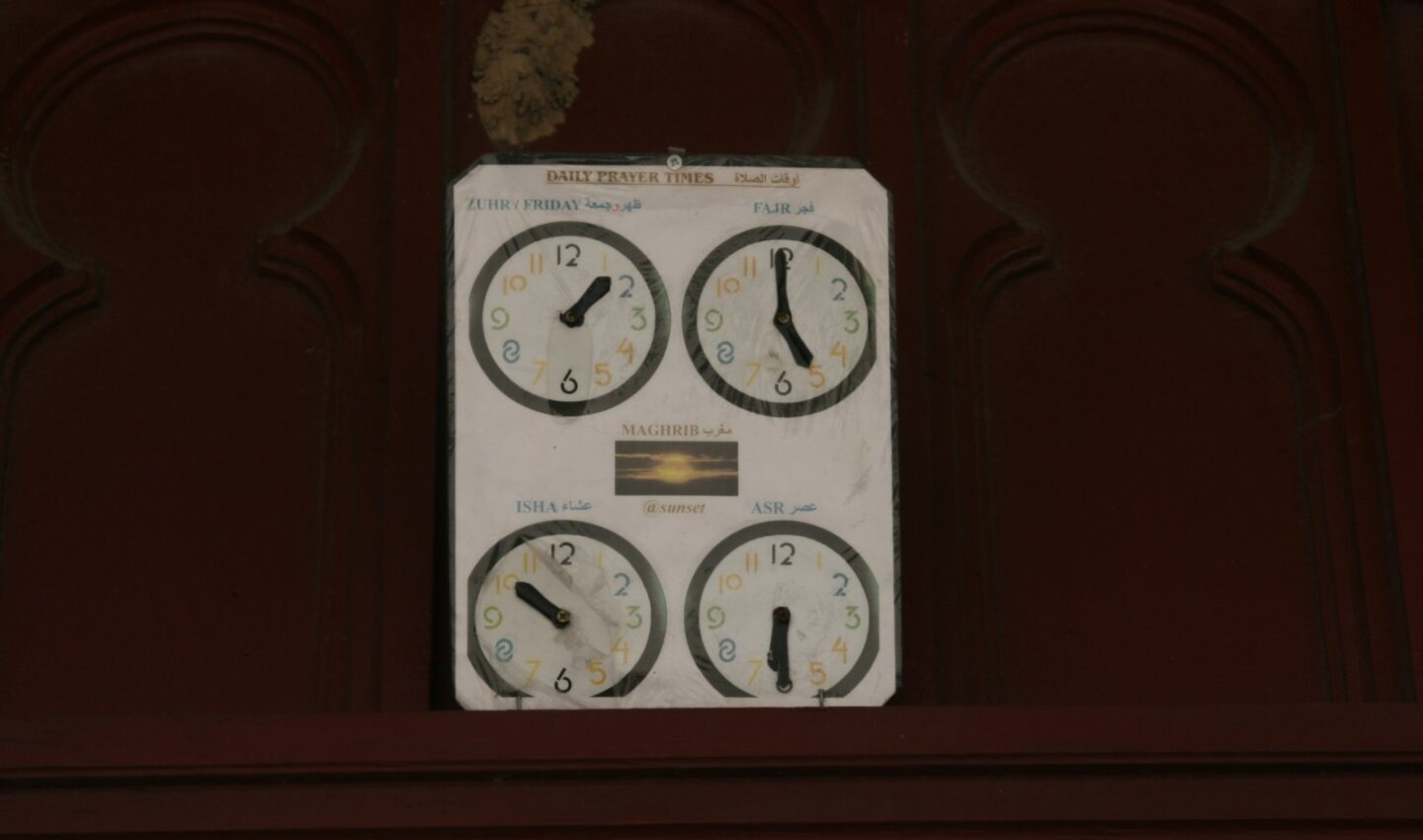
The UAE publishes an official prayer calendar, and mosques across Dubai follow it. The adhan — the call to prayer — sounds from minarets at the appointed times, effectively announcing the schedule to the whole city, and most residents also keep a prayer times app on their phones that follows the official calendar for their location. Newspapers and the displays inside mosques and mall prayer rooms list the day’s times as well.
The practical advice is absolute: always check the official UAE calendar or a trusted prayer times app for the specific day. Timetables in hotel leaflets, old blog posts and last month’s screenshot are all quietly out of date. It also helps to know that between the adhan and the congregational prayer in a mosque there is usually a short interval, so the prayer in the mosque begins a little after the listed time — mosque noticeboards show the local arrangement.
📸 Follow @dxbtalk1 on Instagram for daily Dubai in photos →
How the Schedule Shapes the Day
Once you see the pattern, Dubai makes more sense. Meetings avoid straddling Dhuhr where possible. Traffic has a pre-Maghrib pulse as people head home or to the mosque. Restaurants plan around the Maghrib rush in Ramadan, when it marks the breaking of the fast. Shops in older districts pause briefly at prayer times. Gym sessions, school runs, boat trips and beach plans all flex gently around a moving timetable that everyone shares.
Friday has its own shape: the Jummah sermon and prayer replace Dhuhr in the middle of the day, and the city pauses more deeply. Ramadan rearranges the edges too, adding Taraweeh prayers after Isha. None of this is announced with any drama — it is simply the rhythm residents grow up inside, and newcomers absorb within a few weeks.
Tips for Visitors and New Residents
- Download a prayer app set to Dubai and the official UAE method; turn on the alerts you actually want.
- Plan Fridays and sunsets carefully — Jummah and Maghrib are the two times that most affect traffic, bookings and queues.
- Expect small daily shifts. A tour, transfer or tee time planned to the minute should leave margin around prayer times.
- Listen for the adhan. In much of the city it remains the simplest timetable of all: when you hear it, a prayer time has arrived.
A Clock Made of Light
There is something quietly beautiful about a city timed by the sun. Clocks were invented to free us from daylight, yet Dubai keeps one foot in the older world, where dawn, noon and dusk still call the pattern of the day. Learn the five names, check the day’s times each morning, and the city’s rhythm will start to feel less like a puzzle — and more like a pulse you share.