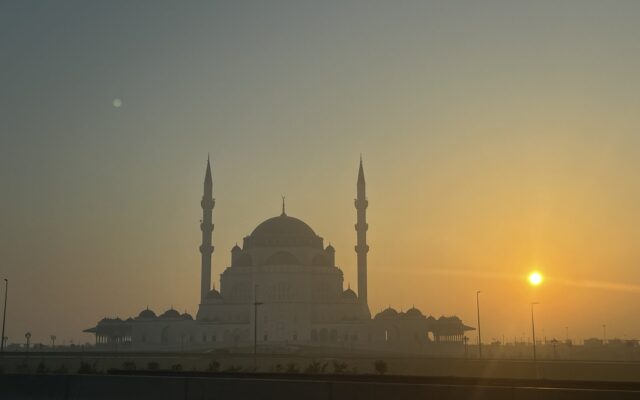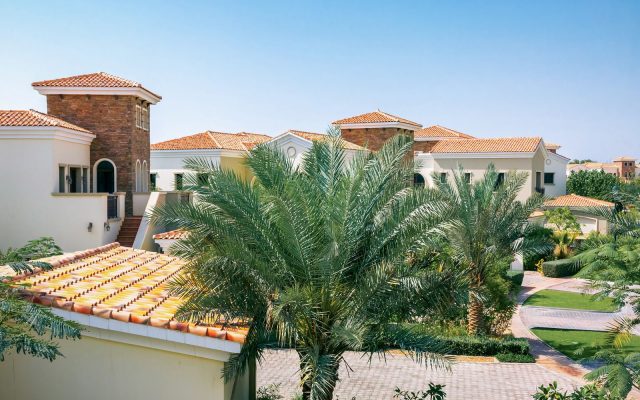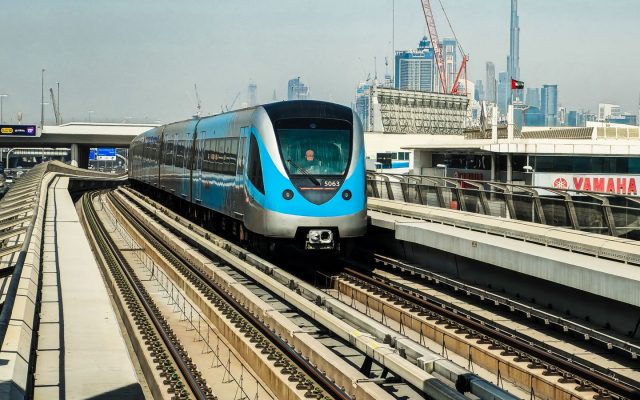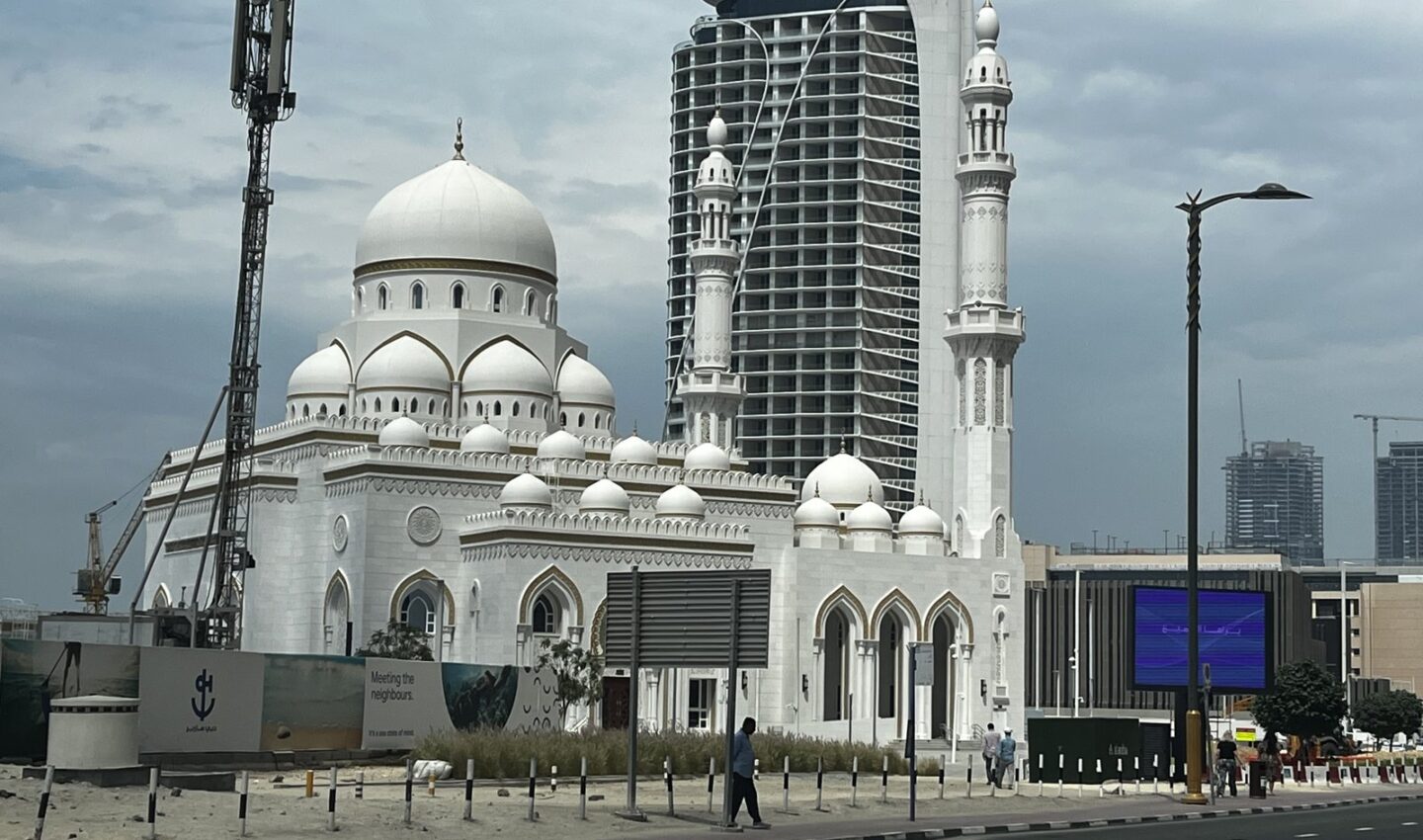
In Dubai’s north east, beyond the airport’s flight paths and the busy border roads, Muhaisnah spreads out in villa blocks and school streets — a district built for families, and for the workers whose accommodation areas nearby house many of the people who keep the whole city running. It asks little attention from the rest of Dubai, and gets on contentedly without it. What holds Muhaisnah together, residents will tell you, is the mosque: or rather, the mosques, plural — the resident prayer houses threaded through the villa blocks, and the larger congregations where, at sunset especially, the district’s two worlds meet in the same rows.
Villa-block mosques and family rhythms
For Muhaisnah’s families, prayer is gloriously local. Neighbourhood mosques serve the villa streets closely, so the daily pattern runs on foot: children walking with fathers to Maghrib, grandmothers making the short trip with a neighbour’s arm to lean on, teenagers cycling home from Isha through quiet streets. In a district full of schools, the mosque and the school gate between them organise family life — homework, dinner and the evening prayer slotting together with the ease of long practice.
The five prayers keep their usual, shifting appointment with the sun, and residents check the official UAE calendar or a prayer times app for the day. Fajr here has a special stillness — villa streets, birdsong, and the soft shuffle of the early congregation. Dhuhr and Asr fit around school hours and office commutes towards Deira and Festival City. By Maghrib the whole district seems to exhale at once.
Where the district’s worlds meet
Muhaisnah’s wider area — many in Dubai know its labour accommodation side by the name Sonapur — is home to thousands of the city’s workers: builders, drivers, technicians and service staff from across South Asia, Africa and beyond. Their mosques, and the shared congregations of the district, are the centre of rest, dignity and friendship in lives spent far from home. At Maghrib and on Fridays, the sight is one of the most moving in Dubai: men arriving from sites and shifts in great, good-humoured numbers, washing away the day, and standing for prayer in rows where a foreman and a first-week labourer are indistinguishable — and, for that hour, home.
Friday gathers everyone at full strength. Families arrive early from the villa blocks; workers arrive in groups that fill the approaches; the sermon in Arabic carries over a congregation of many mother tongues; and afterwards, the greetings take their own sweet time. For workers whose families are a flight away, these Friday communities are family — the people who notice your absence, share their lunch, and make a district of accommodation blocks into a place with a heart.
📸 Follow @dxbtalk1 on Instagram for daily Dubai in photos →
Ramadan in the north east
When Ramadan comes — its dates fixed each year by moon sighting and official announcement — Muhaisnah’s mosques carry the district through its evenings. Iftar is shared generously, with workers and families breaking the fast side by side; nobody eats alone who does not choose to. The night prayers run deep and late, and the streets between mosque and home stay gently busy with tea, conversation and children enjoying the upside-down Ramadan clock. Charity moves quietly through the district all month, much of it organised by no one in particular — which means, in practice, by everyone.
- For families: villa-block mosques make daily prayer a walking habit children absorb early.
- For workers: mosques near the accommodation areas are the centre of rest-day life, friendship and Friday belonging.
- For newcomers: a few Fridays in the same mosque and the district will know your face — and then your name.
An unshowy district, a deep faith
Most of Muhaisnah’s mosques are for their worshippers, not for visitors — non-Muslim entry varies by mosque, and the guided-visit place in Dubai remains Jumeirah Mosque. But the story of this district does not need a tour to be understood. It is told every evening at sunset, when the villa streets and the workers’ blocks turn towards the same call, and a quiet corner of the north east becomes, for twenty minutes, the whole world praying in one place.
Dubai’s famous districts get the photographs. Muhaisnah gets something rarer: a community that proves, daily and without display, that the mosque’s oldest job — holding people together — is still being done beautifully.