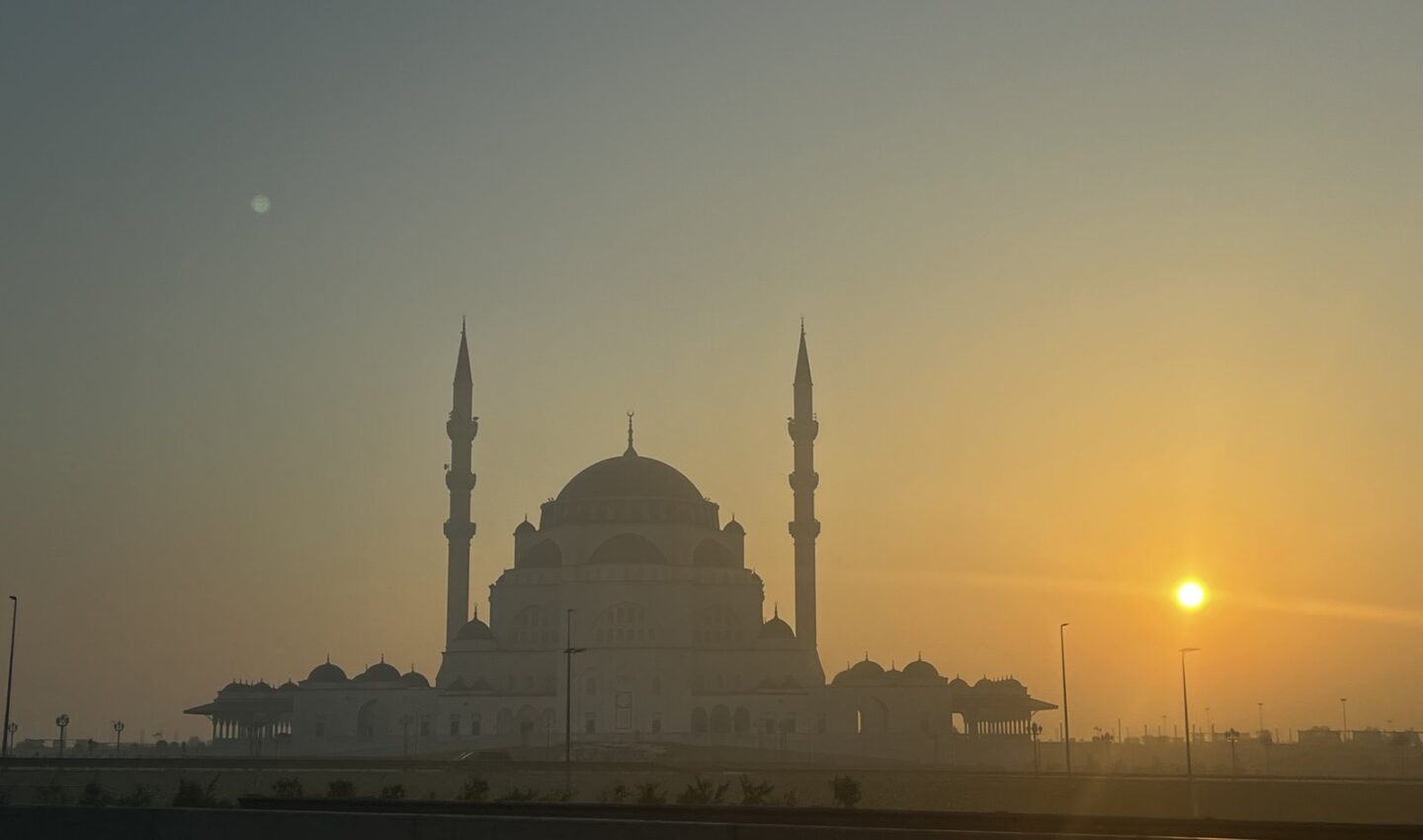
Al Qusais sits at Dubai’s shoulder, hard against the Sharjah border, and it has the energy of a place with two cities in its life. Its apartment blocks and schools serve families who may work in Dubai, Sharjah or both; its industrial edges employ thousands more; and its streets carry a friendly, unpretentious bustle from dawn to late evening. For all these people, Al Qusais’s mosques are simply home ground — the places where the neighbourhood gathers, where children are raised in the community’s sight, and where Friday arrives each week like a small festival. This is a resident’s guide to praying here.
A neighbourhood that prays close to home
Al Qusais is built at a human scale, and its prayer life matches. Neighbourhood mosques serve the residential blocks closely, so for most families the five daily prayers involve a short walk rather than a journey — down the stairs, along the pavement, into a hall full of people from your own streets. That proximity produces the best kind of mosque community: one where attendance is easy, faces become familiar fast, and the elderly and the very young can both manage the trip without heroics.
The daily pattern will be familiar across northern Dubai. Fajr is the quiet, devoted start, well attended by the district’s early risers and the workers heading for the first metro and buses. Dhuhr and Asr catch the school and office breaks — Al Qusais is full of schools, clinics and small businesses, many with staff prayer arrangements or a mosque moments away. Maghrib gathers families home from the day; Isha sends everyone to bed at peace with the street. Prayer times change daily, so residents check the official UAE calendar or a prayer times app for the day as a matter of routine.
Friday: the busy, beloved crush
Ask anyone in Al Qusais about Friday prayer and they will give you the same affectionate warning: go early. The midday congregation here is famously full — a district of families and workers, all arriving at once, in their Friday best. Halls fill, courtyards fill, and the streets around the mosques take on a carnival of greetings afterwards as hundreds of handshakes are exchanged and lunch invitations fly. The sermon is in Arabic, as everywhere in the UAE, but the crowd around it speaks the full northern-Dubai mixture: Arabic, Urdu, Hindi, Malayalam, Bengali, Tagalog and more.
For newcomers, Friday is both the best introduction to Al Qusais and the one day that needs planning. Families build the morning around it — an unhurried breakfast, clothes laid out, an early start — and that small discipline becomes one of the week’s pleasant anchors. Children, in particular, remember Fridays here: the crowd, the sweets, the feeling of the whole street going somewhere together.
📸 Follow @dxbtalk1 on Instagram for daily Dubai in photos →
Workers, students and the border life
Al Qusais’s position gives its mosques a double congregation. Alongside settled families are the district’s workers — in the industrial areas, workshops, warehouses and services — and a large student and young-worker population drawn by the rents and the metro. At prayer, the border city’s seams disappear: the Sharjah commuter, the Dubai schoolteacher and the technician from the industrial zone stand in one row, and afterwards each returns to a different emirate, a different job, the same Friday feeling.
Ramadan intensifies everything, in the best way. Its dates depend on the sighting of the moon and the official announcement, and when it comes, Al Qusais’s mosques host the district’s evenings: shared iftars at sunset, rows deep into the night at Taraweeh, and a gentle, generous tiredness shared by the whole street. Charity here is practical and local — food shared, lifts offered, newcomers to the district folded in without fuss.
- Families: the walk-to-mosque layout makes it easy to build children’s prayer habits early.
- Workers: mosque and workplace prayer options cover shift patterns across the residential and industrial sides.
- Visitors: most mosques are for worshippers, with guided visits available instead at Jumeirah Mosque; admire Al Qusais’s from the street on a Friday to see the community at full strength.
The border district with its heart at home
Al Qusais could easily have become a place people merely sleep between two cities. Its mosques are a large part of why it did not. By gathering the district — families, workers, students, elders — into the same rooms five times a day, they turned a border suburb into a community with a centre. Pray here a few Fridays running and you will stop being new. In Al Qusais, that is not a metaphor. It is practically a timetable.