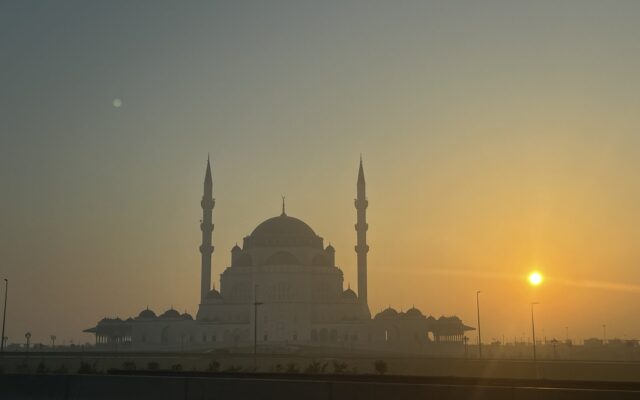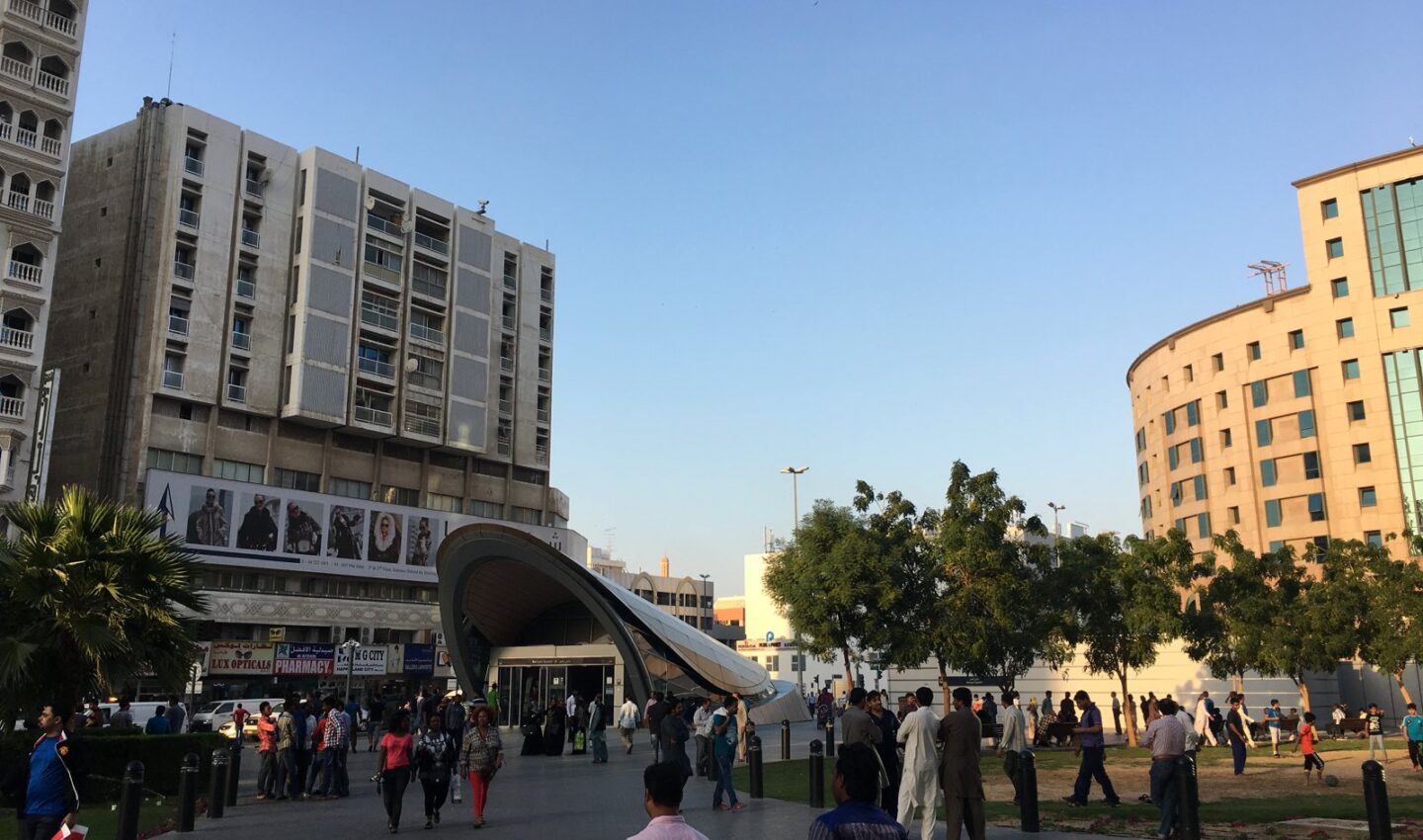
There is a moment, repeated five times a day in Naif and around Baniyas, that captures old Deira perfectly. A trader is mid-negotiation over perfumes; a porter is wheeling boxes towards a dhow-bound truck; a shopper is comparing gold in a bright window. Then the adhan rises from a nearby minaret, and — without drama, without announcement — the tempo of the whole trading quarter adjusts. Shutters half-close. Conversations wrap up kindly. Men stream through lanes they could walk blindfolded, towards the small mosques that have served these streets for as long as anyone can remember.
Naif and Baniyas form the trading heart of Deira: the perfume souk, the gold souk, electronics shops, textile stores and a maze of wholesale businesses stacked between the Creek and the inner streets. It is dense, noisy, fragrant and wonderful. And threaded through it, never more than a short walk away, are mosques and prayer spaces sized for the souk’s rhythm — modest, welcoming and busy from dawn to night.
Prayer built into the trading day
Commerce elsewhere in the world treats prayer as an interruption. In the souks, it is simply part of the schedule, like the abra crossings or the afternoon lull. Shopkeepers take turns so a store is never quite abandoned; partners watch each other’s counters; a handwritten note might appear in a window and nobody thinks it strange. The trust this requires — leaving your goods in a neighbour’s care several times a day — is one of the souks’ oldest currencies, and it still circulates freely.
The congregation tells the district’s story. Deira’s traders come from everywhere: Emirati and Gulf merchants, Iranian and Indian wholesalers, Pakistani and Bangladeshi shop staff, East African buyers, Filipino assistants. At prayer they stand in the same rows, and afterwards business resumes in four or five languages at once. If you want to understand how Dubai became a trading city of 200 nationalities, skip the conference hall and stand quietly near a Naif mosque at Asr.
Small mosques, great devotion
Do not come to Naif looking for monumental architecture. Come looking for devotion at street level. These are working mosques: cool prayer halls a few steps from the heat of the lanes, ablution areas busy all day, shelves of worn sandals by the door. Their beauty is in their use — the way a hall fills within minutes of the call, the way latecomers find spaces made for them, the way an elderly trader is guided to a chair by young men who compete gently for the honour.
Friday transforms the quarter. The midday prayer draws traders, workers and residents in such numbers that arriving early becomes essential, and the streets around the mosques take on a festival calm — trade paused, families gathering, the whole district breathing out. Prayer times, here as everywhere in the city, shift daily; traders check the official UAE calendar or a prayer times app for the day and plan stock deliveries and souk walks around it almost without thinking.
📸 Follow @dxbtalk1 on Instagram for daily Dubai in photos →
A word for visitors
Visitors exploring the souks will hear the adhan and see the prayer rhythm at close quarters, and it is one of the most authentic experiences old Dubai offers. The respectful approach is simple: step aside for worshippers hurrying to prayer, keep voices low near mosque doors at prayer times, and remember that most mosques are for worshippers rather than tours — non-Muslim entry varies by mosque, with Jumeirah Mosque the well-known guided-tour exception. Admired from the street, Naif’s mosques still reward you: minarets rising over the rooftops, the call echoing off the lanes, and that visible pause in the middle of the city’s most relentless bargaining.
- Best moments to feel it: Maghrib, when the souks glow and prayer and evening trade overlap; and Friday midday, when the whole quarter gathers.
- What you will notice: shops entrusted to neighbours, rows of many nations, and handshakes that are also business relationships of decades’ standing.
The souk and the mosque, side by side
Naif and Baniyas remind us that in Dubai, faith and trade were never separate stories. The same streets produced both, the same families built both, and the same daily call still gathers both into one room. The gold in the windows is beautiful, certainly. But the sight of a hundred traders leaving it all behind for ten quiet minutes, five times a day, might be the most valuable thing in the souk.