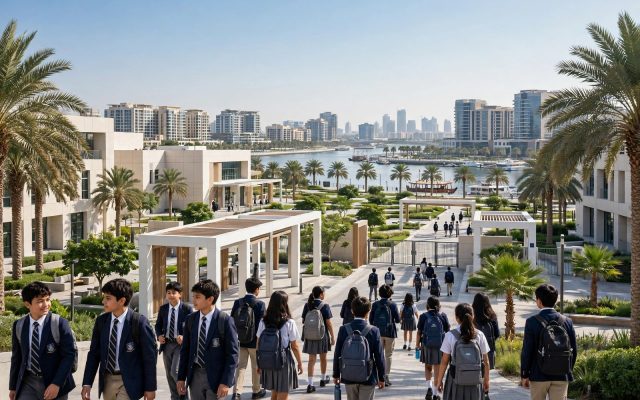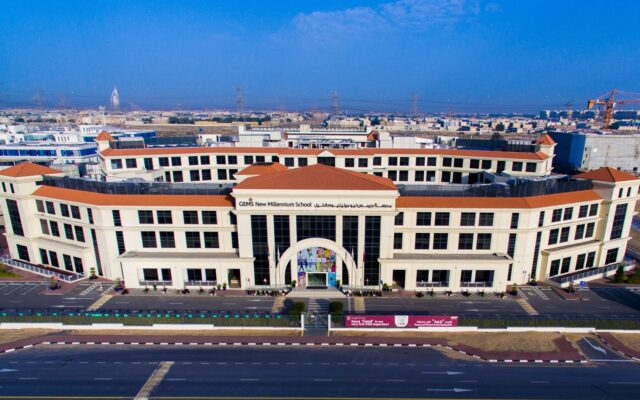
Where you study in Dubai and where you live are rarely the same place, and the daily journey between them shapes student life more than most prospectuses admit. The city’s universities cluster mainly in Dubai International Academic City (DIAC) and Dubai Knowledge Park (DKP), two districts with very different transport profiles. Understanding your options — Metro, buses, university shuttles, car shares and driving yourself — before you choose accommodation can save you hours every week.
The Two Big Campuses, Two Different Commutes
Dubai Knowledge Park sits on Al Sufouh, close to the Dubai Internet City Metro station on the Red Line, with the tram and frequent buses along the coast. For students living anywhere along the Metro corridor — Marina, JLT, Al Barsha, Deira or Bur Dubai — DKP is one of the easiest campuses in the city to reach without a car.
Dubai International Academic City, home to a large cluster of universities, lies inland near Al Warqaa and Mirdif. It has no Metro station on its doorstep; the nearest stations require a connecting bus or a car journey. Many DIAC institutions therefore run shuttle buses from Metro stations and major residential areas. If you are considering a DIAC university, the shuttle timetable is not a footnote — it is a core part of the course, and you should read it before signing a tenancy contract.
Metro and Bus: The Backbone
The Metro’s Red and Green lines cover the older city and the Sheikh Zayed Road corridor well, and feeder buses connect stations to surrounding districts. Fares are paid with a Nol card and are zoned; students may be eligible for concessionary arrangements, which are worth applying for early in the year. The system’s great strength is predictability: a Metro journey takes the same time at 8am as at noon, which cannot be said of any road in Dubai.
Practical tips from seasoned student commuters: travel before the sharpest peak when your timetable allows, use the journey for reading or recorded lectures, and learn your station’s feeder bus times rather than assuming a bus will simply appear. In the summer months, the walk between a bus stop and a campus gate matters — factor shade and distance into your route, not just minutes on a map.
Free Dubai Tools
Dubai, in Your Hands
📸 Follow @dxbtalk1 on Instagram for daily Dubai in photos →
University Shuttles and Organised Transport
Many universities operate their own transport, either free or for a termly fee, running from accommodation blocks and popular residential areas such as International City, Dubai Silicon Oasis, Sharjah border districts and Jebel Ali. Schedules are built around teaching hours, which is convenient until you want the library in the evening or a society event after the last bus. Ask transport offices about return times, exam-period arrangements and how places are booked. Some students combine shuttles in the morning with a Metro or taxi home later — a hybrid plan that usually beats owning transport on a student budget.
Car Shares, Taxis and Ride-Hailing
Informal car shares are a long-standing feature of student life at outlying campuses. Classmates living in the same building or district split fuel and Salik toll costs, rotate driving, and gain a door-to-door journey no bus can match. If you join one, agree the money and the ground rules — lateness, cancellations, exam weeks — at the start, in writing if necessary. Friendships survive car shares best when the admin is boring.
Taxis and ride-hailing apps fill the gaps: early lectures, late finishes, group trips where four fares split one car. Used daily they are the most expensive option by far, but as a backup plan they rescue many a timetable.
Driving Yourself
Many students in Dubai learn to drive during their studies or convert an existing licence, depending on their nationality and the rules that apply to them. Owning a car brings freedom and real costs — lessons and tests if you are starting from scratch, then purchase, insurance, registration, fuel, parking and maintenance. University parking policies vary, and some campuses charge or restrict student parking. Run the full annual numbers before assuming a car is the economical answer; for Metro-corridor students it rarely is.
Choosing Where to Live
The golden rule is to commute on paper before you commit. Time the actual journey at the actual hour, including the walk at both ends, in both directions. A cheaper room forty minutes further away can cost you an hour a day — over a three-year degree, that is a significant slice of your life. Students who choose accommodation around their campus’s transport reality, rather than around rent alone, consistently report the easier degree.
DXB FACT — DID YOU KNOW?
150 million flowers, in the desert
- Miracle Garden recordlargest natural flower garden on Earth
- Flowers150 million+
- Area72,000 m²
- Star displaya life-size Emirates A380 in flowers
Source: Guinness World Records
A new Dubai fact every dayRead more »
Reader poll
Poll of the Day
A fun reader poll, just for curiosity — not an official survey. A new question arrives every day.