Every serious art city has a district that does the unglamorous work — the cheap floors, the loading bays, the room to make a mess — and in Dubai that district is Al Quoz. Its role in the city’s art and culture scene is not decorative. Al Quoz is where Dubai’s culture is physically produced: framed, printed, rehearsed, stored and shipped, as well as shown. Understanding the district means understanding how a young city built itself an art scene from the warehouse up.
The Engine Room: Production, Not Just Display
Galleries are the visible tip of Al Quoz, but the district’s deeper function is production. Framing workshops, print studios, art handlers, fabricators, photographers and suppliers fill the streets behind the avenues of display. This matters more than it sounds: an art scene that can only import finished work stays a showroom, while a scene that can make work becomes a culture. Al Quoz gave Dubai’s artists the industrial base to produce at serious scale — and gave collectors and institutions a reason to treat the city as a place where art happens, not merely where it is sold.
A Stage for the Region
Al Quoz also became Dubai’s listening post for the wider region. Its galleries champion contemporary art from across the Middle East and beyond, and during the city’s art weeks the district is where the international crowd — curators, collectors, critics — comes to read the region’s temperature. Exhibitions here routinely carry conversations that began in Beirut, Tehran, Karachi or Cairo into a Dubai room. In a city built on connection, Al Quoz is the node where the region’s art connects to the world’s market and back again.
📸 Follow @dxbtalk1 on Instagram for daily Dubai in photos →
The Community Function
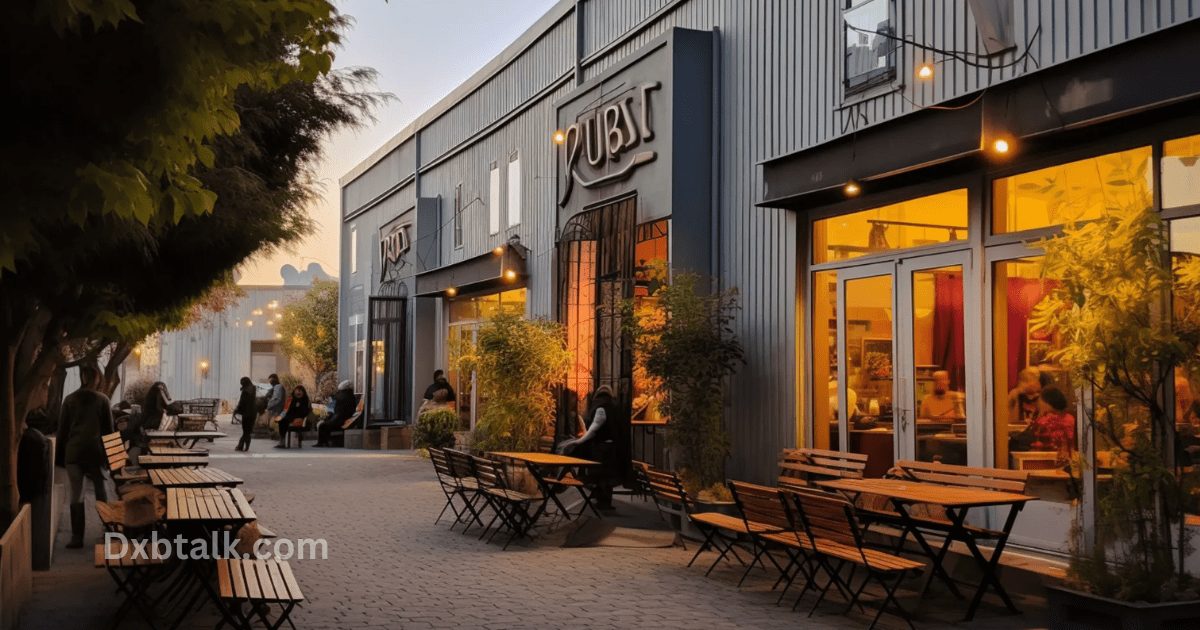
Art scenes die of isolation, and Al Quoz’s street plan is an accidental cure: everything is a short walk from everything else, so openings spill into shared courtyards, artists share workshops and cafés, and the district’s festivals and open days turn professional infrastructure into public occasion. The audience this builds is different in kind from a mall’s — people come to Al Quoz on purpose, for culture, and stay for hours. That density of intention is why the district’s community programming, its cinema, its bookshops and its coffee counters matter to the scene’s economics as much as any single gallery.
The Bridge Between Heritage and the New
Perhaps the district’s subtlest role is translational. Dubai’s heritage districts — Al Fahidi, the Creek, Deira — hold the city’s past; its towers hold its ambitions. Al Quoz sits between them, and its programming constantly ferries ideas across: traditional crafts re-examined by contemporary artists, archival material in modern shows, calligraphy beside installation. A young city needs somewhere the old and the new negotiate in public, on equal terms, without either being turned into a museum or a mall. In Dubai, that negotiating table is a warehouse district.
The Talent Pipeline
One more function rarely gets credited: Al Quoz is where Dubai’s art professionals are made. Gallery assistants become curators here; studio technicians become artists; interns at the district’s foundations and festivals graduate into the institutions of the whole region. The district’s density creates an informal university — openings as seminars, café conversations as supervision, warehouse jobs as the practical syllabus. A city can import exhibitions overnight, but it cannot import a generation of people who know how art is made, moved, hung and sold. Al Quoz grew that generation locally, and every museum, fair and collection the UAE has built since is staffed by its graduates.
Why the Role Endures
Districts like Al Quoz are fragile everywhere — success raises rents, and rents evict the culture that created the value. That Dubai’s art district has held its working character this long is partly luck, partly the protection of an industrial grid that stays cheaper than the shoreline, and partly deliberate: the institutions anchored here understand what the district is for. As long as the frames are still made on these streets and the openings still crowd these courtyards, Al Quoz will remain what it became — not a backdrop to Dubai’s culture, but its engine room, its stage and its commons, all in one unlikely industrial estate.