

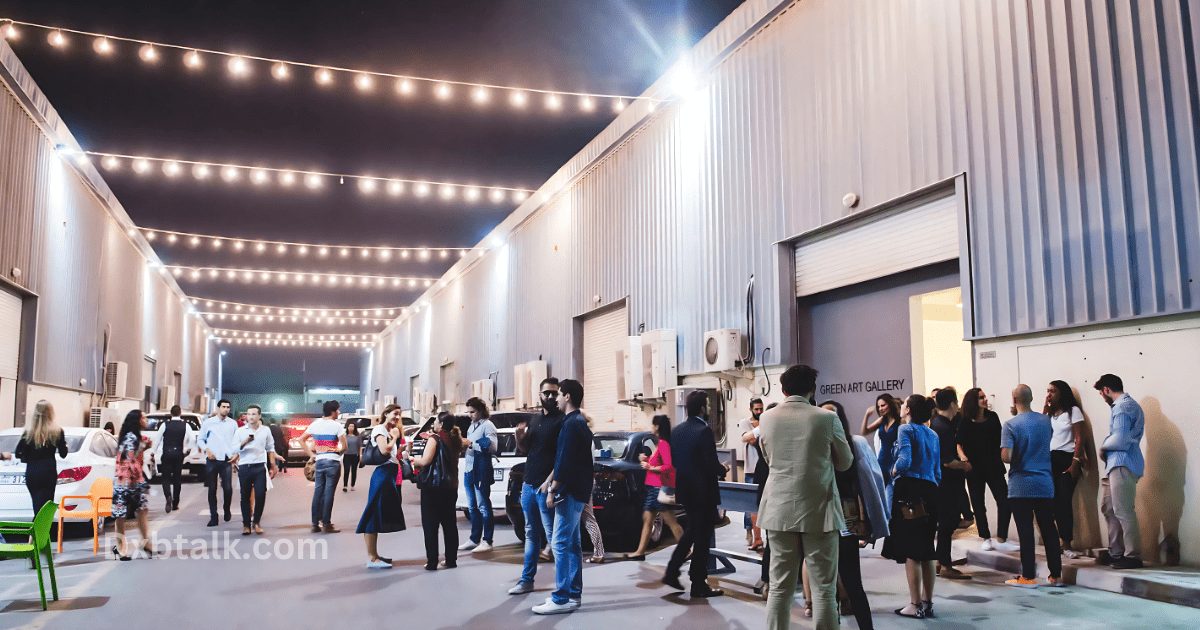
Al Quoz hides in plain sight. From Sheikh Zayed Road it looks like what it partly still is — a grid of warehouses behind the showrooms — yet inside that grid sits Dubai’s art district: galleries, studios, a cinema, cafés and workshops folded into an industrial estate. First-time visitors often drive in, see shutters, and nearly drive out again. This guide exists to stop that happening: how Al Quoz is laid out, where to start, and how to read a district that rewards those who arrive on foot and on purpose.
First, the Geography
Al Quoz is divided into numbered areas, and the art scene concentrates mainly in Al Quoz 1, around Alserkal Avenue, with creative businesses scattered through the neighbouring blocks. The district sits inland from Al Safa and Umm Suqeim, a short taxi ride from the Mall of the Emirates side of town. There is no single grand entrance. The practical approach is to aim for Alserkal Avenue as your anchor — it is the densest cluster of galleries and the easiest place to orient yourself — then expand outward to The Courtyard and the surrounding streets as confidence grows. Parking is street-and-lot, dress is casual, and the district keeps gallery hours rather than mall hours: plan a daytime visit, and check the day’s openings before you go.
The Anchor: Alserkal Avenue
Alserkal Avenue converted a row of warehouses into the country’s best-known arts address, and it still works as the district’s front door. Within a few hundred metres you can move between major galleries — The Third Line’s programme of contemporary Middle Eastern art, Carbon 12’s international contemporary roster, and a rotating cast of neighbours — plus the district’s independent cinema, concept stores and cafés. Openings cluster here during art season, and the Avenue’s own festivals turn the whole street into an event. If you have only two hours for Al Quoz, spend them on this street and its immediate lanes; it is the district in concentrated form.
📸 Follow @dxbtalk1 on Instagram for daily Dubai in photos →
Beyond the Avenue: Studios, Spaces and The Courtyard
The wider district is where Al Quoz stops performing and starts working. Artist studios and creative businesses occupy the surrounding warehouses — some open to visitors, many part of workshop and open-studio programming — and institutions such as Art Jameel grew from this ecosystem of making. A short hop away, The Courtyard offers the district’s shaded, leafy counterpoint: galleries, boutiques and cafés around a gentler courtyard setting, ideal for the second half of a visit when your eyes need lower stakes and better coffee. The contrast is the lesson: Al Quoz is not one venue but a working landscape, and wandering it — with a map app for the numbered streets — is the real experience.
A Short History Worth Knowing
The transformation has a timeline worth carrying in your head as you walk. Al Quoz spent decades as pure industry — the workshops and warehouses serving the construction of the newer city rising around it. The galleries arrived in the 2000s, drawn by the only thing young art scenes ever really need: large, cheap, flexible space on the edge of an expensive city. Alserkal Avenue’s conversion of a warehouse row into a formal arts address in the following decade made the district legible to the wider world, and the cafés, cinema, studios and festivals followed the galleries the way they always do. What you are walking through is therefore not a themed attraction but a genuine urban succession — industry, then art, then culture — still visibly layered in the same streets. The factories that remain are not a failure of the theme. They are the reason the theme exists.
Events, and How to Time a Visit
The district’s calendar breathes with the art year. Exhibition openings cluster in the cooler months and around the city’s art weeks; the Avenue’s festivals and open days add markets, talks and performances; workshops run year-round for those who want to make something rather than only look. Practical rhythm: arrive late morning, galleries until lunch, The Courtyard for the pause, one more street of warehouses in the afternoon. Evenings belong to the cinema and special events. Al Quoz was hidden once — an industrial estate the city drove past. For anyone willing to slow down inside it, it is now the most rewarding cultural walk in Dubai, precisely because nothing about it was built to be looked at from a car.






Join the conversation