Old Dubai keeps the hours photographers dream about. Long after the new city has started its day in glass and traffic, the historic districts around the Creek are still waking up — and in winter, when sunrise arrives at a civilised hour and the light comes in low and honey-coloured, the first two hours of the day belong to anyone carrying a camera. This is a route rather than a list: one morning’s walk through Bur Dubai and across to Deira that strings together the strongest images, with the practical notes that separate photographs from snapshots.
Start in Al Fahidi, just after dawn
Begin in the Al Fahidi Historical Neighbourhood — Bastakiya on older maps — within the first hour after sunrise. The lanes here are narrow and the wind towers tall, so the early light does not flood the quarter; it rakes. One wall glows sand-gold while the lane below stays in blue shade, gypsum and coral-stone details stand out in relief, and the neighbourhood cats conduct their morning inspections in deliberate patches of sun. Winter adds two gifts summer never offers: you can walk comfortably for hours, and on still mornings a faint cool haze softens the far ends of the lanes, giving photographs a depth that hard summer light flattens away.
Work slowly here. The quarter rewards photographers who stand still — a doorway, a carved wooden shutter, the clean geometry of a wind tower against the morning sky. The courtyard cafés begin opening as the morning unfolds, and when the light starts to harden, they make a natural place to pause and review what you have.
Down to the Creek: the working waterfront
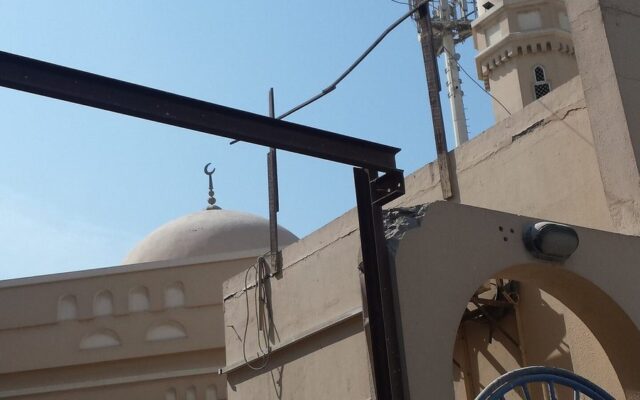
From Al Fahidi, drop down to the Bur Dubai abra station as the Creek hits its stride. This is the city’s oldest working view: abras shunting across the water in a constant, unhurried rhythm, canopies and passengers lit from the side, and Deira’s skyline with the minarets of Baniyas Road drawn up behind them. In winter the Creek often carries a skin of mist in the first minutes of light, and on the stillest mornings the reflections double everything — dhows, towers, wheeling gulls — before the breeze arrives to break the surface.
Walk the Bur Dubai bank towards the cargo dhows, where crews load goods for ports across the Gulf and beyond in a scene that has changed remarkably little in a century. It is a working waterfront, brisk and purposeful, so photograph it as you would any workplace: dockside life, cranes, stacked cargo and boats from a respectful distance. Portraits are a different matter — ask first, as covered below.
📸 Follow @dxbtalk1 on Instagram for daily Dubai in photos →
Cross to Deira as the souks open
The abra crossing takes a few minutes and costs a dirham — keep a coin handy — and it delivers the morning’s best sequence: the boat low on the water, the far bank approaching, and the light now behind you, falling full on Deira. Land on Baniyas Road and walk into the souk district as it opens. The spice souk is the photographer’s prize at this hour: sacks of frankincense, dried limes, saffron and rosebuds arranged in rich blocks of colour, with shafts of light cutting through the covered lanes and doing half the composition for you. Around the gold souk, the shutters rattle upward more or less as one — come for the atmosphere of the opening rather than close work among the windows, and stay aware that shopkeepers are setting up their day, not performing it.
- Best light: the first ninety minutes after sunrise. By ten, the contrast turns hard and the lanes lose their glow.
- Best months: December to February, for the sun’s low angle and the clarity of the air.
- Kit: a phone genuinely suffices here. If you carry a camera, bring one versatile lens — the lanes are close, the Creek is wide.
- Carry: small notes and coins for abras and karak, water for when the sun climbs, and a lens cloth — dew and Creek spray find lenses in this district.
People, permissions and good manners
Old Dubai is lived in and worked in; it is not a film set, and the early morning is when that matters most. Buildings, boats, goods and general street scenes can be photographed freely and happily. Point a lens directly at an identifiable person, though, and the courtesy of asking applies — particularly with women, children, and anyone at prayer or hard at work on the dhows. A smile and a gesture towards the camera settle most requests one way or the other, and a refusal is always the end of the conversation. Some official and port-related buildings around the Creek are not for photographing; if a guard waves you off, a nod and a lowered camera close the matter instantly. Interiors of mosques sit outside this route entirely — admire the architecture from the street unless you are part of an organised visit.
Finish with breakfast, obviously
End the walk the way the districts end their own early shift: at a cafeteria table in Deira, or back across the water in Bur Dubai, with karak arriving in a small glass and something hot and simple on a plate. Scroll through the camera roll over breakfast and you will understand why photographers in this city set alarms in January that they would not dream of setting in June. The light does the heavy lifting on a winter morning in old Dubai. All you have to do is be standing there when it arrives.