Every cuisine in Dubai arrived in somebody’s luggage. The spices came in a mother’s parcel, the recipes in a grandmother’s memory, the restaurant in a family’s savings — and multiplied by two hundred nationalities, that is how a food scene happens. Dubai’s eating is not a curated attraction laid on for visitors; it is the accumulated home cooking of its population, scaled up into restaurants. To eat here with understanding is to see the dishes as what they are: a community’s way of keeping itself fed, in both senses, far from home.
It Starts With Homesickness
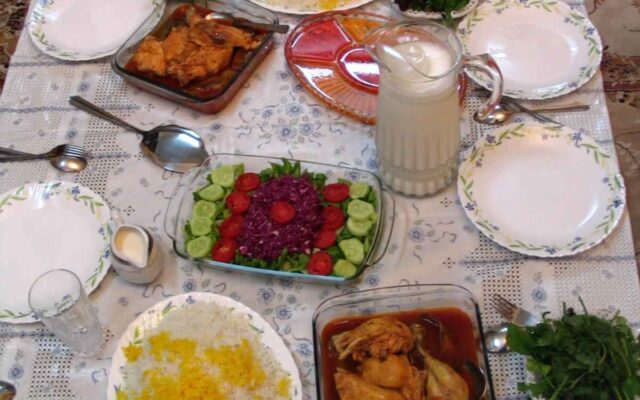
The engine of the whole scene is not demand from diners in general but longing from specific ones. A community reaches a size where someone opens the shop that stocks its ingredients, then the bakery that makes its bread properly, then the cafeteria that cooks the dish the way the capital of home cooks it. These businesses are not aimed at adventurous outsiders; they are aimed at their own, which is precisely why they are good — the customers can tell. The South Asian canteens of Karama and Bur Dubai, the Filipino bakeries and grill houses of Satwa and Al Rigga, the Iranian, Ethiopian, Levantine and Central Asian kitchens of Deira: each exists first to feed its people, and the rest of the city is lucky to be invited. When residents recommend a place with the words “it tastes like home,” they are giving the highest mark Dubai’s food culture awards.
The Ingredient Trail
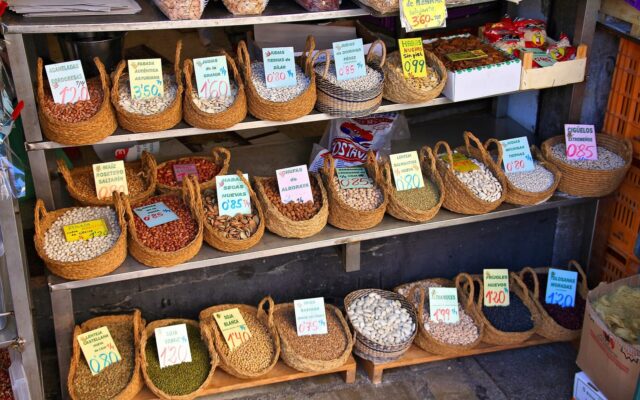
Cuisines need supply lines, and Dubai’s trading genius built them. The old souks still handle the region’s spice and dry-goods trade, but the deeper story is in the supermarkets: shelves of Filipino vinegars and purple yam, South Asian flours and fresh curry leaves, Korean pastes, Ethiopian coffee and injera flour, plantain and cassava, cheeses and charcuterie from Europe — a distribution system so complete that almost any dish on earth can be cooked here tonight from bought ingredients. Festivals spike the system beautifully: Ramadan transforms the supermarkets, Diwali stacks the sweet counters, Christmas fills the import aisles with a dozen countries’ traditions at once. Follow the ingredients and you can read the city’s population more accurately than a census — the tills know who lives here, and what they miss.
📸 Follow @dxbtalk1 on Instagram for daily Dubai in photos →
Where Cuisines Start Talking to Each Other
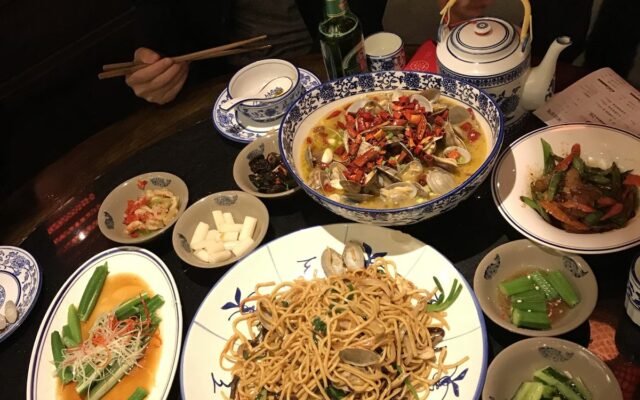
Feed two hundred food cultures through one city for a generation and they begin to converse. Dubai’s second-generation cooking — in chef-led restaurants and in family kitchens alike — borrows with the confidence of proximity: Levantine grills take on South Asian marinades, Emirati dishes absorb the spice grammar of the Indian Ocean trade that always fed them, a Filipino barbecue glaze turns up where no one at the table finds it strange. Karak itself, the city’s unofficial national drink, is the emblem: a South Asian tea, sweetened and spiced, naturalised so completely that no Dubai identity is imaginable without it. Fusion here is not a marketing concept applied from above. It is what children of mixed tables grow up assuming food is.
Festivals as Public Tasting Menus
The calendar keeps handing the city excuses to eat each other’s food in public. Ramadan’s iftar tents and night markets put Emirati and regional tables at the centre of the social season; Diwali turns whole districts into sweet shops; food festivals and Global Village’s pavilions stage the world’s cuisines as an evening’s walk. These events matter beyond appetite: they are where communities present themselves to the city on their own terms, with their best dishes forward, and where a resident’s palate gets its rolling education. The person who has eaten through a year of Dubai’s festivals has, without leaving home, travelled respectably.
Eating the Story
All of which suggests a way to eat here that honours the scene: choose restaurants the way the scene was built — community first. Ask colleagues where their family eats on Fridays; accept the recommendation even when — especially when — it is a cafeteria with six tables and no English menu. Learn three dishes deeply rather than thirty shallowly, and let the staff teach you how they are eaten at home. The food of Dubai is frequently described as the world on a plate, which makes it sound like a buffet. It is closer to a library: every kitchen a community’s collected memory, shelved in the open, free to anyone willing to read. Meals here are never just meals. They are how two hundred peoples tell a shared city who they are — one dinner service at a time.