Every visitor to Dubai eats brilliantly and internationally — and most leave without tasting the food of the place itself. Emirati cuisine is the quiet host at the city’s table: a cooking shaped by desert scarcity, Gulf waters and the spice trade, built for generosity and designed to be shared. It is also genuinely delicious, once you know what you are looking at. Learn these dishes before you come — what they are, how they are eaten, where they sit in the culture — and the menus of Emirati restaurants stop being lists and start being invitations.
The Rice Dishes: Machboos and the Family Platter
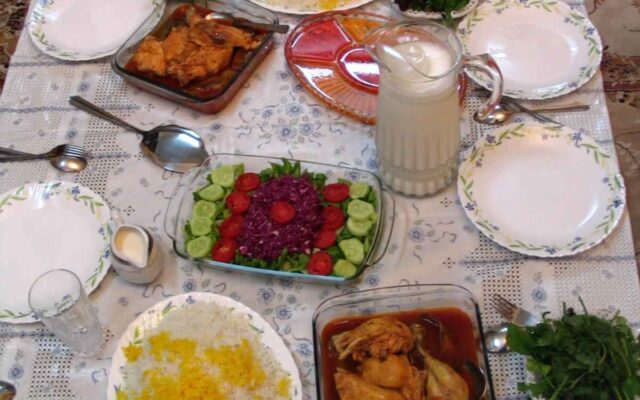
Start with machboos, the dish that anchors the Emirati table: rice cooked with meat, chicken or fish in a spiced broth — dried lime, cardamom, cloves, cinnamon and the baharat-style blends the trade winds delivered — until the grains carry the whole flavour of the pot. It arrives on a platter, not a plate, because it is built for the table to share, and the cook’s pride is in the balance: fragrant rather than fiery, the meat tender enough to yield to a spoon. Around it sit its cousins — biryani’s local forms, fish rice dishes from the coastal tradition, and saleeg-like comforts of the wider peninsula. If you eat one Emirati main course in Dubai, eat this one, in company, and understand that the platter’s size is not a portion error. It is the culture, expressing itself in rice.
Harees and Thareed: The Dishes of Ramadan and Home
Two dishes carry the cuisine’s soul. Harees — wheat beaten with meat into a smooth, porridge-like consistency, finished with ghee — is labour-intensive, celebratory and deeply tied to Ramadan and weddings; its plainness is deceptive, the flavour lying in the meat, the grain and the hours. Thareed is the home cook’s masterpiece: a rich meat and vegetable stew ladled over thin regag bread, which softens into the sauce as you eat, somewhere between a stew and a savoury bread pudding, and widely loved as one of the oldest dishes of the region. Neither performs for cameras. Both taste like family — which is exactly what they are, and why finding them on a menu is a small act of luck worth taking.
📸 Follow @dxbtalk1 on Instagram for daily Dubai in photos →
Bread, Breakfast and the Sweet Things
The day begins with breads. Regag — paper-thin, crisped on a hot plate — is served with cheese, honey or eggs; chebab, the Emirati pancake, comes golden and saffron-tinted, eaten with date syrup or cream cheese; balaleet pairs sweet vermicelli with a spiced omelette in a sweet-savoury combination that confuses visitors for exactly one bite. The sweets continue the theme: luqaimat, crisp golden dumplings drenched in date syrup, are the beloved standard, fried fresh at festivals and family gatherings; khabeesa and aseeda carry the older, grain-and-ghee traditions. Underpinning everything is the pairing that opens every Emirati welcome — dates, and gahwa, the lightly roasted, cardamom-scented Arabic coffee poured from the dallah in small cups, refilled until you shake the cup gently to say: enough, and thank you. Learn that gesture alone and you have learned the etiquette of the whole cuisine.
From the Sea: The Coastal Half
Before oil, the Gulf fed this coast, and the seafood tradition survives proudly: grilled hamour, the local grouper, served whole with rice and a spiced sauce; fish machboos; dried and salted fish preparations from the preserving era; shrimp dishes along the Creek’s restaurants. The coastal cooking is the older Dubai speaking — the Dubai of the diving boats and the fish market at dawn — and eating it in Deira, within sight of the dhows, is a history lesson that happens to be lunch. Ask what is fresh rather than what is famous; the Gulf’s seasons govern the honest menus.
How to Eat It, and Where
The etiquette is generous and simple: food is shared, the host’s honour is measured in your appetite, and a polite taste of everything offered is the correct grammar of gratitude. Eat with the right hand where bread and rice are taken by hand, accept the coffee and dates on arrival as the welcome they are, and do not rush — an Emirati meal is a social structure, not a refuelling. To find the real cooking, look for the dedicated Emirati restaurants now established across the city, the heritage houses of Al Fahidi serving traditional breakfasts, and the cultural meals hosted by the Sheikh Mohammed Centre for Cultural Understanding, where the food comes with the stories attached and no question is too basic. Come to the table having done this much homework and the host cuisine of Dubai will do the rest — which is, and always has been, its entire intention.