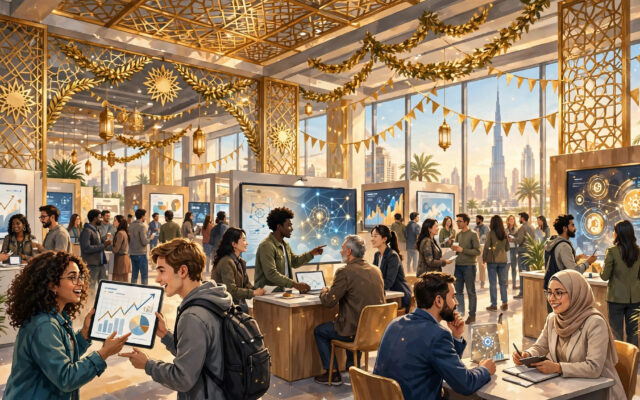
Dubai’s skyline is famous around the world, but what makes it interesting is not just height — it is the way the city treats architecture as a statement about the future. Towers, cultural buildings and whole districts are designed to test new ideas about sustainability, technology and how people live and work. For anyone interested in design, the city is an open-air exhibition of ambition, and the most instructive way to read it is not by asking which building is tallest, but by asking what problem each building was trying to solve.
Designing Against the Sun
Designing in Dubai starts with the climate. Intense sun and heat shape almost every decision, from the orientation of a building to the materials on its facade. Modern towers use shading, reflective surfaces and carefully placed glass to reduce heat gain while keeping interiors bright — a difficult balance in a city where an unshaded west-facing window can turn an office into a greenhouse by mid-afternoon. Facades are engineered like clothing for the climate: layered, ventilated, sometimes patterned to throw shade across their own glass. Sustainability has become central rather than optional. Newer buildings increasingly feature energy-efficient cooling and lighting systems that cut waste, recycled and locally sourced materials where practical, and landscaping planted with species suited to dry conditions, so the greenery at a tower’s base is not maintained at absurd water cost. These choices are not only environmental. They shape running costs and comfort for the people inside, which is why developers now market them as selling points rather than extras.
Buildings That Think
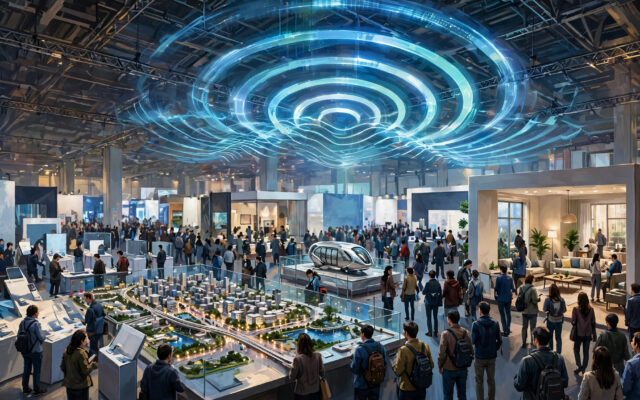
Beyond their appearance, many of Dubai’s newer buildings are designed around smart systems. Automated lighting, climate control and security adapt to occupancy and time of day, while digital infrastructure supports remote work and connected living — the goal is buildings that respond to their users rather than simply housing them. At the glamorous end of the spectrum sits the Museum of the Future, a torus of stainless steel wrapped in Arabic calligraphy that functions as the idea made visible: a building whose form was only buildable because of advanced modelling, housing exhibitions about the decades ahead. At the everyday end, the same thinking appears in quieter forms — lobbies that manage their own energy, parking systems that guide drivers to free bays, district cooling networks that chill whole neighbourhoods far more efficiently than building-by-building plants. The futuristic and the mundane are the same design philosophy at different budgets.
📸 Follow @dxbtalk1 on Instagram for daily Dubai in photos →
From Towers to Districts
The more interesting shift is in scale. Early Dubai built objects — one tower, one mall, one island. Newer Dubai increasingly builds systems: whole districts planned around how people move, gather and access services. Walkable streets, shaded public spaces and mixed-use neighbourhoods combining homes, offices and leisure are now part of the design conversation, reflecting a move from isolated towers toward complete communities. The city’s great solar park in the desert extends the same logic to infrastructure — architecture’s future tense applied to power itself. District-scale thinking is less photogenic than a record-breaking spire, but it is where the genuine experimentation now happens: how to make outdoor life possible for more of the year, how to cool a street rather than just a room, how to give a new neighbourhood a centre that did not have to be imported.
How to Look at It
You do not need to be an architect to enjoy Dubai’s design. Start by looking up: the variety of shapes, from twisting towers to sail-like structures, rewards a slow walk through the main districts. Then look closer at ground level, where entrances, public art and landscaping show how much thought goes into the spaces between buildings — the shaded arcade, the plaza that catches the evening breeze, the lobby visible through glass. Museums and cultural venues are worth visiting for their architecture alone, since several were designed as landmarks in their own right. Pay attention, too, to what the newest buildings do differently from the icons of twenty years ago: smaller gestures, better shade, more green, more interest in the pedestrian and less in the photograph. Whether you admire the ambition, question the scale or simply enjoy the views, Dubai’s buildings invite a reaction — and that invitation, renewed with every project, is precisely the point of designing for the future.