Ask a Dubai resident to describe their day and you will not hear about landmarks. You will hear about a school run, a metro carriage, a karak at a particular cafeteria, and an evening walk their neighbourhood does almost ceremonially. A teacher, a nurse, a trader and a freelancer will each describe a different city — but under the variety runs a shared rhythm, set by the climate, the working week and the light. This is that rhythm, hour by hour.
Early Starts: The City Wakes Before the Heat
Dubai’s day begins early, and in the warm months it begins early on purpose. Schools start young children at hours that surprise newcomers, offices fill from eight or before, and the gyms do a full shift of business before either. The commute is the morning’s main event: by car on the great arterial roads, or by metro, where the driverless trains run above the traffic with the skyline sliding past. The morning coffee stop is a genuine institution — this is a city running on specialty coffee, karak chai and breakfast meetings — and by nine the working day is fully alight. Residents of cooler countries notice the pattern within a week: everything important is scheduled as if the afternoon belongs to someone else.
The Middle: Work, Errands and the Indoor Hours
Midday in the summer months is the city’s indoor interval. Work continues — air conditioning sees to that — but the streets empty of any errand that can be postponed, and lunch happens inside, often without leaving the tower or the mall it sits in. School finishes early by many countries’ standards, so the afternoon carries its own second rhythm of pickups, activities and homework before the evening. Fridays have their own shape inside the working week: a long prayer break at the day’s heart, after which business resumes — a weekly reminder that the calendar here is woven from two traditions at once.
📸 Follow @dxbtalk1 on Instagram for daily Dubai in photos →
Evenings: The City’s Real Social Hours
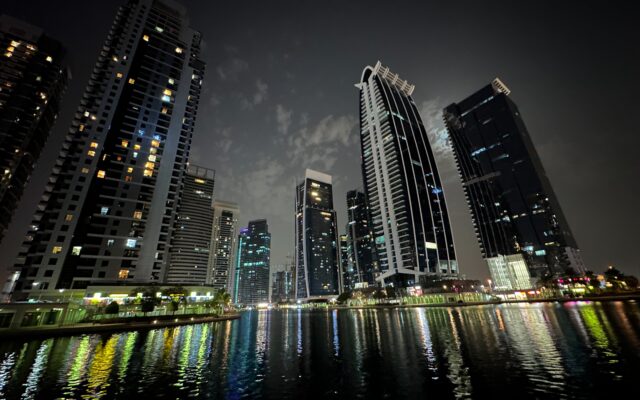
As the heat lets go, Dubai does the thing visitors never quite believe until they live it: everyone comes outside. The parks fill with walkers doing their circuits, the beaches gather their evening crowds and swimmers, the promenades along the Marina, the Canal and the Creek turn into slow rivers of strollers, and the restaurants, cafeterias and malls take over as the city’s living rooms. Sports leagues play, running clubs meet, friends dine late by northern standards. For many residents this is the day’s centre of gravity — work is what the morning was for; the evening is what the city is for. A quiet night in a high-rise, the skyline doing its light show for free, is the introvert’s version of the same hour.
The Weekend: A Different Country
Since the UAE moved its weekend, Saturday and Sunday carry the leisure weight, and the city visibly changes personality. Saturday is the social summit — the long brunch that runs all afternoon, the beach day, the desert trip, the family expedition to somewhere with water. Sunday runs slower and more domestic: markets, errands, a neighbourhood café morning, the week’s logistics quietly assembled. Residents describe the effect as living in two places — a hard-working weekday city and a holiday-shaped weekend one — and prize the arrangement because the second city is genuinely available: it does not require a flight, only a free morning.
Strip the skyline away and a day in the life here is recognisably ordinary — work, family, errands, friends. What Dubai adds is intensity and polish around the ordinary: a commute above a six-lane highway, an evening walk beside a marina, dinner from any cuisine on earth within a short drive of home. The rhythm becomes invisible to the people living it, which is the surest sign it works. It takes a visitor, standing on a promenade at 7 p.m. watching a whole city come out to play, to notice that the ordinary day here is not quite ordinary at all.