Dubai runs on systems, and daily life in Emirates Hills sits at the crossing of several of them. Get the sequence right and it is a morning’s work; get it wrong and it follows you for months. Here is the sequence, the paperwork, and the local knowledge that turns a bureaucratic obstacle course into a routine errand.
Step by step: getting this right
Work through it in this order. First, gather the facts that apply to you — your documents, your dates and your budget — because almost every wrong turn in Dubai comes from acting on general advice before checking your own position. Second, use the official channel for anything with a fee or a legal effect: the authority’s app or portal, or the service centre that handles it in person.
Third, keep a record of every step: reference numbers, receipts, screenshots and the names of counters you visited. Dubai’s systems are joined up enough that a reference number from one step unlocks the next, and fragmented enough that you will be asked for it. Residents who keep a simple folder — phone scans plus one physical file — move through this city noticeably faster than those who rely on memory.
Eating, walking and the winter dividend
Evening eating is Dubai’s default social plan, and Emirates Hills covers the spectrum from cafeteria counters to destination restaurants. In the October-to-April season, the city’s outdoor life switches on: promenades, beach clubs’ evening hours, outdoor cinemas, food-truck parks and night swims at designated beaches. Plan winter evenings outdoors by default; summer evenings are an indoor art — malls open late, cinemas, indoor sports and late dinners.
Walking after dark is normal and safe in most of Emirates Hills, with the caveats of heat and traffic rather than personal safety. Pavement quality varies street by street; the good evening loops get discovered by every resident within a month and shared like property.
📸 Follow @dxbtalk1 on Instagram for daily Dubai in photos →
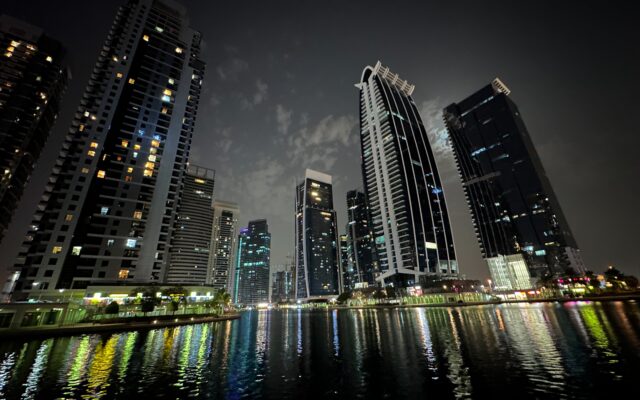
Emirates Hills after dark
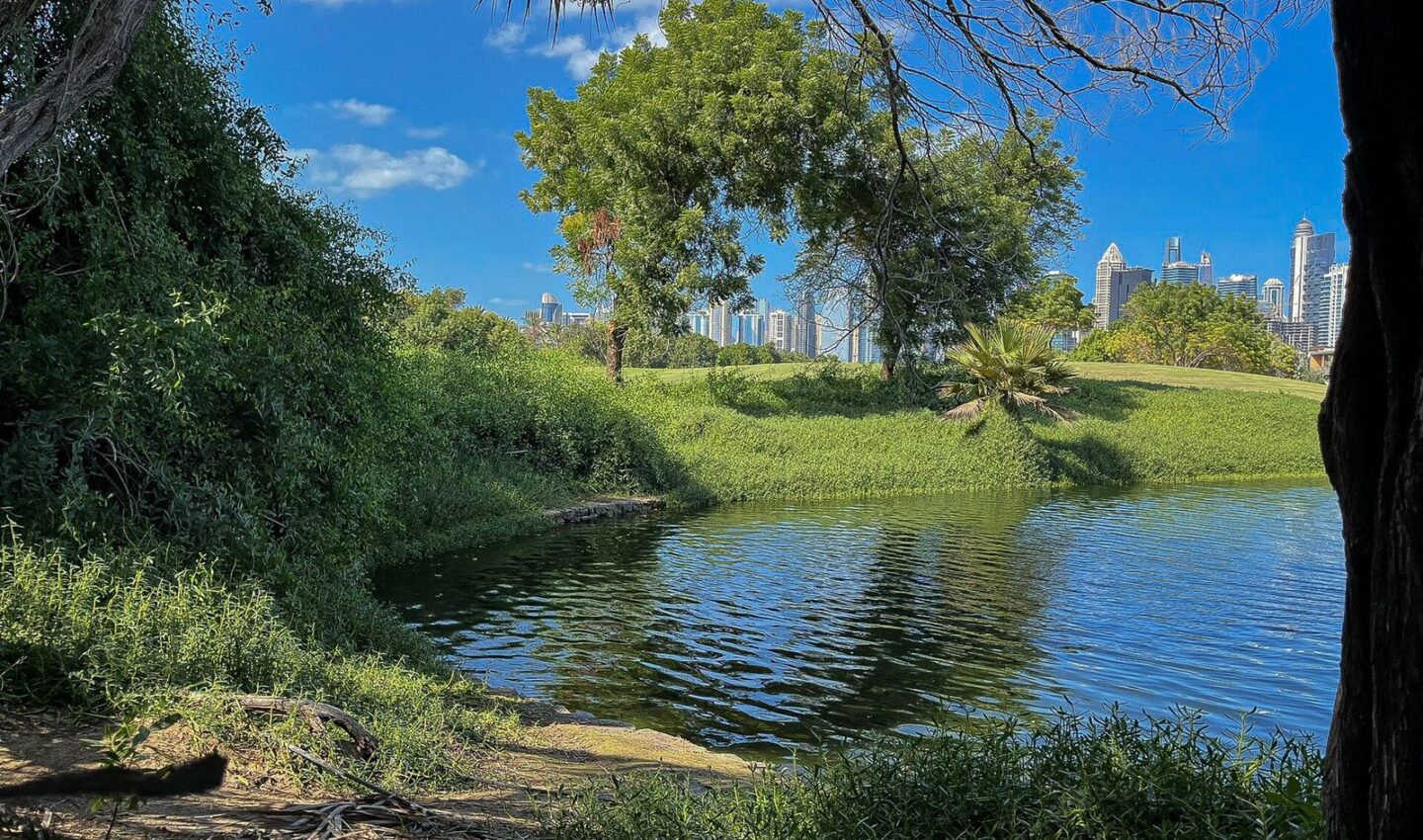
Emirates Hills is Dubai’s most established luxury villa community, built around The Montgomerie golf course. Evening character in Dubai is district-specific: some areas are built around licensed hotel venues and rooftop bars, others around cafeterias, corniche walks and family malls, and in residential villa districts the evening is quiet streets, garden time and delivery riders. Emirates Hills’s pattern becomes clear within a week of living here — this guide maps the options so you can plan around the reality rather than the brochure.
Licensed venues sit inside hotels (and some licensed clubs and restaurants in specific zones), which shapes nightlife geography citywide. Unlicensed districts are not dull — they run on coffee, dessert cafes, shisha lounges where permitted, night markets in season and the social life of majlis and mall.
Late-night practicalities
Dubai stays up late: supermarkets, pharmacies and many restaurants run past midnight, and delivery apps work through the night in Emirates Hills. Taxis and ride-hailing thin out briefly at shift-change times but never vanish; the metro runs into the late evening (check current last-train times, which shift on weekends and holidays). Friday and Saturday are the big social nights since the weekend change — book popular Emirates Hills restaurants ahead on those evenings.
Respect the local rhythm: noise carries in tower corridors and villa streets alike, and community rules on balcony and garden noise are enforced through building management and, if needed, the police non-emergency line. The districts that feel best after dark are the ones where residents self-police the volume.
Keeping records like a resident
Long-term Dubai residents share one unglamorous habit: a records folder, physical or digital, containing the ID, the tenancy, the key contracts, the insurance cards and the last few official receipts for everything. It sounds excessive until the day a bank, a school or an officer asks for a document from two years ago — which, in this city’s joined-up bureaucracy, is a day that reliably comes. Build the folder as you go; reconstructing it afterwards is the painful version.
Common questions
Where do residents get reliable local detail?
Community groups for your district, school or workplace hold the lived detail — which branch is quick, what the process felt like last month. Combine that texture with the official source for the rule itself, and you have the full picture.
Can I do most of this online?
Mostly, yes — Dubai has moved the majority of resident transactions into official apps and portals. The steps that still need your presence are usually biometrics, medicals, signatures and original-document sighting. Start online, and attend in person only for the step that requires your body.
What is the most common mistake?
Acting on out-of-date advice. Systems here change yearly; a friend’s experience from a previous contract or a previous visa is a starting point, not a rule. The second most common mistake is paying an intermediary for a step the official app handles directly.
Where do residents get reliable local detail?
Community groups for your district, school or workplace hold the lived detail — which branch is quick, what the process felt like last month. Combine that texture with the official source for the rule itself, and you have the full picture.
The bottom line
Handled in the right order, daily life in Emirates Hills is a solved problem — thousands of residents do it every month. Prepare the documents, use the official channels, keep your records, and it becomes one more piece of Dubai admin that quietly stays done. This guide is part of DXB Talk’s resident library at dxbtalk.com, where the guides interlock the way the systems do.