Ask ten Dubai residents about daily life in Emirates Hills and you will get ten confident answers, at least four of which are out of date. This guide sticks to how things work now: the systems involved, the steps in their real order, and the details that decide whether it goes smoothly or becomes a story you tell at dinner.
Fines and how to avoid them
Parking fines in Dubai are issued electronically and appear in the RTA or Dubai Police app against your plate — there may be no paper ticket on the windscreen, so check the app after any doubtful parking rather than assuming you got away with it. The common Emirates Hills mistakes: expired paid sessions during a long lunch, parking on pavements or sand where others do, and stopping in disabled bays or loading zones ‘for a minute’.
If you believe a fine is wrong, the dispute route is through the RTA app with evidence — your payment receipt and a photo of the signage. Pay undisputed fines promptly; they are linked to vehicle registration renewal and do not quietly disappear.
Permits, seasons tickets and building parking
If you park in a paid zone daily, price the RTA seasonal parking permits against daily fees — they exist for different zone groups and durations and can cut the cost sharply for commuters. In Emirates Hills apartment buildings, one space is commonly included or rented with the unit; extra spaces trade informally between residents, and visitor parking is the detail visitors always get wrong, so brief your guests on where to park legally.
Newer buildings in Emirates Hills sometimes charge separately for parking, and podium spaces can be tight for large SUVs — check the actual space, not the brochure, before signing. For villas, street parking outside your gate is normal, but blocking a neighbour’s access or a waste-collection point draws complaints and fines.
📸 Follow @dxbtalk1 on Instagram for daily Dubai in photos →
A realistic timeline
Set expectations in weeks, not days. The straightforward version of this process, with documents ready, typically completes in a few working days of actual processing spread across one to three weeks of appointments, approvals and deliveries. The complicated version — a document to attest, a record to correct, a counter that needs a second visit — doubles that, and it is still normal.
The timeline you control is your own preparation: documents gathered, forms understood, fees budgeted, appointments booked at the calm end of the day. Residents who prepare experience Dubai’s systems as impressively efficient; residents who improvise experience the same systems as a maze. The difference is rarely the system.
How parking works in Emirates Hills
Parking in Emirates Hills follows the wider Dubai pattern: RTA paid public parking in the busy commercial strips, free parking inside most residential streets and community areas, and building parking for residents. Paid zones are signed with the tariff and hours — most operate Monday to Saturday, with Sundays and public holidays free in the standard zones — and payment runs through the RTA app, Nol card, or SMS to 7275 (mParking) from a local mobile.
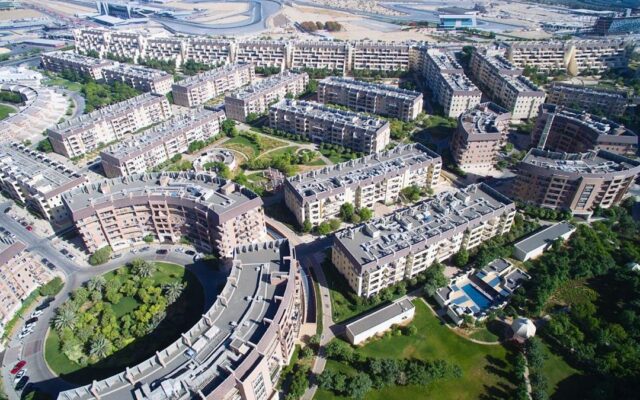
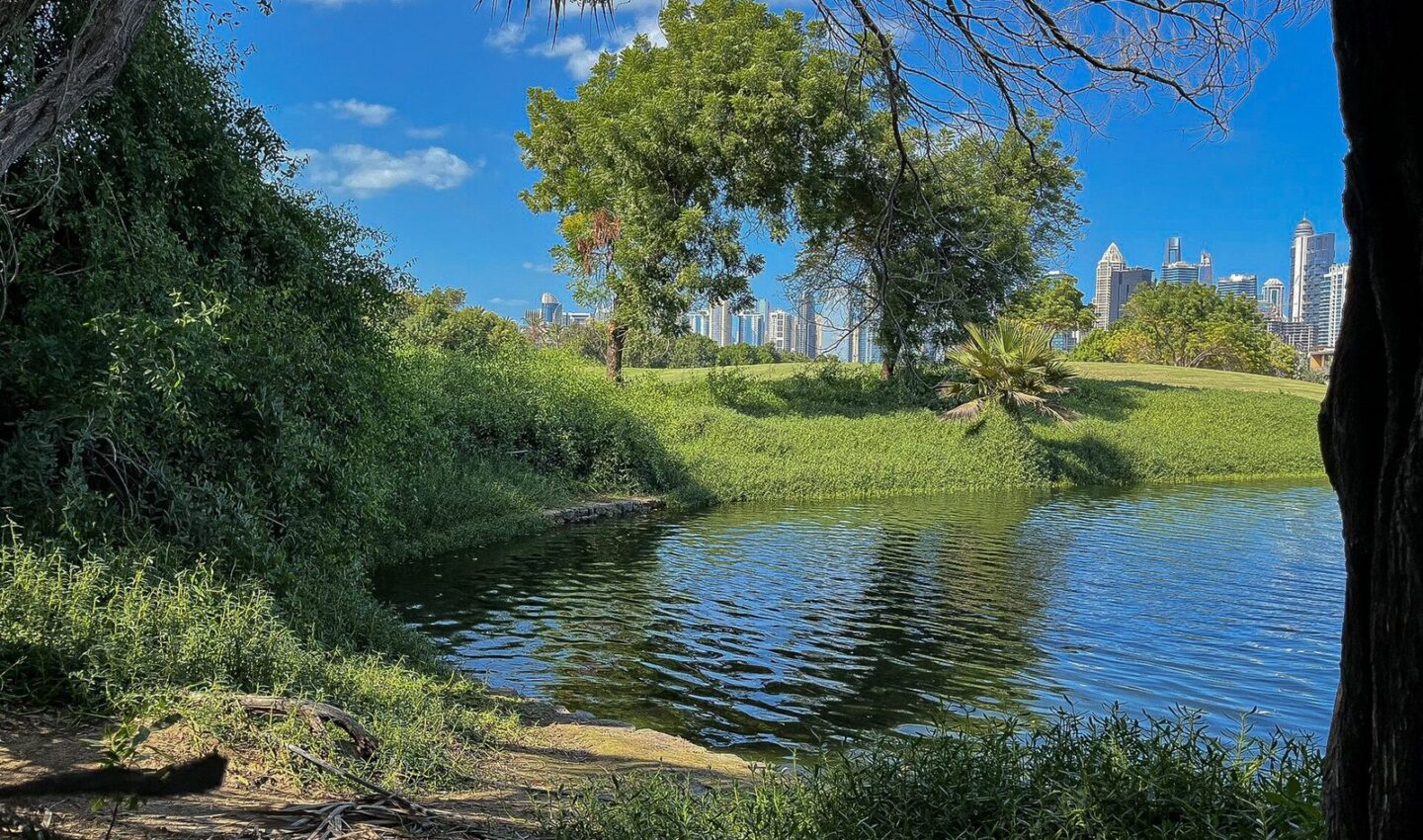
Because Emirates Hills is Dubai’s most established luxury villa community, built around The Montgomerie golf course, the pinch points are predictable: retail frontages, school-run hours, and evenings near restaurants. Residents learn quickly which side streets stay legal and free, and which ‘quiet’ corner is actually a tow-away zone near a junction or hydrant. When in doubt, the sign on the nearest pole governs — photograph it if you plan to contest anything.
Keeping records like a resident
Long-term Dubai residents share one unglamorous habit: a records folder, physical or digital, containing the ID, the tenancy, the key contracts, the insurance cards and the last few official receipts for everything. It sounds excessive until the day a bank, a school or an officer asks for a document from two years ago — which, in this city’s joined-up bureaucracy, is a day that reliably comes. Build the folder as you go; reconstructing it afterwards is the painful version.
Common questions
Can I do most of this online?
Mostly, yes — Dubai has moved the majority of resident transactions into official apps and portals. The steps that still need your presence are usually biometrics, medicals, signatures and original-document sighting. Start online, and attend in person only for the step that requires your body.
Where do residents get reliable local detail?
Community groups for your district, school or workplace hold the lived detail — which branch is quick, what the process felt like last month. Combine that texture with the official source for the rule itself, and you have the full picture.
What is the most common mistake?
Acting on out-of-date advice. Systems here change yearly; a friend’s experience from a previous contract or a previous visa is a starting point, not a rule. The second most common mistake is paying an intermediary for a step the official app handles directly.
Where do residents get reliable local detail?
Community groups for your district, school or workplace hold the lived detail — which branch is quick, what the process felt like last month. Combine that texture with the official source for the rule itself, and you have the full picture.
The bottom line
Handled in the right order, daily life in Emirates Hills is a solved problem — thousands of residents do it every month. Prepare the documents, use the official channels, keep your records, and it becomes one more piece of Dubai admin that quietly stays done. This guide is part of DXB Talk’s resident library at dxbtalk.com, where the guides interlock the way the systems do.