This is a practical guide to daily life in Bur Dubai — written for people who live here, not visitors passing through. It covers the systems you will deal with, the documents and decisions that matter, and the mistakes that cost residents time and money, in the order you will actually meet them.
GPs, dentists and emergencies
Choose a family doctor in Bur Dubai before you need one: register the family, do one routine visit each, and learn the clinic’s appointment and walk-in culture. Dentistry is a strong point of Dubai healthcare — routine dentistry is widely available, while orthodontics, implants and cosmetic work reward shopping around and asking what is included in the quote (x-rays, follow-ups, retainers).
For emergencies, know your nearest hospital emergency department and keep 998 (ambulance) saved; Dubai ambulance response is professional and hospital emergency care is provided first and billed after. Store your insurance details and allergies in your phone’s medical ID — in a city of newcomers, your phone is your medical record’s front page.
Insurance networks come first
Your health insurance policy decides where your ‘near home’ care actually is: every policy has a network list, and out-of-network visits mean partial or no cover. Before registering in Bur Dubai, check your insurer’s current network for the clinics you can reach in fifteen minutes, including their labs and imaging, because referrals chain inside networks. Employers must provide at least basic cover in Dubai; the quality of the network is a real part of any job offer’s value.
Keep the clinic’s app and your digital insurance card on your phone. Approvals for scans and procedures can take hours; a clinic that pre-checks approvals before booking saves the classic Dubai experience of being told at the desk that today’s MRI is not covered.
📸 Follow @dxbtalk1 on Instagram for daily Dubai in photos →
Mistakes residents make (so you don’t have to)
The recurring mistakes are boringly consistent. Acting on a friend’s experience from three years ago in a system that has since moved online. Paying an intermediary for something the official app does free. Signing — a lease, a contract, a package — before reading the clause that governs leaving it. And assuming that because something is common practice it is therefore permitted: Dubai tolerates a lot informally right up to the moment it doesn’t.
The antidote is unglamorous: verify on the official channel, read the document, ask what happens if you need to stop or leave, and get commitments in writing. None of this slows a well-run process by more than a day, and it prevents the month-long unravellings that fill the community forums.
Healthcare near home in Bur Dubai
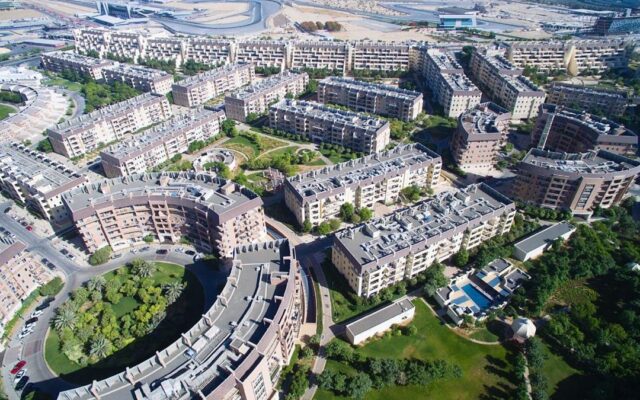
Bur Dubai is the historic heart of the city on the west bank of the Creek, mixing souks, consulates and dense apartment blocks. Everyday healthcare in Dubai is private-first: residents register with a clinic near home for GP visits, paediatrics, dentistry and routine tests, and use hospitals for emergencies, surgery and specialists. In and around Bur Dubai you will find the big groups (Mediclinic, Aster, Medcare, NMC, Prime and others) alongside independent clinics — quality is generally high, and the differentiator is usually your insurance network rather than clinical standard.
Pharmacies are everywhere in Bur Dubai, many open late or 24 hours, and pharmacists handle a lot of minor-ailment traffic. Prescription rules are enforced for antibiotics and controlled medicines, so expect to need a consultation for anything beyond the basics.
One more thing residents learn
Experience adds a footnote to almost every Dubai system: the second time you do this, it takes half the time and a quarter of the stress. The learning curve is the real cost of the first attempt, which is why residents swap notes so freely — in the community groups, at the school gate, in the queue itself. Ask the person who did it last month, and offer your own notes when you are the one who has done it. The city’s informal knowledge network is one of its genuine infrastructures.
Common questions
What is the most common mistake?
Acting on out-of-date advice. Systems here change yearly; a friend’s experience from a previous contract or a previous visa is a starting point, not a rule. The second most common mistake is paying an intermediary for a step the official app handles directly.
Where can I double-check the current rules?
On the official channel for the authority involved — its website, app or service centre — because fees, hours and procedures for daily life in Bur Dubai are updated by official decision and summaries like this one age. Verify the step you are about to pay for, on the day you pay for it.
What is the most common mistake?
Acting on out-of-date advice. Systems here change yearly; a friend’s experience from a previous contract or a previous visa is a starting point, not a rule. The second most common mistake is paying an intermediary for a step the official app handles directly.
Where do residents get reliable local detail?
Community groups for your district, school or workplace hold the lived detail — which branch is quick, what the process felt like last month. Combine that texture with the official source for the rule itself, and you have the full picture.
The bottom line
Handled in the right order, daily life in Bur Dubai is a solved problem — thousands of residents do it every month. Prepare the documents, use the official channels, keep your records, and it becomes one more piece of Dubai admin that quietly stays done. This guide is part of DXB Talk’s resident library at dxbtalk.com, where the guides interlock the way the systems do.