Begin where Dubai began. Bur Dubai, on the western bank of the Creek, is one of the city’s oldest neighbourhoods — the side where the port, the fort and the merchants’ houses grew up together, and where the modern metropolis keeps its memory. Visitors chasing only the new Dubai miss half the story; Bur Dubai is the half with the plot.
The Fort and the Museum
At the district’s heart stands Al Fahidi Fort, among the oldest buildings in the city, its coral-stone walls and towers built to guard a trading settlement. Inside, the Dubai Museum tells the transformation as a walk-through story: the fishing and pearling village, the Creek crowded with dhows, the merchants and divers and craftsmen — and then, room by room, the astonishing acceleration into the global metropolis outside the door. It is the single best orientation a newcomer can buy, and it reframes everything seen afterwards: the towers across the Creek read differently once you have stood in the fort that preceded them.
Al Bastakiya: The Quiet Quarter
Beside the fort, the Al Fahidi Historical Neighbourhood — long known as Al Bastakiya — preserves the merchants’ quarter in its original grain: narrow alleyways between high-walled houses, wind towers rising to catch the breeze, carved doors and shaded courtyards now given over to art galleries, small museums, cultural houses and cafés. It is a peaceful retreat a few minutes from the souks’ full volume, and the best place in Dubai to learn the old architecture by walking through it — every house an argument for shade, every lane a lesson in how this city lived before the air conditioner.
📸 Follow @dxbtalk1 on Instagram for daily Dubai in photos →
The Creek, the Mosque and Meena Bazaar
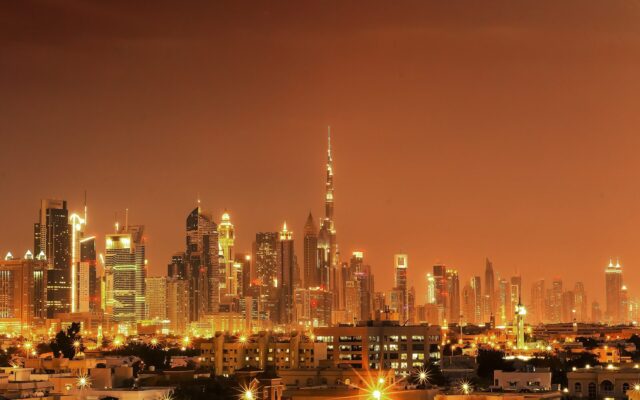
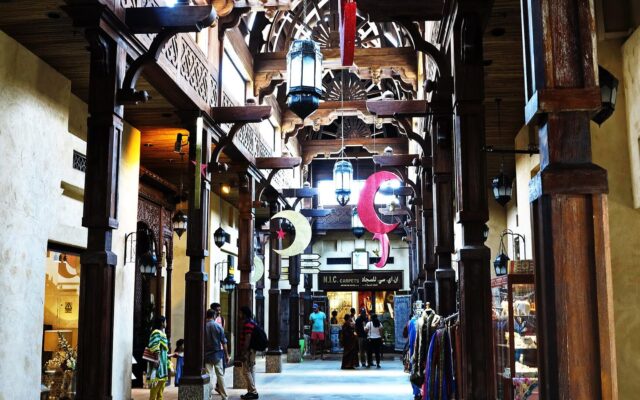
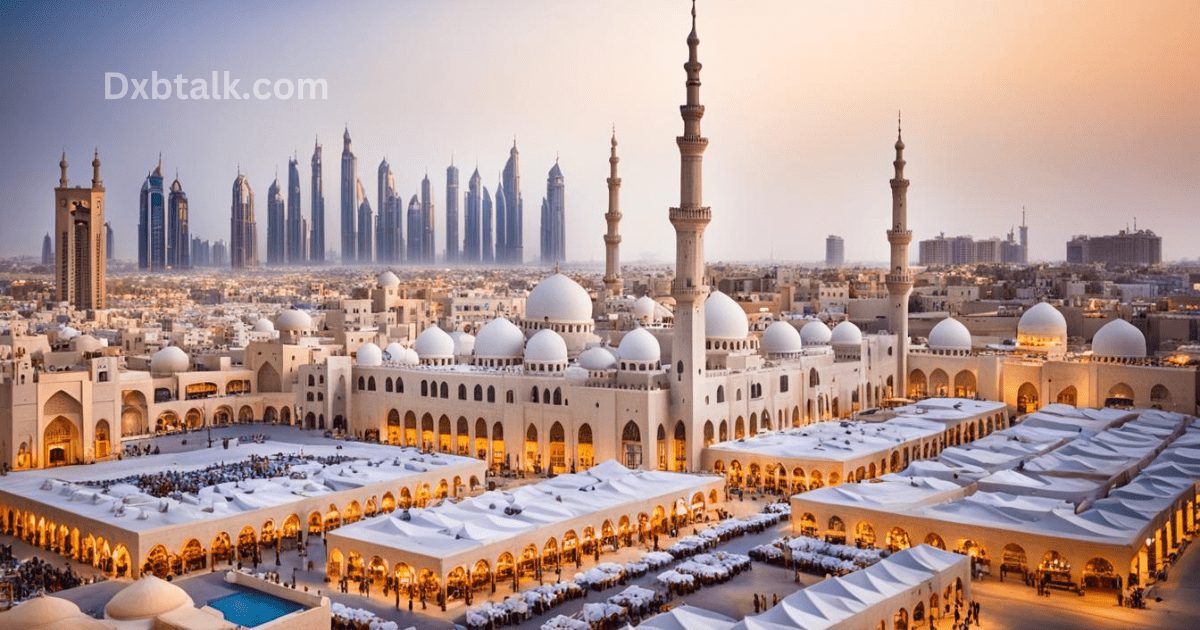
Bur Dubai’s front door is the water. The Grand Mosque, among the city’s largest, anchors the bank with its tall minaret, a landmark for every abra crossing. The Creek itself is the district’s theatre: wooden abras ferrying passengers for a token fare, dhows loading cargo as they have for a century, the far bank of Deira glittering across the water. Step inland and the register changes to commerce at full colour — Meena Bazaar, the district’s famous shopping quarter, dense with textiles, jewellery, electronics and spices, where bargaining is expected and the tailors work at neighbourhood speed. Between the bazaar, the souks and the lanes of small shops, Bur Dubai remains what it has always been: a working district that happens to be a treasure.
How to Give Bur Dubai Its Due
Come in the morning for the museum and the quiet lanes, cross the Creek and back by abra because the ride is the point, and let Meena Bazaar take the afternoon. Tourists and locals share this district on unusually equal terms, because Bur Dubai does not perform its heritage — it continues it, in buildings still used, boats still working, shops still serving their neighbourhoods. Explore the cultural sites, the galleries and the souks in one unhurried sweep and you will understand the modern city’s foundations better than any skyline can teach you. This is where history, culture and heritage are not exhibits. They are the address.
Eating in Bur Dubai
The district feeds its explorers in its own register: small restaurants and cafeterias in and around Meena Bazaar serving the communities who built the place, bakeries and sweet shops doing the morning rush, cafés tucked into the Bastakiya lanes where the heritage houses now pour coffee under wind towers. Prices belong to the neighbourhood, not the tourist map, and a day’s exploring can be fuelled handsomely for less than a single course across the Creek. Eat where the lanes smell best and the tables are fullest; Bur Dubai’s kitchens have been passing that test since before the test existed.
End the day as the district would wish: on the water at dusk, abra fare in your pocket, the call to prayer over the rooftops and Deira lighting up across the Creek. Everything Dubai became started on these two banks, and Bur Dubai — patient, storied, still working — is where the city goes to remember it.