

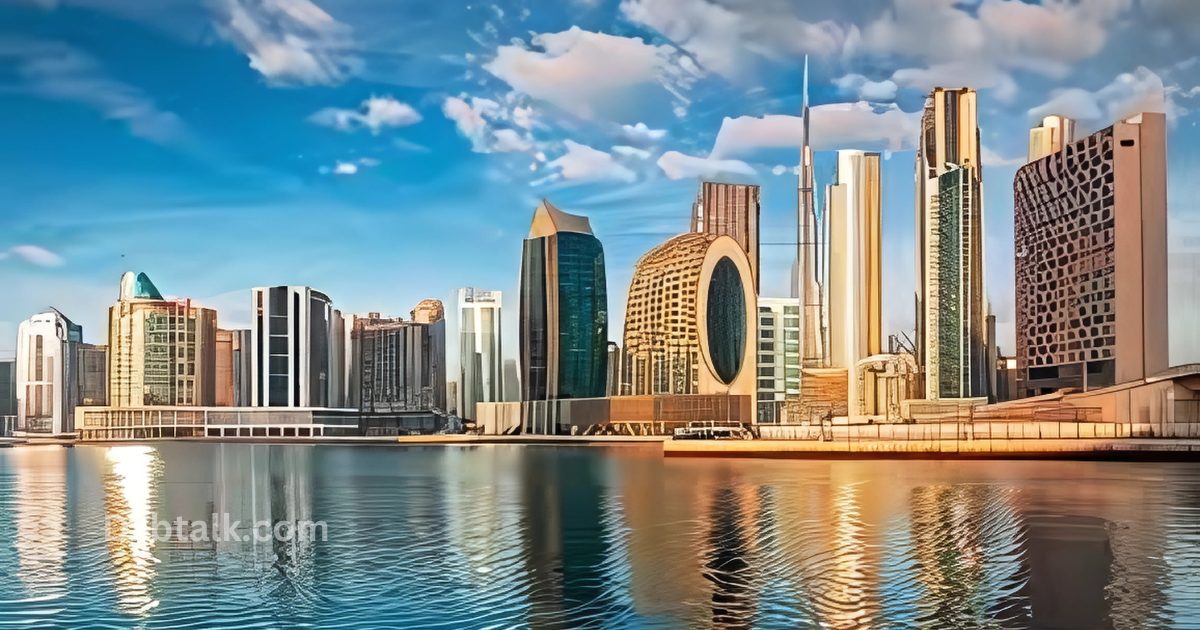
Drive down Sheikh Zayed Road and you pass the argument in glass and steel: a purpose-built business district that rose from the canal-side desert in little more than a decade. Business Bay is more than a commercial address — it plays a vital role in Dubai’s economic landscape, a hub for finance, real estate and corporate headquarters. Understanding what it contributes explains a great deal about how modern Dubai’s economy actually works.
The Financial Engine
Business Bay is home to hundreds of multinational corporations and SMEs, and functions as a key player in Dubai’s vision of becoming a global financial centre. The logic is geographic as much as economic: Dubai’s strategic location between East and West makes it a natural meeting point for firms serving both, and Business Bay gives those firms a central, prestigious, comparatively flexible place to land. Banks, consultancies, trading firms and regional headquarters cluster here because their clients, partners and competitors are here — the self-reinforcing gravity that every financial district runs on.
Real Estate and Infrastructure Development
The district has witnessed tremendous development: high-rise office towers, luxury hotels and residential buildings rising together into a dense mixed-use city within the city. That construction has contributed directly to Dubai’s booming property market, and investors from across the globe have been attracted by Business Bay’s prime location — minutes from Downtown and DIFC, wrapped around the Dubai Canal — and its potential for strong returns. Unlike single-purpose office zones, the residential population gives the district life after working hours, which in turn supports the hotels, restaurants and services that make it more attractive to the next arriving firm.
📸 Follow @dxbtalk1 on Instagram for daily Dubai in photos →
Employment and the Figures
The rapid development has created thousands of job opportunities across finance, real estate, hospitality and retail, and the district has become a magnet for skilled professionals, entrepreneurs and startups looking to build on Dubai’s growing economy. The scale, in the figures commonly cited for the district, is striking: over 240 towers dedicated to office and residential space, some 64 million square feet developed, and more than 300 multinational corporations based here — a significant contribution to Dubai’s non-oil GDP growth and to its deliberate strategy of economic diversification.
The Future Outlook
As Dubai continues along its path of diversification, Business Bay will remain at the forefront of its growth strategy. Ongoing infrastructure development, new commercial projects and a continuing influx of foreign investment all point the same way. Districts succeed when they become necessary, and by that measure Business Bay has already succeeded: Dubai’s economy now runs, in large part, through it.
The Canal Effect
Business Bay’s second act arrived with water. The extension of the Dubai Canal through the district gave its towers a waterfront, its residents an evening promenade, and the whole area a leisure layer that pure office districts lack. Hotels multiplied along the canal banks, restaurants followed the foot traffic, and the district’s identity softened from nine-to-five headquarters zone into a place people also choose for dinner, a run, or a weekend stay. Economists notice such things: amenities are not decoration on a business district, they are part of its offer to the firms deciding where their people will agree to work.
What Business Bay Says About Dubai
Step back and the district becomes evidence in a larger argument. Dubai’s growth model — build the infrastructure first, at a scale that invites the future to move in — is written across Business Bay in its purest form: a canal-side business city raised in a generation, now employing, housing and entertaining tens of thousands. Its role in the emirate’s economy is no longer a projection. It is a routine, measurable fact, renewed every working morning when the towers fill.
A Note on Visiting
For visitors, Business Bay rewards an hour’s curiosity: the canal promenade at dusk, dinner in one of its towers, the skyline of offices lit like circuitry. It is not old Dubai, and it does not pretend to be. It is the Dubai of right now — the working, trading, deal-making city — and seeing it clearly is part of understanding how the emirate actually functions beneath the holiday surface.




