

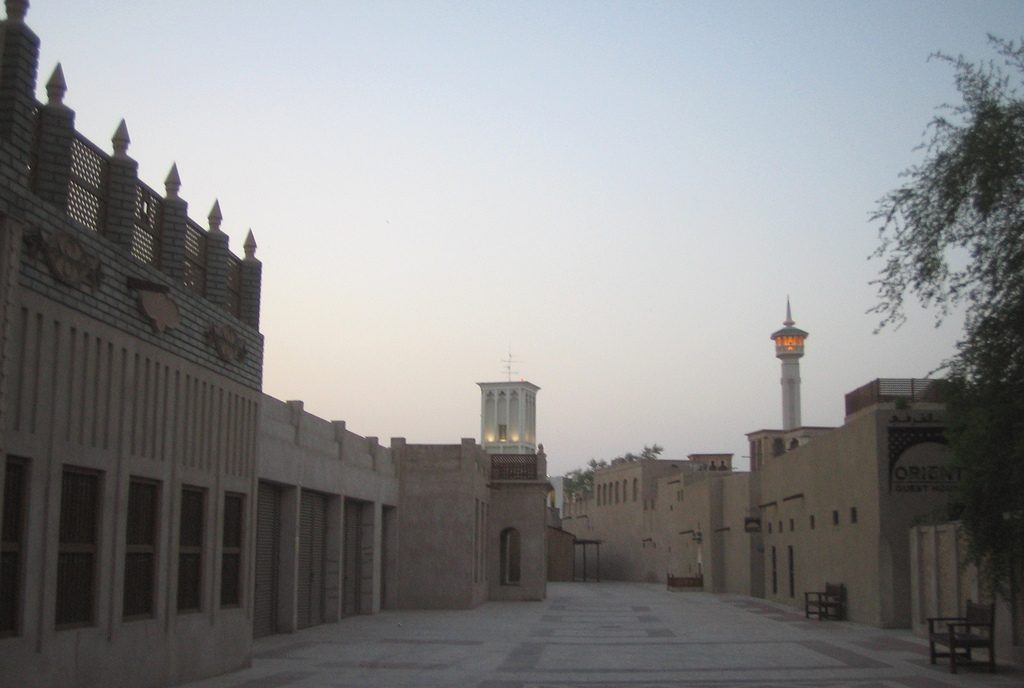
Al Fahidi, on the Bur Dubai bank of the Creek, is where Dubai began — a small, walkable neighbourhood of sand-coloured merchant houses with wind towers, narrow lanes (sikkas) and quiet courtyards, now home to museums, galleries, cafés and the Dubai Museum’s old fort. A self-guided walk here takes one to two unhurried hours and shows you the city as it looked before the towers. This route strings together the essentials in a sensible order, starting at the fort and ending at the Creek.
Before You Start
Go in the morning if you can: the lanes are shaded and cool early, the museums open from the morning onwards (confirm current opening hours and any ticket arrangements on the official Dubai Culture channels, as individual houses vary), and the tour groups have not yet arrived. Al Fahidi Historical Neighbourhood is reached easily from Al Fahidi Metro station on the Green Line, a short walk away, or by taxi to the Dubai Museum entrance. Comfortable shoes, water and modest dress that covers shoulders are sensible — you are steps from mosques and a traditional residential quarter.
The Walk, Stop by Stop
- Al Fahidi Fort and Dubai Museum. Start at the city’s oldest building, the 18th-century fort. The museum’s galleries (including the famous underground life-size scenes of old Dubai — pearl divers, souks, desert camps) give you the context that makes the streets outside come alive. Note: the museum has been undergoing renovation phases in recent years, so check its current status before promising it to your group; the fort itself and the neighbourhood remain worth the trip regardless.
- The wind-tower houses. From the fort, wander into the quarter’s lanes. The barjeel wind towers were the air-conditioning of their day, funnelling breezes down into the rooms. Many houses are now galleries and small museums — look for the Coins Museum, the Calligraphy displays and the various cultural houses signposted along the lanes.
- Sheikh Mohammed Centre for Cultural Understanding. Housed in a restored wind-tower home, the SMCCU runs the famous cultural breakfasts and lunches and guided heritage tours under the motto “Open Doors, Open Minds” — book through its official site if you want the hosted version of this walk, with Emirati hosts answering every question you have.
- XVA Gallery and Café. One of the neighbourhood’s beloved courtyards — art exhibitions around a shaded café famous for its mint lemonade. A perfect mid-walk pause.
- Arabian Tea House. The original branch of this much-loved café sits in a former merchant’s home; the courtyard, with its turquoise benches and trailing plants, is the classic Al Fahidi rest stop for tea, breakfast trays and Emirati dishes.
- The Creek and the abra station. Finish by walking out to Baniyas Road: cross Dubai Creek on a traditional abra for a token fare (confirm the current fare at the station — it has been famously just a dirham for years, paid in cash), watch the dhows loading cargo, and look back at the wind towers from the water.
📸 Follow @dxbtalk1 on Instagram for daily Dubai in photos →
Details That Make the Walk Better
The neighbourhood rewards slow looking: carved gypsum screens, heavy wooden doors with brass studs, the old city wall fragment near the fort, and the Grand Mosque’s minaret — the tallest in old Dubai — rising over the rooftops nearby (the mosque itself is not open to non-Muslim visitors, but its exterior anchors many photographs). Textile and souvenir lanes on the quarter’s edge sell shawls, spices and lanterns; gentle bargaining is expected in the souk lanes, less so in the gallery shops.
Combine Al Fahidi with the rest of old Dubai in one sweep: the abra drops you in Deira at the Spice and Gold Souks, and the whole loop — fort, lanes, creek crossing, souks — fills a rich half day. For first-time visitors it is the single most valuable walk in the city: an hour among wind towers explains Dubai better than a week of malls.
Practical Notes for the Walk
The neighbourhood is compact but its lanes are a gentle maze, and that is part of the fun — getting briefly lost down a sikka usually delivers you to a courtyard you would otherwise have missed. If your time is short, keep the fort, one cultural house, the tea house courtyard and the Creek front as your non-negotiables and let the rest be bonus. Most houses and museums charge modest entry or are free, but arrangements differ by venue and change over time, so carry a payment card and check the official Dubai Culture listings for the houses you care most about. Guided tours — including the SMCCU’s hosted walks and seasonal heritage tours — add the stories behind the doors, and are worth booking for a first visit if your dates allow.
Endurance matters more than speed: even in winter the sun is strong by midday, and the quarter has little vehicle traffic but also little air-conditioning outside the museums and cafés. Build in the courtyard stops rather than treating them as optional, and you will leave with the unhurried feeling Al Fahidi has kept for two hundred years — five minutes from a Metro station, in the middle of one of the world’s most futuristic cities.
Extending the Walk: Bastakiya to the Souks
If your legs and the weather allow, Al Fahidi is the natural first chapter of a longer old-Dubai walk. From the quarter’s Creek edge, the abra carries you to Deira’s Baniyas Road, where the Spice Souk’s sacks of saffron, dried limes and frankincense perfume the lanes, and a few minutes further the Gold Souk’s windows blaze with hundreds of shopfronts of jewellery. Walk back along the Deira Creekside past the dhow wharves — still loading cargo for ports across the Gulf and East Africa — and you have seen the trading machine that built the merchant houses you started in. The whole extension adds one to two hours and turns a neighbourhood walk into the story of a port city.





