

Al Karama is the Dubai neighbourhood that residents recommend with a slight reluctance, the way you share a favourite restaurant — gladly, but aware that its charm depends on it staying exactly as unpolished as it is. A dense, lived-in district of low-rise blocks and crowded pavements, it offers what the luxury city structurally cannot: genuine bargains, independent shops with decades in them, and food priced for the people who actually live here. Its gems are hidden only from those who never leave the mall circuit.
The Shopping: Treasure-Hunting Rules Apply
Karama rewards the browser, not the list-maker. Its flea market scene is the headline for hunters: vintage items, handmade crafts and pre-loved goods at prices that make the finding feel like sport. Around it, small artisan shops sell the handmade end of the district’s retail — local crafts, pottery and textiles that carry Dubai’s cultural diversity in physical form, made and sold by the communities who live here. The tailoring shops are a Karama institution in their own right: custom clothing, from suits to traditional dresses, made to measure at prices that recalibrate what “bespoke” is allowed to cost, provided you bring a little patience and a clear idea. And for the quiet hunter, the second-hand bookstores are the district’s softest secret — shelves of pre-loved books at pocket-money prices, where the literary gem you did not know you were looking for is the standard outcome. None of this is curated. That is the point. The pleasure is the sifting, and the prices forgive the effort completely.
How to Work the District Like a Regular
Karama has an etiquette of its own, and observing it upgrades the whole expedition. Mornings belong to the freshest stock and the calmest browsing; the district builds through the day and peaks in the evening, when the food stalls are at full power and the pavements at full census. Carry small cash — cards work in many places, but the flea stalls, vendors and tiny cafés run fastest on notes, and the exact change of a happy purchase is a small social pleasure here. Where prices are negotiable, negotiate like a neighbour rather than an auctioneer: a smile, a modest counter-offer, and grace whether you win or settle. Ask shopkeepers what else you should see; Karama’s retailers route browsers to each other with a generosity that amounts to the district’s own recommendation engine. And leave something undiscovered on purpose. Karama is not a checklist to finish — it is a standing invitation, and locals measure it in years of small returns.
📸 Follow @dxbtalk1 on Instagram for daily Dubai in photos →
The Food Between the Finds
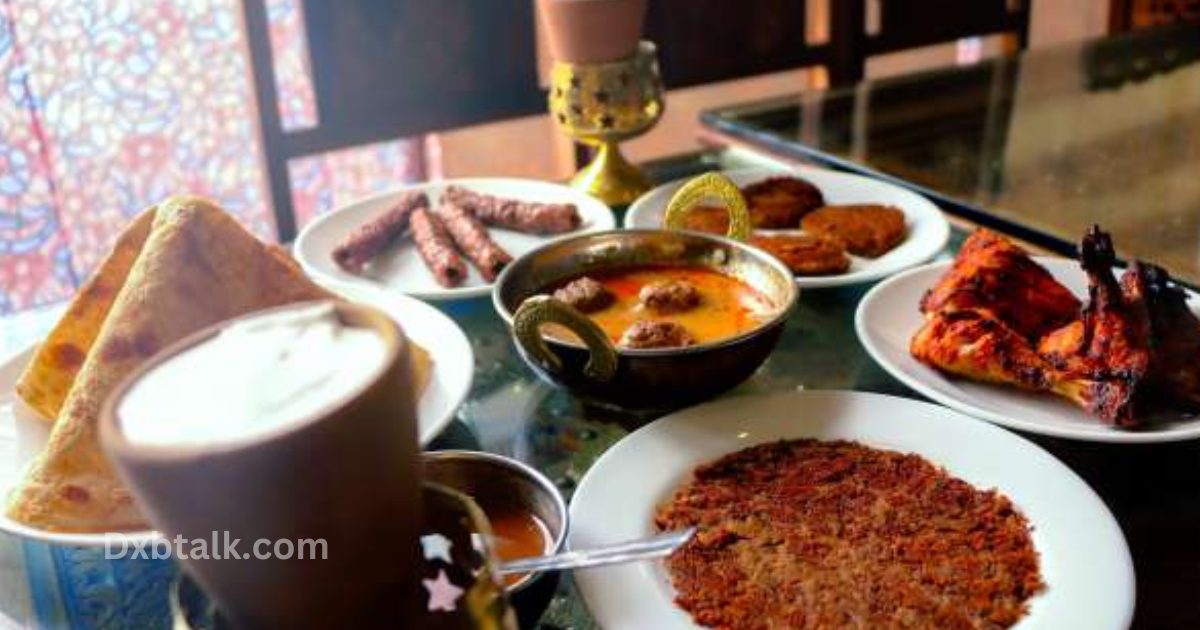
Shopping Karama hungry is the recommended method, because the district feeds its browsers continuously. Street corners carry vendors selling samosas made minutes ago — crisp, savoury, dangerously repeatable. Small local cafés offer the sit-down version: coffee, tea and traditional snacks in rooms where the pace is the neighbourhood’s own. The specialty bakeries finish the circuit, producing pastries and desserts — baklava, kunafa and their relatives — at prices that encourage taking a box home “for later” in full knowledge of what will happen to it. Eat as you go rather than breaking for a meal; in Karama, grazing is not a compromise, it is the itinerary.
A Note on What “Affordable” Means Here
Karama’s affordability is not the discount-store kind, where cheapness is the whole personality. It is the older kind: fair prices set by shops with low overheads, long leases and customers who would notice instantly if the value slipped. That distinction matters because it explains the quality surprises — tailoring that outlasts garments three times its price, food cooked to a regular’s standard rather than a tourist’s tolerance, books and crafts priced for the neighbourhood’s own shelves. You are not hunting a sale. You are shopping at the rates a community sets for itself, as its guest.
Why Bother With Hidden Gems at All?
Because Karama is where Dubai’s everyday culture is on open display, priced honestly and served without ceremony. Exploring it connects you to the city as its residents know it: multicultural, resourceful, warm, and far more interested in value than in velvet ropes. Come with small cash, comfortable shoes and no deadline. The district will handle the rest — and send you home with a bag of finds, a box of something sweet, and the mild smugness of the initiated.




