

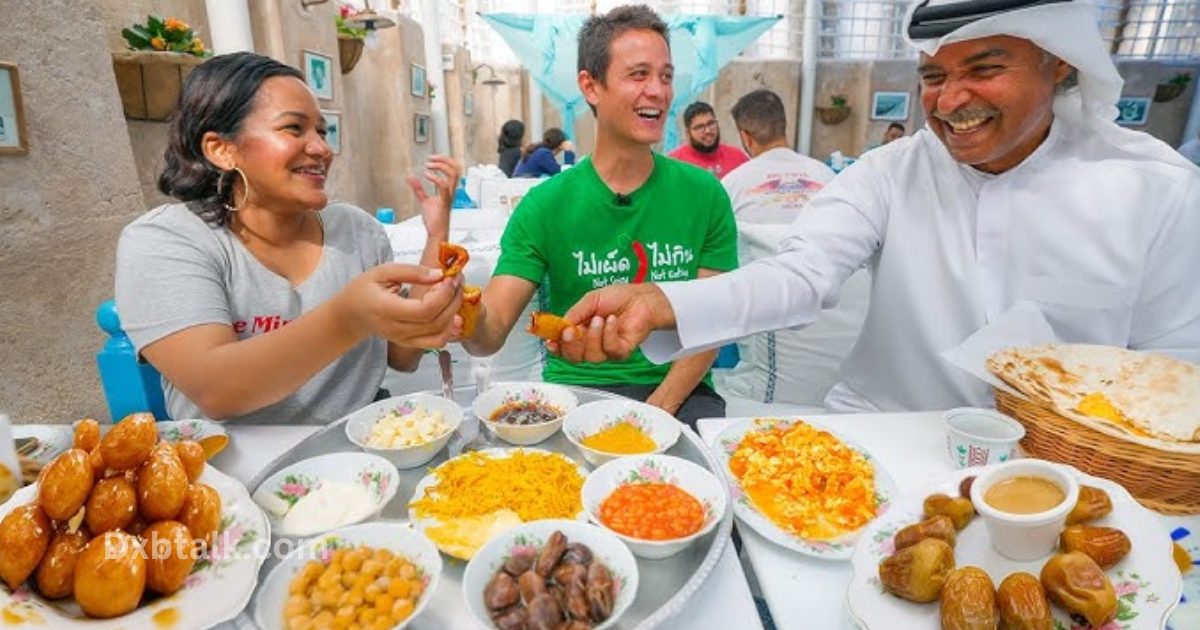
Eating like a local in Al Karama does not mean finding one famous restaurant. It means learning the crawl: a sequence of small, specific stops, each famous for exactly one thing, eaten standing or squeezed into a cafeteria while the district hums around you. Karama is Dubai’s great street-food classroom — overwhelmingly South Asian and Middle Eastern, priced for the people who live here, and generous to anyone who arrives hungry and curious. Here is how a local builds the evening.
Start Where the Smoke Is: Grills and Shawarma Stalls
The crawl opens savoury. Shawarma and falafel stalls work the busiest corners, spits turning, falafel frying to order — the falafel sandwich, stuffed with pickles and tahini and eaten within metres of the fryer, is the district’s handshake. Follow your nose to the grill smoke and you will find the kebab houses; the name locals will give you first is Al Ustad Special Kabab, the Persian-style institution loved for its juicy grilled meats, where the lamb kebab with saffron rice is the order regulars build around. The portions are honest, the bread arrives hot, and nobody is performing for tourists.
The Biryani Institutions
Every Karama food conversation reaches biryani within a minute, and two names dominate it. Student Biryani — the Karachi-born chain with a devoted local following — serves the spicy, unapologetic version residents cross the district for, best eaten with raita and absolutely no plans afterwards. Karachi Darbar covers the wider Pakistani table: biryanis, yes, but also haleem, karahis and the full hearty canon, at prices that make it a weekly habit for the neighbourhood’s families rather than an occasion. If you only eat one sit-down meal in Karama, make it at this level — this is the food the district cooks for itself.
📸 Follow @dxbtalk1 on Instagram for daily Dubai in photos →
Parathas: Breakfast Food, Any Hour
Paratha King makes the case that a stuffed flatbread is a complete food group. The parathas come off the griddle blistered and glistening — aloo for the traditionalists, spicy chicken for the ambitious, a long list beyond — and they are ordered for breakfast, lunch and the late-evening tea run with equal conviction. Pair one with a karak chai and you have performed the most Karama meal in existence for the price of a coffee in the mall districts. This is also the stop to watch the district’s theatre: families, taxi drivers, office groups and students all eating the same bread at the same counters.
Finish Sweet: The Mithai Shops
No Karama crawl ends with the savouries. The Indian sweet shops — mithai specialists with their trays of gulab jamun, rasgulla, jalebi and a dozen milk sweets whose names you will learn by pointing — exist to close the evening. Regulars buy by the small box: a few pieces for the table, a few more for home, because restraint in a mithai shop is a skill acquired over years, not visits. A hot jalebi eaten standing outside the shop, syrup still shining, is the correct full stop.
The Tea That Bookends Everything
Notice how the crawl is punctuated. It starts with a karak at a cafeteria counter while the group assembles, and it ends — whatever has been eaten in between — with another karak, because the tea is not a course so much as the evening’s punctuation. The fresh-juice stands play the supporting role: orange, sugarcane and cocktail juices pressed to order, taken standing, restoring the appetite the last stop spent. Build these pauses in deliberately. The crawl is a social form as much as a menu, and the talking that happens over the tea is half of what the locals came for.
How Locals Run the Crawl
A few habits separate the local pattern from the tourist one. Timing: the scene builds from the afternoon and peaks in the evening, so arrive hungry around sunset and let the night layer up. Money: cards work in the restaurants, but the smallest stalls still run on cash — carry small dirham notes. Sharing: order across the table and eat family-style, because the crawl’s whole point is range; a group of four tastes four times as much as a person alone. Spice: ask, honestly, for your level — these kitchens respect a clear instruction and ignore a brave face. And pace yourself: Karama rewards the grazer who walks between stops over the hero who fills up at the first one. Eat this way and you have not just had dinner in Karama. You have done what Karama does, which is the entire pleasure of the place.




