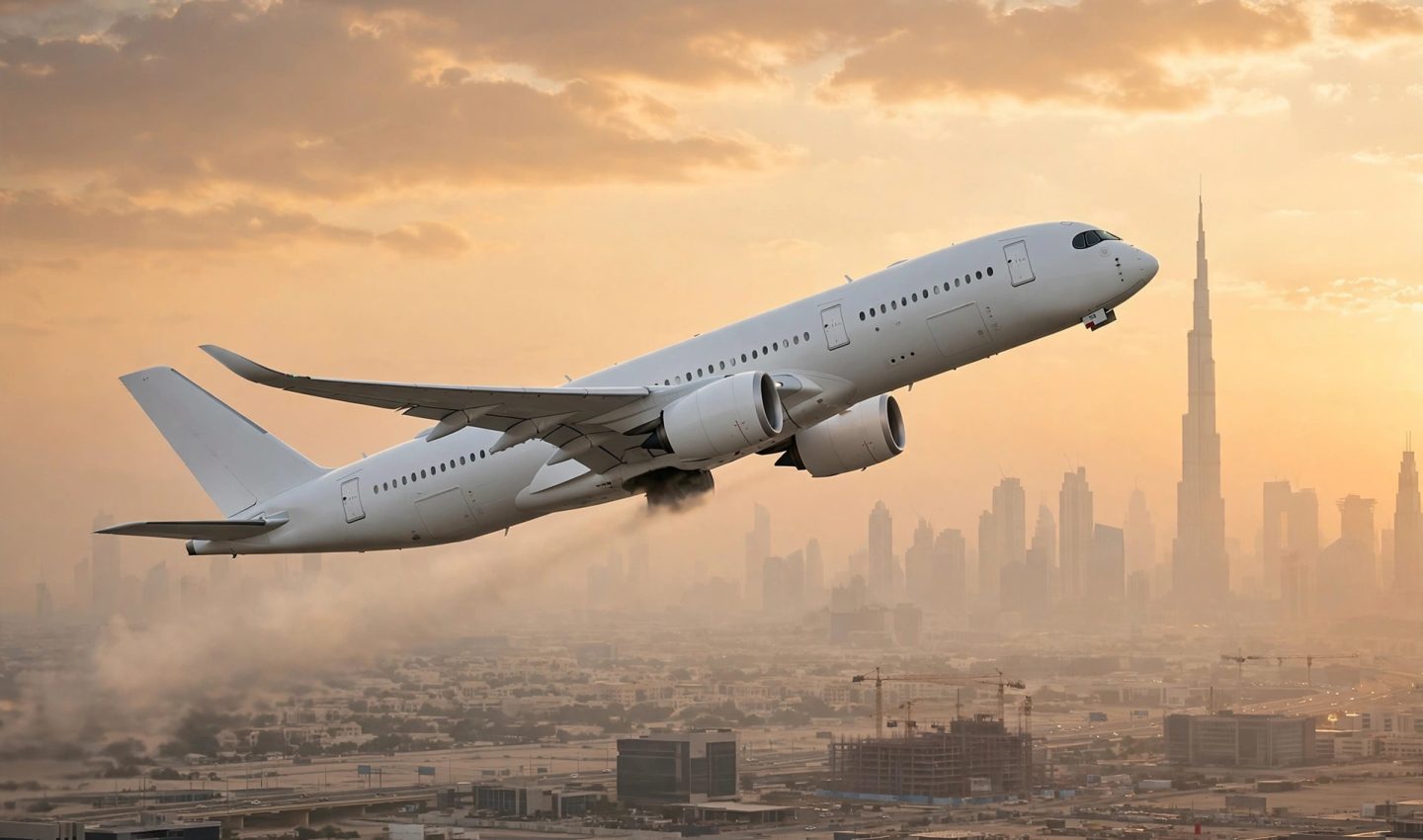
On 25 October 1985, a flight left Dubai International Airport for Karachi. It was EK600, the first flight of a brand-new airline, and it carried almost nothing of its own: the aircraft, an Airbus A300, was wet-leased from Pakistan International Airlines, along with a Boeing 737 that flew to Mumbai the same day. The airline had been founded just seven months earlier, on 15 March 1985, with US$10 million in backing from the Dubai government. Its name was Emirates.
Two leased aircraft
Emirates began with almost nothing. It had two leased aircraft, a small team, and an order from Dubai’s ruler, Sheikh Mohammed bin Rashid Al Maktoum, to build an airline for the city. Sheikh Ahmed bin Saeed Al Maktoum, who became its chairman, led the project. The first flights were operated with PIA crews, and PIA even provided free training facilities for Emirates cabin crew at Karachi Airport.
It was a strange beginning for what would become one of the world’s great airlines, but it was also a clever one. Dubai did not try to build an airline from scratch with its own aircraft and its own crews. It borrowed both, learned fast, and started flying within months. The first destination was Karachi, the second Mumbai, and from those two routes a network began to grow.
Growing into a giant
The growth was rapid. Emirates ordered the Boeing 777 in the early 1990s and became the launch customer for the Airbus A380 in 2000. Its first A380 arrived in July 2008, and the aircraft became the symbol of the airline: the onboard lounge, the shower spa in first class, the sheer size of the double-decker jet. Today, Emirates is the world’s largest operator of both the Airbus A380, with 116 in service, and the Boeing 777, with 133 in service, as of January 2026.
The fleet now numbers more than 250 aircraft, all of them wide-body jets, and the airline serves more than 150 cities in 80 countries across six continents from its hub at Dubai International Airport’s Terminal 3. It is the world’s largest long-haul airline, and one of the few airlines in the world to operate an all-wide-body fleet.
Free Dubai Tools
Dubai, in Your Hands
📸 Follow @dxbtalk1 on Instagram for daily Dubai in photos →
Why it worked
Emirates worked because Dubai’s geography worked. The city sits within eight hours’ flying time of two-thirds of the world’s population, and the airline turned that position into a business: fly people from Europe to Asia, from Africa to Australia, and change planes in Dubai on the way. The hub became the destination, and the destination became the hub.
The airline also worked because it was run as a business, not as a flag carrier. It was expected to make money, and for most of its history it did, year after year. It grew through the Gulf War, through the financial crisis, through the pandemic, and each time it came back bigger.
Forty years after two leased aircraft left Dubai on the same October day, Emirates is one of the most recognised brands in the world, and its home city is one of the great crossroads of global travel. The airline did not just serve Dubai. It made Dubai.
How It Was Built — the city, piece by piece.
DXB FACT — DID YOU KNOW?
The largest harbour humans ever built
- Jebel Ali recordworld's largest man-made harbour
- Containers in 202415.5 million TEU
- Middle East rankNo. 1 container port
- Opened1979
Source: DP World
A new Dubai fact every dayRead more »
Reader poll
Poll of the Day
A fun reader poll, just for curiosity — not an official survey. A new question arrives every day.