Every light in Dubai, every tap that runs, every air conditioner that hums through a summer afternoon depends on one organisation: the Dubai Electricity and Water Authority, known as DEWA. And for years, the man in charge of it has been Saeed Mohammed Al Tayer, its managing director and chief executive. His job is not only to keep the power on in a fast-growing city. It is to change where that power comes from.
The man who runs DEWA
Al Tayer leads DEWA as its managing director and chief executive, a role that puts him at the centre of Dubai’s infrastructure. Electricity and water are the two services a desert city cannot live without, and DEWA provides both. Under his leadership, the authority has become one of the most closely watched utilities in the region, not because of what it does today but because of the future it is building.
His public message has been consistent: Dubai has a clear strategy and a clear roadmap to reach 100 per cent of its energy production capacity from clean energy sources by 2050, under the Dubai Clean Energy Strategy 2050 and the Dubai Net Zero Carbon Emissions Strategy 2050.
The solar park in the desert
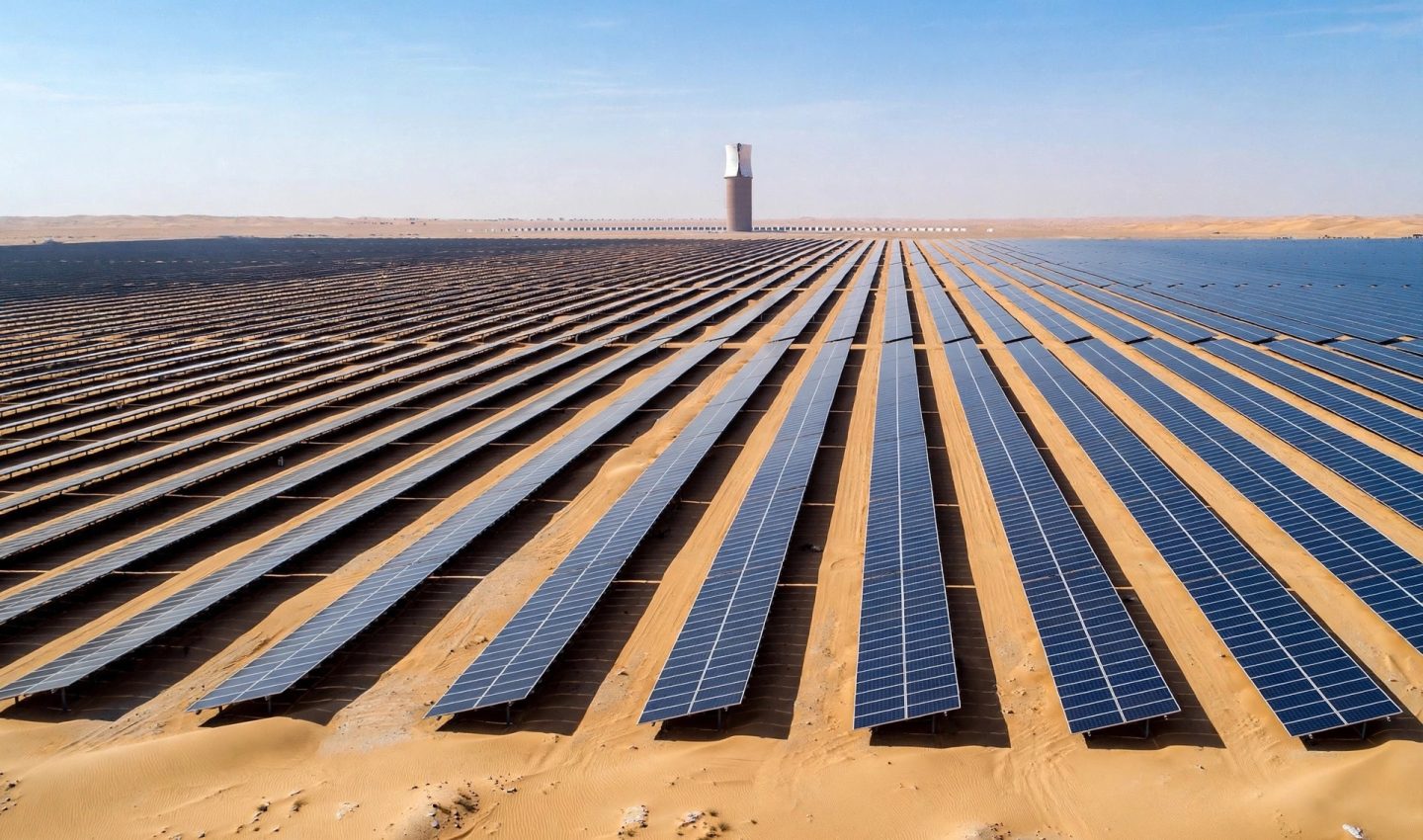
The clearest symbol of that work is the Mohammed bin Rashid Al Maktoum Solar Park, south of the city. It is the largest single-site solar park in the world, and DEWA says its planned capacity is 5,000 megawatts by 2030, using both photovoltaic solar panels and concentrated solar power. The park is being built in stages, with total investments of around AED 50 billion, and when complete it is expected to cut 6.5 million tonnes of carbon dioxide emissions every year.
The park’s history shows how fast the plan moved. Its first phase, of 13 megawatts, became operational in October 2013. The second phase, of 200 megawatts, was inaugurated in November 2015. Later phases grew far bigger: the fourth phase, at 700 megawatts, is the world’s largest single-site concentrated solar power plant.
Free Dubai Tools
Dubai, in Your Hands
📸 Follow @dxbtalk1 on Instagram for daily Dubai in photos →
A strategy, not a single project
Al Tayer has always presented the solar park as one part of a wider plan. DEWA uses a model called the Independent Power and Water Producer model, in which private companies build and run plants in partnership with the authority. That model has attracted tens of billions of dirhams in investment, including for the solar park and for the Hassyan desalination complex, which uses reverse osmosis technology to turn seawater into drinking water.
The Dubai Clean Energy Strategy 2050 was announced in November 2015 with targets of 7 per cent clean energy by 2020, 25 per cent by 2030 and 75 per cent by 2050. Since then, the ambition has been raised to 100 per cent of Dubai’s total power capacity from clean energy sources by 2050, alongside net-zero carbon emissions. The numbers keep moving, but the direction has not changed.
For a city built in the desert, power is survival. Al Tayer’s work is to make sure Dubai’s lights stay on while the source of that power changes completely, from gas to sun. It is a quiet kind of leadership: no towers, no headlines, just the grid itself, rebuilt one solar panel at a time.
Faces of Dubai Business — the people behind the city’s giants.
DXB FACT — DID YOU KNOW?
The largest harbour humans ever built
- Jebel Ali recordworld's largest man-made harbour
- Containers in 202415.5 million TEU
- Middle East rankNo. 1 container port
- Opened1979
Source: DP World
A new Dubai fact every dayRead more »
Reader poll
Poll of the Day
A fun reader poll, just for curiosity — not an official survey. A new question arrives every day.