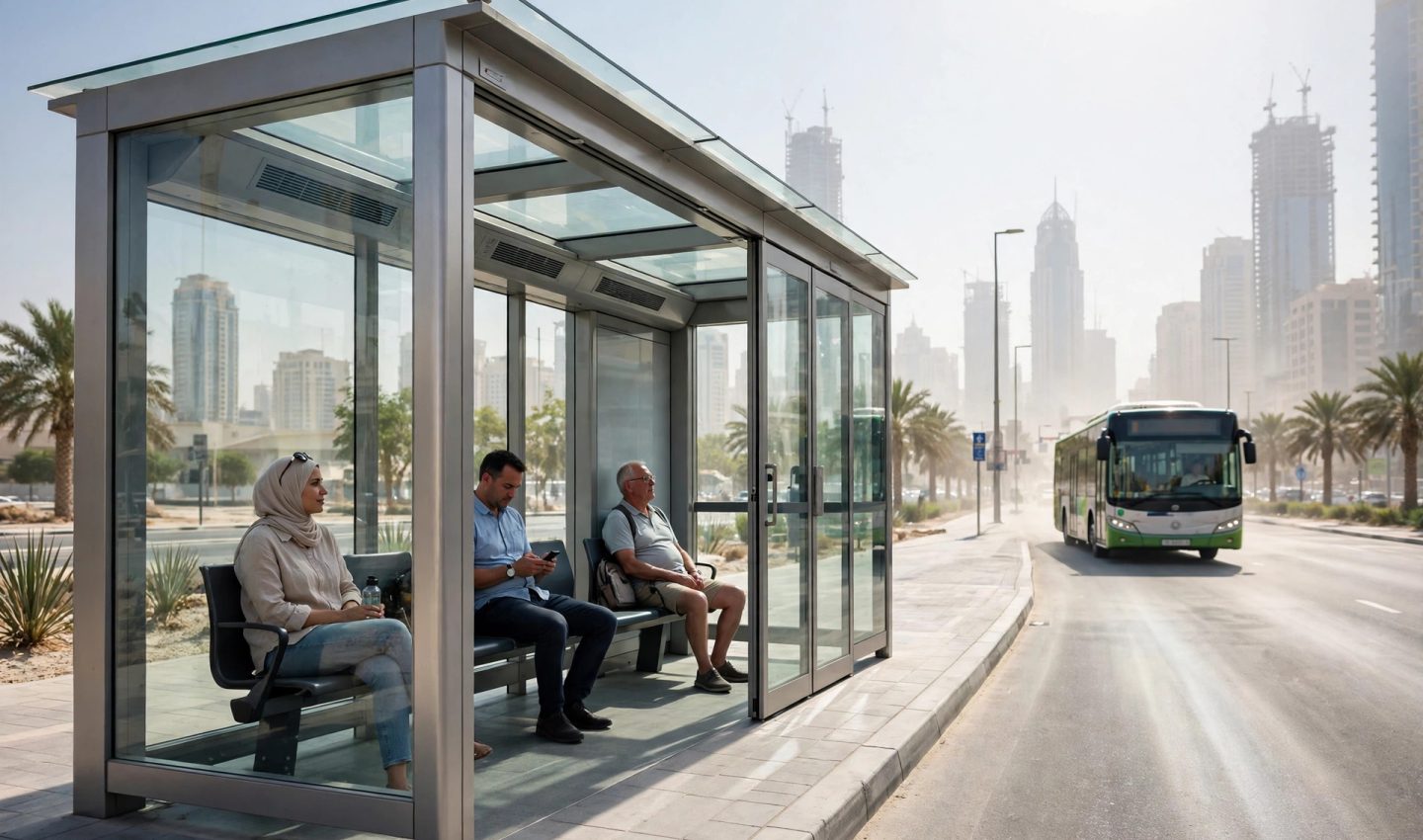
Stand at a Dubai bus stop in August, when the air outside is in the mid-forties and the humidity makes it feel worse, and you will understand why this might be the most beloved small invention in the city: the shelter is air-conditioned. A glass box of cool air, humming quietly at the kerbside. Dubai pioneered air-conditioned bus shelters from around 2006, and hundreds now dot the city — a world-first piece of street furniture that says more about this place than many of its towers.
Why a Bus Stop Needed Air-Conditioning
Most cities treat a bus shelter as a roof and a bench. In Dubai, for nearly half the year, an unshaded wait is not merely unpleasant — in extreme heat it can be genuinely punishing, especially for the workers, students and elderly passengers who rely on buses most. When Dubai’s Roads and Transport Authority set out in the mid-2000s to build a serious public bus network, it faced an honest problem: no one would choose a bus if using one began with ten minutes of standing in an oven. Cooling the wait was not a luxury. It was the price of making public transport usable.
First of Their Kind
The first air-conditioned shelters appeared around 2006, and Dubai was widely credited at the time as the first city in the world to install them. The design is simple and robust: an enclosed, glazed shelter with a cooling unit, seating, route information and space for advertising, which helps pay for the power. The programme grew with the bus network, and air-conditioned shelters spread across the emirate’s main routes — hundreds of them, maintained as part of the street furniture of the city. Step into one on a summer afternoon and the relief is physical: twenty-something degrees, a seat, a moment of quiet before the bus arrives.
📸 Follow @dxbtalk1 on Instagram for daily Dubai in photos →
Small, Daily, Democratic
What makes the shelters special is who they serve. Dubai’s famous luxuries are mostly private — hotel lobbies, mall atriums, first-class cabins. The cooled bus stop belongs to everyone and to no one: the delivery rider between jobs, the nanny with a sleeping child, the labourer heading home, the tourist who misjudged the walk. It is public money spent on the comfort of people standing still in the heat, which is a quietly radical priority. Residents barely notice them anymore, the way you stop noticing anything that simply works — until a visitor steps inside one, sighs with relief, and asks why their city does not have these.
Free Dubai Tools
Dubai, in Your Hands
The Network They Belong To
The shelters are one piece of a larger air-conditioned journey Dubai has been building for decades: cooled Metro stations and footbridges, shaded and chilled walkways, even air-conditioned passages linking stations to malls. The bus network itself has grown into hundreds of routes feeding the Metro, and the shelters mark its stops like small embassies of cool. In a city that holds records for the tallest, deepest and largest, the little glass box at the kerb may be the record that matters most at 2pm in August: first, and still hard to beat.
Practical Notes
- Finding them: air-conditioned shelters serve the main bus routes across Dubai; not every stop has one — smaller stops may have a simple shaded shelter.
- Paying: buses take the Nol card only — tap in when you board; cash is not accepted.
- Plan the wait: the RTA’s apps and journey planners show live bus times, so you can time your arrival at the shelter.
- Heat sense: even with cooled stops, carry water in summer and avoid long walks between stops at midday.
- Getting around: our Dubai travel guides cover buses, the Metro and the Nol card in full.
DXB FACT — DID YOU KNOW?
Snow in the middle of the desert
- Ski Dubaithe Middle East's first indoor ski resort
- Real snow22,500 m² of it
- Inside temperature−1°C to −4°C, all year
- Slopes5 — including an indoor black run
Source: The National
A new Dubai fact every dayRead more »
Reader poll
Poll of the Day
A fun reader poll, just for curiosity — not an official survey. A new question arrives every day.