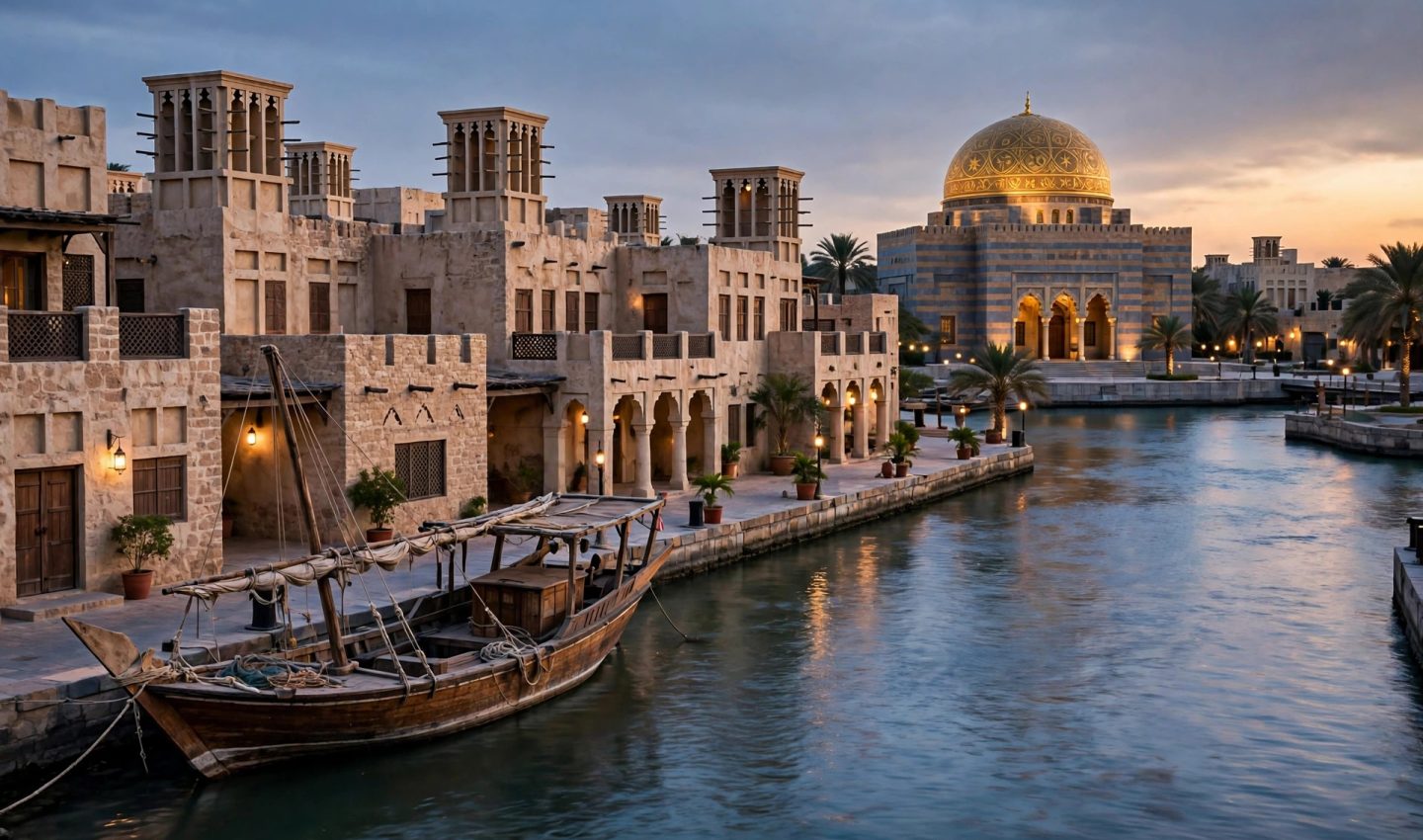
Dubai’s neighbour does not do glitter. Sharjah, named Cultural Capital of the Arab World by UNESCO, is the emirate of museums, restored merchant houses and old souks — and it begins about twenty minutes past Dubai’s northern edge. A day here is the perfect counterweight to the malls: calligraphy and astronomy, coffee in a coral-stone courtyard, and a creek full of wooden dhows that still trade the old way. It is also, not incidentally, the gentlest day out on this list for your wallet.
Getting There — and the Traffic Truth
The honest answer is: it depends on the clock. Sharjah is only about 25 kilometres from Deira, but the road between the two cities carries one of the heaviest commutes in the country. Off-peak, the drive takes 30 minutes; in the morning and evening rush it can stretch well past an hour, so the 30–60 minute range you will see quoted assumes you travel smart. Go mid-morning, and come back before four or after eight. Buses run from Union Square and other Dubai stations to Sharjah’s Al Jubail station for a few dirhams, and taxis are plentiful both ways.
The Heritage Area and the Museums
Start in the Heart of Sharjah, the restored old town around the creek. The Sharjah Museum of Islamic Civilization, under its golden dome on the Corniche, is the flagship — astrolabes, manuscripts, ceramics and coinage across two calm floors. In the heritage quarter itself, lanes of coral stone and gypsum lead past the Al Hisn fort, the Calligraphy Museum, and the houses of pearl merchants turned into small museums. A few minutes away, Souk Al Arsah — one of the oldest marketplaces in the UAE — sells antiques, oud and silver under thick old walls. Prices in the souks are negotiable and the pace is gentle; nobody here is in a hurry, and neither should you be. The nearby Sharjah Art Museum is one of the Gulf’s most serious galleries, and the Blue Souk — the Central Souk, with its blue-tiled vaults down by the lagoon — is where the city shops for gold, carpets and antiques.
📸 Follow @dxbtalk1 on Instagram for daily Dubai in photos →
Al Noor Island and the Waterfront
When the museums close in on you, cross to Al Noor Island in the Khalid Lagoon: gardens, a butterfly house, modern sculpture and a boardwalk looking back at the skyline. Families also make for the Al Majaz Waterfront across the water, with its fountains, cafés and mosque on the shore. If you have children with you, the discovery centre and aquarium on the Corniche make an easy final stop before the drive home. Finish the day as Sharjah does — slowly, with karak tea at a Corniche café while the dhows load for the Gulf.
Free Dubai Tools
Dubai, in Your Hands
Practical Notes
- Dress modestly: Sharjah is the most conservative emirate — cover shoulders and knees, especially in the heritage area and museums.
- Alcohol: Sharjah is a dry emirate; alcohol is not sold anywhere, including hotels. Plan the day accordingly.
- Traffic: never schedule the return drive between 5pm and 8pm if you can avoid it.
- Friday: many museums open later on Fridays, after prayers; check the day’s timings before you go, as hours change.
- Costs: museum entry fees are modest but vary — carry small cash and check current prices at the door.
Two cities, two temperaments, one short drive: Sharjah is the day trip that shows you the Emirates before the towers. More ideas for days out sit on our Dubai Experience page.
DXB FACT — DID YOU KNOW?
Snow in the middle of the desert
- Ski Dubaithe Middle East's first indoor ski resort
- Real snow22,500 m² of it
- Inside temperature−1°C to −4°C, all year
- Slopes5 — including an indoor black run
Source: The National
A new Dubai fact every dayRead more »
Reader poll
Poll of the Day
A fun reader poll, just for curiosity — not an official survey. A new question arrives every day.