

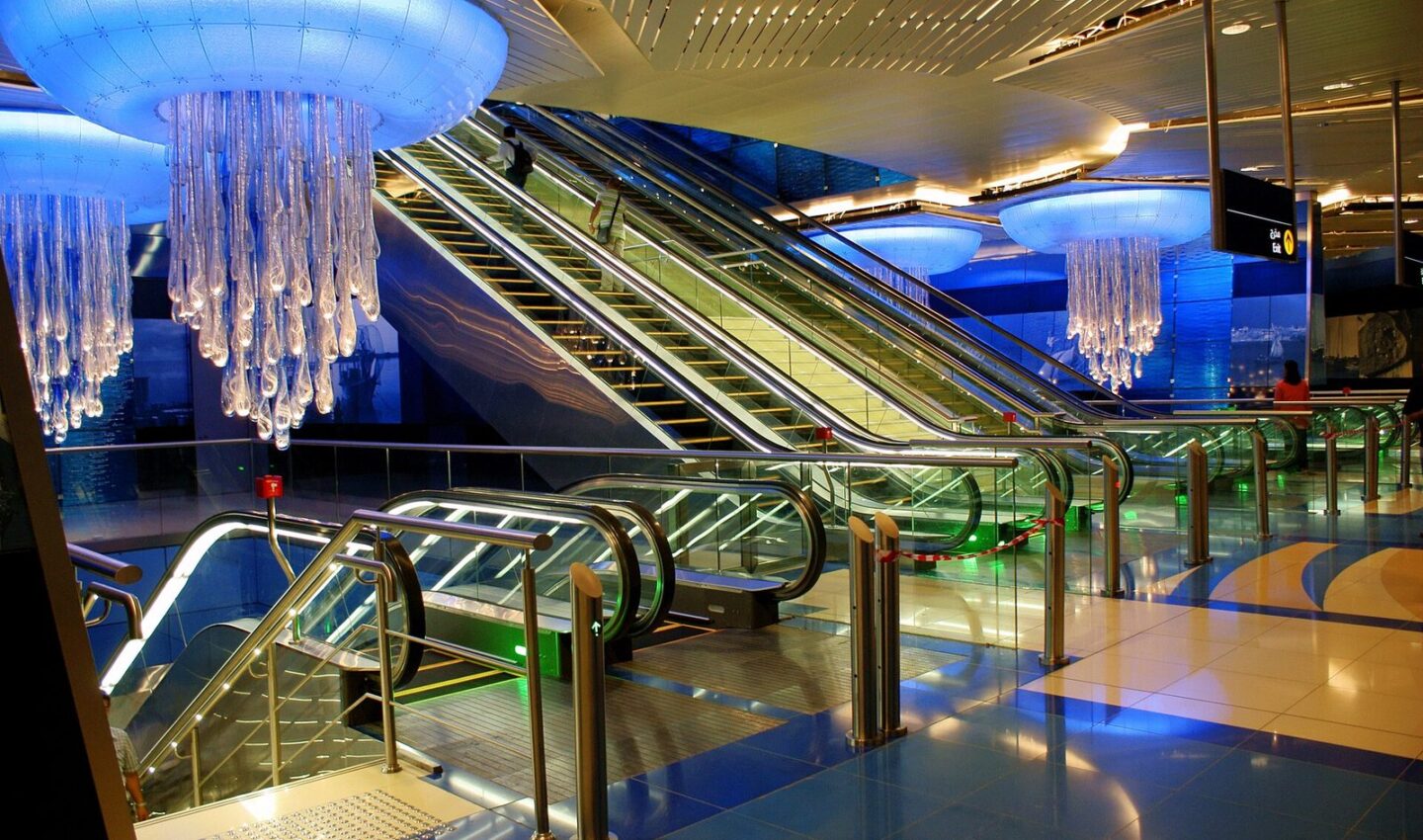
If you live in Deira, you are in one of the best-connected parts of Dubai for public transport. Both the Red Line and Green Line run through the area, several major bus routes start or pass here, and the abra and ferry links across the Creek add options you do not get elsewhere. For most daily trips you can manage comfortably without a car, as long as you know which station serves which street and how the feeder buses work.
The Metro stations that matter in Deira
Deira sits at the meeting point of the two Metro lines, which is its biggest advantage. On the Green Line, Baniyas Square, Abu Hail, Al Qiyadah and Stadium serve the northern side, while Union and BurJuman are the big interchanges nearby. On the Red Line, Al Rigga, Union and Al Futtaim give you a direct run towards Jebel Ali and Expo City, and towards Dubai International Airport in the other direction. Union Square is the busiest interchange in the city, so allow extra time there at peak hours when crowds build on the platforms and in the connecting corridor.
Station exits matter in Deira because the blocks are long and the summer heat makes a wrong exit painful. Check the exit number on the station map before you leave the concourse. Al Rigga station is handy for the hotel and apartment streets around Al Rigga Road, Baniyas Square suits the souks and the Creek side, and Abu Baker Al Siddique is useful for Hor Al Anz and Abu Hail residential streets. Most stations have air-conditioned footbridges, lifts and tactile paving, and they open from early morning until late at night, with slightly later hours on Fridays — always check the RTA timetable for the current schedule.
Bus routes and feeder services
Buses fill the gaps the Metro does not cover. Gold Souk bus station is a main hub on this side of the Creek, with routes heading to Satwa, Jumeirah, Al Barsha, International City and across to Sharjah. Al Ghubaiba in Bur Dubai is the other major hub, reached by abra or Metro for southern routes. Within Deira itself, feeder buses link stations such as Abu Hail and Stadium to Al Nahda, Al Qusais and Muhaisnah, which is especially helpful if you live away from a station entrance.
- Gold Souk station for intercity buses and routes towards the northern emirates
- Al Ghubaiba station, across in Bur Dubai, for southern and Jumeirah routes
- Feeder buses from Abu Hail and Stadium for Al Qusais, Al Nahda and Hor Al Anz
- Night services on selected routes — check the RTA S’hail app for timings
- Abras from Baniyas and Al Sabkha for a quick Creek crossing at a very low fare
Use the S’hail app or the RTA website to plan a door-to-door journey. The app shows live bus positions, which helps in Deira where traffic on Baniyas Road and Al Rasheed Road can delay buses in the evening. If your commute is regular, note an alternative route as well, so a road closure or a busy evening does not leave you stuck.
📸 Follow @dxbtalk1 on Instagram for daily Dubai in photos →
Nol cards, fares and everyday tips
You need a Nol card for the Metro, buses, tram and modern abra stations. Most residents choose a Silver Nol card, which you can buy and top up at any station, at many supermarkets and through the Nol Pay app. Fares are charged by zones travelled, and Deira to central areas such as Business Bay or Dubai Media City typically crosses one or two zones. As a guide, a standard Silver card journey usually costs around a few dirhams per trip, but always check the official RTA portal for current fares before you budget.
Tap in and tap out every time, even when gates are open, otherwise you may be charged the maximum fare or a penalty. Keep a small balance buffer so you are not caught out on an early start, and register your card online if you can — a registered card is easier to replace if it is lost. Gold Class on the Metro costs more but can be worth it on the crowded Union to BurJuman stretch at peak time.
Getting to the airport, malls and work areas
For Dubai International Airport, Terminal 1 and Terminal 3 have their own Red Line stations, and Terminal 2 is a short taxi or bus ride from Abu Hail or Al Qiyadah. For shopping, Deira City Centre is directly linked to its Red Line station, while Baniyas Square and the Gold Souk area cover traditional shopping on foot. Commutes to DIFC, Business Bay and Media City are straightforward on the Red Line from Union or Al Rigga, usually without needing to change. If you work in Healthcare City or Festival City, the Green Line from Baniyas Square or Abu Hail is generally the simpler option.
Taxis remain plentiful in Deira and are useful late at night or when carrying shopping, but for a predictable daily commute the Metro plus a short walk or feeder bus is usually faster and cheaper. Consider the weather from June to September — choose the station exit and bus stop with the most shaded or indoor route to your building.
FAQ
Which Metro station is best for central Deira?
Union and Baniyas Square cover most central streets, while Al Rigga is better for the Al Rigga Road apartments and hotels. Pick by your exact street, not just the area name.
Can I live in Deira without a car?
Yes, many residents do. With two Metro lines, major bus hubs and abras, most work, school and shopping trips are manageable, though a car helps for trips to newer suburbs.
How do I check live bus times in Deira?
Use the RTA S’hail app for live positions and journey planning, and keep your Nol card topped up through the app so you do not need to queue at the station.
For more neighbourhood guides and practical help with daily life, visit DXB Talk and browse our Dubai Areas guides for the street where you live.





